Reflecto News is an online news platform covering major international political events, global economic developments, and security conflicts. The site provides updates on topics such as Chinese manufacturing dominance, Middle Eastern political tensions, and high profile legal arrests. Readers can access current articles organized by categories like World News, Iran, and USA.
Reflecto News | Breaking News | US-Iran Conflict
WASHINGTON — The United States military has intercepted and compelled six Iranian oil tankers carrying approximately 10.7 million barrels of crude to reverse course and return to Iran, as Washington intensifies its naval blockade of Iranian shipping routes amid the ongoing war, according to multiple maritime tracking reports .
🔒 37 Vessels Redirected Since Blockade Began
The interceptions are part of a sustained campaign by U.S. Central Command (CENTCOM) to enforce a maritime blockade imposed on Iranian ports on April 13. According to CENTCOM, U.S. forces have now directed a total of 37 vessels to turn around or return to port since the blockade began .
The six tankers carrying Iranian crude were part of a larger group of at least 19 Iran-linked tankers that attempted to leave the Gulf. According to shipping data, six of those vessels were reportedly transporting crude, with a combined cargo of approximately 10.7 million barrels .
At current market prices—with Iranian oil typically sold at a discount of roughly $10 per barrel below Brent crude—the diverted cargo is estimated to be worth nearly $1 billion .
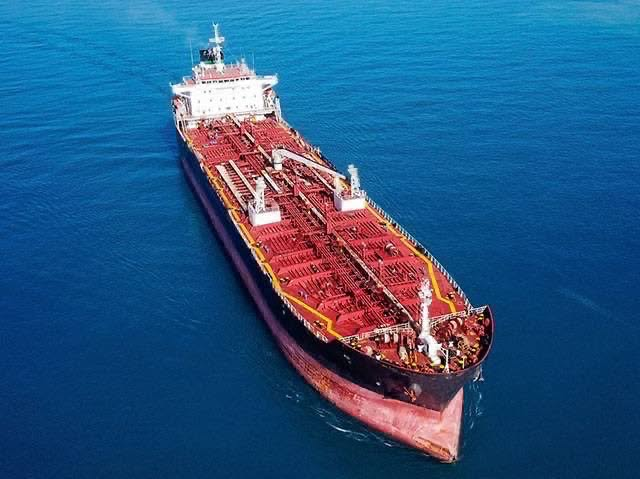
⚓ Latest Interception: M/V Sevan in the Arabian Sea
The most recent interception occurred early Saturday, April 25, when a U.S. Navy helicopter launched from the guided-missile destroyer USS Pinckney (DDG 91) intercepted the M/V Sevan, a sanctioned Iranian tanker, in the Arabian Sea .
According to CENTCOM, the Sevan was among 19 “shadow fleet” vessels sanctioned by the U.S. Department of Treasury for activities related to transporting billions of dollars’ worth of Iranian oil, gas, and petrochemical products to foreign markets .
“U.S. forces continue to enforce U.S. sanctions and fully implement the blockade against ships entering or departing Iranian ports.”
— U.S. Central Command (CENTCOM)
The tanker changed course and began heading back toward Iran under U.S. Navy escort. No shots were fired, and no injuries were reported .
🚢 The ‘Shadow Fleet’: Evading Detection
Iran has long relied on a so-called “shadow fleet”—aging tankers that employ tactics such as:
- Switching off AIS transponders to avoid tracking
- Spoofing vessel locations
- Conducting ship-to-ship transfers at sea
- Relabeling cargoes
- Using front companies to disguise ownership
Despite these tactics, the U.S. Navy has continued to identify and intercept vessels attempting to breach the blockade .
On April 22, the U.S. military seized the oil tanker Majestic X in the Indian Ocean. The vessel, previously named Phonix, had been sanctioned by the U.S. Treasury Department in 2024 for smuggling Iranian crude .
Ship-tracking data showed the Majestic X in the Indian Ocean between Sri Lanka and Indonesia, roughly the same location where another tanker, the Tifani, was earlier seized by American forces .
⚔️ Escalating Blockade Enforcement
The naval blockade has escalated significantly over the past two weeks:
- April 13: U.S. imposes blockade on ships entering or leaving Iranian coastal waters
- April 16: Restrictions widened to include any Iranian vessels on the open seas
- April 22: U.S. seizes Majestic X oil tanker in Indian Ocean
- April 25: U.S. intercepts M/V Sevan in Arabian Sea, forces return to Iran
CENTCOM has not disclosed the names of all six tankers forced to return, and the vessels have not been publicly identified. According to maritime security sources, the U.S. military is deliberately targeting Iranian ships away from the Strait of Hormuz and in open waters to avoid the risks posed by floating mines .
📉 ‘Blockade Has Been a Tremendous Success’
President Trump has publicly declared the blockade a success. In a CNBC interview, he stated:
“The blockade has been a tremendous success.”
When asked about lifting the U.S. embargo, Trump said he would not do so until Washington reaches a “final deal” with Iran .
The administration estimates that redirected tankers represent hundreds of millions of dollars in lost revenue for Tehran. According to one analysis, the forced return of these oil cargoes has disrupted shipments valued at more than $1 billion .
🧩 Iran Still Moving Some Oil Despite Interceptions
Despite the blockade and ongoing interceptions, Iran continues to move some oil. Data collected by TankerTrackers.com indicates that Iran loaded at least 4.6 million barrels of crude at export terminals in recent days, with another four million barrels appearing to have crossed the U.S. blockade line .
Lloyd’s List Intelligence found that at least 26 vessels linked to Iran—including 11 oil and gas tankers and two very large crude carriers—have sailed in and out of Iranian ports since the blockade began. Cargo tracking firm Vortexa claims that at least 34 Iran-linked tankers bypassed the blockade line in the Strait of Hormuz .
“The U.S. military has continued to redeploy and resupply its naval and air forces in anticipation of potential future resumption of war. The military is ready to resume strikes if the order is given.”
— U.S. official (anonymous, cited by maritime security sources)
Vortexa has also identified multiple fully laden tankers slipping past U.S. warships, with roughly nine million barrels moved by Iran around the blockade in recent days .
📊 Renewed Strait of Hormuz Traffic
There are also reports that traffic is picking up again in the Strait of Hormuz, despite dueling U.S. and Iranian blockades. According to maritime security consultancy Windward, 19 vessels made the transit through the waterway on April 25—most outbound and all broadcasting their AIS transponders .
The noteworthy transits included the sanctioned tankers Oceanjet and Lumina Ocean, both linked to Iran’s petroleum industry .
🔮 What Comes Next
The U.S. Navy is expected to continue its interception campaign as the blockade remains in effect. The Pentagon has told Congress that clearing mines deployed in the Strait of Hormuz—allegedly by Iran—could take up to six months .
Meanwhile, diplomatic efforts to end the war remain stalled. Iranian Foreign Minister Abbas Araghchi has shuttled to Moscow for consultations with President Putin, as Tehran coordinates with its key strategic partner. The ceasefire remains in place but fragile, and no second round of formal talks has been scheduled.
Frequently Asked Questions (FAQs)
Q1: How many Iranian oil tankers has the US forced to turn back?
U.S. forces have forced a total of 37 vessels to turn around or return to port since the blockade began on April 13. Among these, at least six tankers were carrying Iranian crude oil totaling approximately 10.7 million barrels .
Q2. What is the “shadow fleet”?
The “shadow fleet” refers to older tankers operated by Iran to evade sanctions. These vessels use tactics such as switching off AIS transponders, spoofing locations, conducting ship-to-ship transfers, and using front companies to disguise ownership and destinations .
Q3. What is the estimated value of the diverted oil?
At a discount of roughly $10 per barrel below Brent crude prices—typical for Iranian oil—the 10.7 million barrels of crude is valued at approximately $910 million to $1 billion .
Q4. How many vessels has CENTCOM intercepted total?
As of April 26, CENTCOM reports that U.S. forces have directed 37 vessels to turn around or return to port since the blockade began .
Q5. Is Iran still able to export any oil despite the blockade?
Yes. Despite interceptions, tracking data indicates Iran has loaded at least 4.6 million barrels of crude at export terminals in recent days, and some 34 Iran-linked tankers have bypassed the blockade line in the Strait of Hormuz .
Q6. Why is the US Navy intercepting vessels away from the Strait of Hormuz?
The U.S. military is deliberately targeting Iranian ships in open waters to avoid the risks posed by floating mines. The Pentagon has told Congress that clearing mines from the Strait of Hormuz could take up to six months .
Q7. Has the US seized any Iranian tankers outright?
Yes. On April 22, the U.S. military seized the oil tanker Majestic X in the Indian Ocean. The vessel had been sanctioned by the U.S. Treasury in 2024 for smuggling Iranian crude .
Key Takeaways for Reflecto News Readers
| Aspect | Summary |
|---|---|
| Number of tankers forced back | At least 6 Iranian crude tankers |
| Total crude volume diverted | Approximately 10.7 million barrels |
| Estimated value | ~$910 million to $1 billion |
| Total vessels redirected since blockade started | 37 (as of April 26) |
| Latest interception | M/V Sevan (April 25, Arabian Sea, USS Pinckney) |
| Iran’s evasion tactics | “Shadow fleet” (AIS off, ship-to-ship transfers, front companies) |
| Key seizures | Majestic X (April 22), M/V Sevan (April 25) |
| Strait of Hormuz traffic | 19 vessels transited April 25 (most outbound) |
| Mine clearance timeline | Up to 6 months (Pentagon estimate) |
Follow Reflecto News for continuous updates on the U.S. naval blockade, Iranian oil shipments, and all breaking news from the Middle East and around the world.
This article is the intellectual property of Reflecto News. Redistribution without attribution is prohibited. For syndication or media inquiries, please contact the editorial team.
Updated: April 27, 2026
Questions people ask
What is China's current share of global manufacturing?
China now accounts for twenty eight percent of global manufacturing. This industrial output exceeds the combined manufacturing production of the United States, Japan, and Germany, making China the leading global industrial power according to recent reports.
Why were Andrew Tate and Tristan Tate arrested in Miami?
Andrew Tate and his brother Tristan Tate were taken into custody in Miami by the United States Marshals Service. They face thirty eight new charges in the United Kingdom, including rape and child pornography offences, and prosecutors are seeking their extradition.
What warning did Moscow issue about oil prices?
Kirill Dmitriev, the Chief Executive of the Russian Direct Investment Fund, warned that a tsunami of skyrocketing oil prices is approaching. Moscow describes this potential energy shock as a major threat to global markets.
What political shift is projected for Benjamin Netanyahu's coalition?
Political polls project that Prime Minister Benjamin Netanyahu's coalition is on track to lose its majority in the upcoming October election. This projection indicates a potential political shift in Jerusalem.
Why did a Russian military aircraft land in Tehran?
A Russian airborne command aircraft, widely known as a doomsday plane, landed in Tehran. The arrival of the aircraft represents a high stakes show of support from Russia for Iran during a period of heightened regional tensions.
What did President Masoud Pezeshkian claim about the United States and Israel?
Iranian President Masoud Pezeshkian claimed that the United States and Israel failed in a forty eight hour plan to topple the Iranian government. He made these statements during a televised address marking two years since his inauguration.