
Reflecto News is an online news platform covering major international political events, global economic developments, and security conflicts. The site provides updates on topics such as Chinese manufacturing dominance, Middle Eastern political tensions, and high profile legal arrests. Readers can access current articles organized by categories like World News, Iran, and USA.
Published on Reflecto News | World News | Politics & Religion
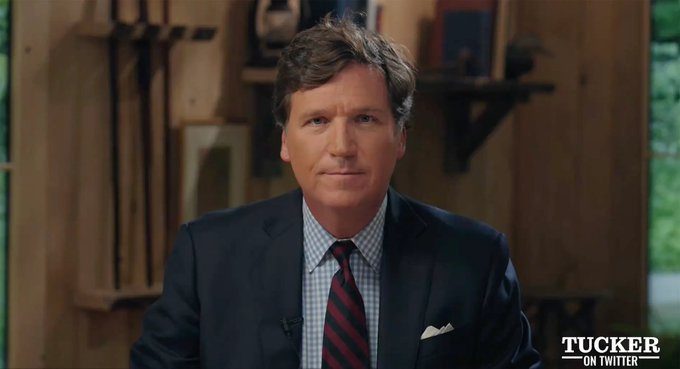
Conservative commentator Tucker Carlson has sparked a firestorm of controversy after declaring that “there are a lot of people in Israel who hate Christianity above all.” The remarks, made during a recent episode of his show, represent an escalation in his ongoing criticism of Israeli government policies and what he perceives as undue influence of pro-Israel lobbies on US foreign policy .
“There are a lot of people in Israel who hate Christianity above all. They don’t just dislike Christians — they hate them. And yet we are told that supporting Israel is a Christian duty. It is not. It is a betrayal of Christianity.” — Tucker Carlson
The Context: Carlson’s Broader Critique
Carlson’s comments come amid an escalating feud between the conservative commentator and the Israeli government. In recent months, Carlson has repeatedly criticized Israeli Prime Minister Benjamin Netanyahu, accusing him of dragging the United States into a war with Iran that serves Israeli rather than American interests .
He has also criticized what he calls the “Israel First” lobby, accusing it of exerting undue influence on US foreign policy. His latest remarks extend this critique to the religious realm, challenging the theological basis for evangelical Christian support for Israel .
Reactions: Condemnation and Defense
Carlson’s remarks have drawn sharp condemnation from Jewish and Christian leaders alike.
Condemnation:
| Organization | Response |
|---|---|
| Anti-Defamation League (ADL) | Called the comments “antisemitic” and “dangerous” |
| American Jewish Committee (AJC) | Accused Carlson of “peddling ancient anti-Jewish tropes” |
| Conference of Presidents | Condemned the “blatant antisemitism” |
| Southern Baptist Convention | Distanced itself from Carlson’s comments |
| Evangelical leaders | Reaffirmed support for Israel as a Christian duty |
Defense:
| Supporter | Response |
|---|---|
| “America First” conservatives | Argued Carlson is criticizing Israeli government policy, not Judaism |
| Anti-war activists | Praised Carlson for challenging pro-Israel lobby influence |
| Some Christian nationalists | Agreed that Christian support for Israel is misguided |
The ADL’s CEO Jonathan Greenblatt stated that Carlson’s comments “play directly into the hands of those who seek to divide Jews and Christians” and “echo the worst antisemitic conspiracy theories about Jewish power and Jewish animus toward Christianity” .
The Israeli Response
Israeli officials have not yet issued an official response to Carlson’s comments. However, Prime Minister Benjamin Netanyahu has previously dismissed Carlson’s criticism of Israeli policy, and Israeli media has characterized Carlson as “hostile” to the Jewish state .
The Israeli government maintains that it respects all religions and protects Christian holy sites in Jerusalem and elsewhere. Christians make up approximately 2 percent of Israel’s population, and the government has pointed to the growth of the Christian community in Israel as evidence of religious freedom .
Historical Context: Jewish-Christian Relations
Carlson’s comments touch on a complex and painful history of Jewish-Christian relations. For centuries, Christian theology in Europe often blamed Jews for the death of Jesus, leading to pogroms, expulsions, and the Holocaust. The Catholic Church formally repudiated the charge of deicide in the 1960s, and most mainstream Protestant denominations have followed suit .
In recent decades, evangelical Christians have become some of the strongest supporters of Israel, viewing the restoration of the Jewish people to the Holy Land as a fulfillment of biblical prophecy . This alliance has been a cornerstone of US-Israel relations, with evangelical voters consistently supporting pro-Israel policies .
Carlson’s challenge to this theological framework — his assertion that supporting Israel is “a betrayal of Christianity” — represents a significant break from the evangelical mainstream .
Political Implications
Carlson’s comments come at a time of growing divisions within the Republican coalition. The “America First” wing of the party, which Carlson represents, has grown increasingly skeptical of foreign entanglements and critical of the US-Israel alliance. Traditional pro-Israel hawks and evangelical supporters have pushed back .
The divide within the Republican coalition:
| Faction | Position on Israel |
|---|---|
| “America First” (Carlson wing) | Skeptical of unconditional support; focus on US interests |
| Traditional hawks | Strong alliance; support for Israeli security |
| Evangelicals | Theological support for Israel as biblical prophecy |
Carlson’s comments are likely to intensify this debate, forcing Republican politicians to choose sides between the “America First” and pro-Israel wings of the party .
What Comes Next
Carlson’s remarks are unlikely to be his last on the subject. The commentator has made criticism of Israeli policy and pro-Israel lobbies a recurring theme on his show, and his influence within the “America First” movement ensures that his views will continue to shape conservative discourse .
| Scenario | Likelihood | Implications |
|---|---|---|
| Further escalation | Likely | Carlson may double down on his comments |
| Republican split widens | Likely | Tensions between “America First” and pro-Israel hawks |
| Israeli response | Possible | Official condemnation or criticism |
| Evangelical backlash | Likely | Some may distance themselves from Carlson |
Carlson’s declaration that “there are a lot of people in Israel who hate Christianity above all” ensures that the debate over the US-Israel alliance will continue — and that the religious dimensions of that debate will be front and center.
Frequently Asked Questions (FAQs)
1. What did Tucker Carlson say about Israel and Christianity?
Carlson declared that “there are a lot of people in Israel who hate Christianity above all,” adding that “supporting Israel is not a Christian duty” but rather “a betrayal of Christianity.”
2. Why did Carlson make these comments?
Carlson has been a consistent critic of Israeli government policies and what he perceives as the undue influence of pro-Israel lobbies on US foreign policy. His latest remarks extend this critique to the religious realm.
3. How have Jewish organizations responded?
The Anti-Defamation League (ADL) and American Jewish Committee (AJC) have condemned Carlson’s comments as antisemitic, accusing him of “peddling ancient anti-Jewish tropes.”
4. How have Christian leaders responded?
Some evangelical leaders have distanced themselves from Carlson’s comments, reaffirming their support for Israel. Others have agreed with his critique of the pro-Israel lobby.
5. Has Israel responded?
Israeli officials have not yet issued an official response to Carlson’s comments.
6. What is the ‘America First’ position on Israel?
The “America First” wing of the Republican party, which Carlson represents, is skeptical of unconditional support for Israel and argues that US foreign policy should prioritize American interests over those of allies.
7. Could Carlson’s comments affect US-Israel relations?
While Carlson is not a government official, his influence within the conservative movement could shape Republican policy toward Israel if he maintains his influence.
Stay informed with Reflecto News – Your trusted source for breaking political, religious, and geopolitical intelligence. Subscribe for real-time updates on US-Israel relations, conservative movement debates, and global religious affairs.
Questions people ask
What is China's current share of global manufacturing?
China now accounts for twenty eight percent of global manufacturing. This industrial output exceeds the combined manufacturing production of the United States, Japan, and Germany, making China the leading global industrial power according to recent reports.
Why were Andrew Tate and Tristan Tate arrested in Miami?
Andrew Tate and his brother Tristan Tate were taken into custody in Miami by the United States Marshals Service. They face thirty eight new charges in the United Kingdom, including rape and child pornography offences, and prosecutors are seeking their extradition.
What warning did Moscow issue about oil prices?
Kirill Dmitriev, the Chief Executive of the Russian Direct Investment Fund, warned that a tsunami of skyrocketing oil prices is approaching. Moscow describes this potential energy shock as a major threat to global markets.
What political shift is projected for Benjamin Netanyahu's coalition?
Political polls project that Prime Minister Benjamin Netanyahu's coalition is on track to lose its majority in the upcoming October election. This projection indicates a potential political shift in Jerusalem.
Why did a Russian military aircraft land in Tehran?
A Russian airborne command aircraft, widely known as a doomsday plane, landed in Tehran. The arrival of the aircraft represents a high stakes show of support from Russia for Iran during a period of heightened regional tensions.
What did President Masoud Pezeshkian claim about the United States and Israel?
Iranian President Masoud Pezeshkian claimed that the United States and Israel failed in a forty eight hour plan to topple the Iranian government. He made these statements during a televised address marking two years since his inauguration.