Reflecto News is an online news platform covering major international political events, global economic developments, and security conflicts. The site provides updates on topics such as Chinese manufacturing dominance, Middle Eastern political tensions, and high profile legal arrests. Readers can access current articles organized by categories like World News, Iran, and USA.
Published on Reflecto News | World News | Politics & Media
Conservative commentator Tucker Carlson has publicly distanced himself from personal animosity toward former President Donald Trump, instead directing his criticism at the ongoing Middle East war and what he describes as the “direction the US government is taking.” In an interview with the Wall Street Journal published Friday, Carlson said his frustration is firmly rooted in policy, not personality, while adding that he feels “betrayed.”
His remarks underscore a persistent tension between the populist, anti-war wing of the right—which Carlson has long championed—and the hawkish foreign policy stance adopted by the Trump administration during the six-week conflict with Iran. Carlson has been one of the most prominent conservative voices questioning the wisdom and necessity of military action against Tehran, while Trump has framed the confrontation as essential to national security and the defense of Israel.
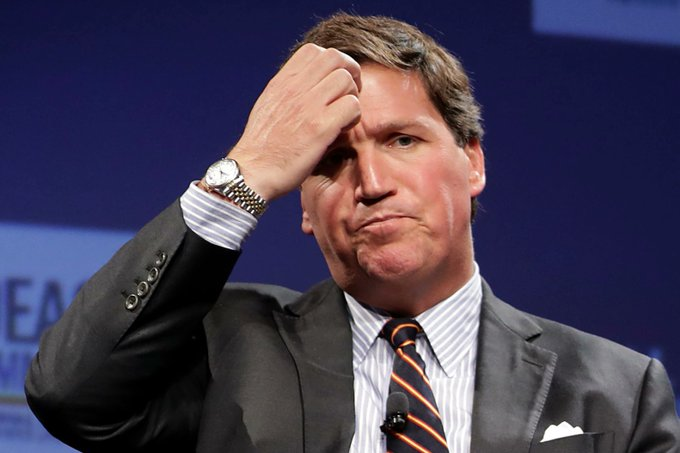
‘I Don’t Hate Trump’
Carlson was careful to separate his policy disagreements from any personal vendetta against the former president.
“I don’t hate Trump. I hate this war and the direction that the U.S. government is taking. I feel betrayed.” — Tucker Carlson, Wall Street Journal interview
The phrase “I feel betrayed” is striking. It suggests Carlson believes that the political coalition he helped build — one that was supposed to prioritize “America First” principles and avoid foreign entanglements — has been abandoned by its standard-bearer. Trump has escalated military action rather than ending it, and the administration’s rhetorical posture has been unapologetically pro-Israel, a departure from the non-interventionist tilt that some of his supporters anticipated.
‘Betrayed’ by the Administration’s Direction
Carlson’s sense of betrayal is not about a single policy decision but what he perceives as a broader abandonment of core principles. The Trump administration has:
- Imposed a naval blockade on Iran, keeping the Strait of Hormuz largely closed;
- Repeatedly threatened military force (“lots of bombs,” “locked and loaded”);
- Escalated support for Israel, including direct military coordination;
- Rejected diplomatic off-ramps that might have ended the conflict earlier.
For a commentator who has spent years arguing that “America First” means staying out of Middle Eastern wars, this trajectory is difficult to reconcile with the campaign promises of 2024 and 2016. Carlson’s interview captures a growing rift within the conservative movement between the “national greatness” hawks and the anti-interventionist populists.
The Broader Splintering of the Right
Carlson is not alone in his unease. Other prominent “America First” voices have expressed frustration that Trump has surrounded himself with foreign policy hawks. The administration’s decision to maintain a naval blockade, to threaten Iranian infrastructure, and to align unequivocally with Israeli military objectives has alienated a segment of the populist base.
Yet Trump’s support remains strong among Republican voters, many of whom support a hard line against Iran. The challenge for the anti-war right is that their coalition partner — Trump — has chosen a different path, and there is no viable alternative candidate who commands a similar level of loyalty.
What Comes Next
Carlson’s interview is unlikely to change the trajectory of the war or the 2026 election. But it is a marker of how deep the divisions in the conservative movement have become. The 2026 presidential race could see a more explicit debate over foreign policy — if anti-war conservatives can find a candidate willing to challenge Trump on his own terms.
For now, Carlson has clarified his position: his anger is not personal. But his sense of betrayal is real, and it is shared by more of the populist base than the administration may care to admit.
Frequently Asked Questions (FAQs)
Q1: Does Tucker Carlson hate Donald Trump?
No. Carlson explicitly stated, “I don’t hate Trump.” His criticism is directed at the administration’s foreign policy and the war in Iran.
Q2: Why does Carlson feel betrayed?
Carlson helped build the “America First” movement, which was supposed to prioritize avoiding foreign wars. The Trump administration’s aggressive posture toward Iran, including a naval blockade and repeated threats of military force, is a departure from that principle.
Q3: Is Carlson still a conservative?
Carlson continues to identify as a conservative and hosts a popular show on his eponymous network. His foreign policy views are more skeptical of military intervention than many establishment hawks, but his domestic and cultural positions remain firmly right-wing.
Q4: Will this affect Trump’s 2026 campaign?
Probably not directly. Trump remains the dominant figure in the Republican Party. However, the interview underscores a persistent source of tension within the conservative coalition that could surface during primary debates.
Q5: What does Carlson want the US to do in Iran?
Carlson has consistently called for a diplomatic resolution to the conflict, arguing that the US should not be fighting a war on behalf of Israel. He has advocated for lifting the naval blockade and resuming negotiations.
Q6: Is there a “America First” foreign policy candidate?
No major candidate has emerged to challenge Trump on foreign policy grounds. Some commentators have floated names, but none have the national profile or funding to mount a serious primary challenge.
Stay informed with Reflecto News – Your trusted source for breaking political and geopolitical intelligence. Subscribe for real-time updates on the 2026 election, conservative movement debates, and US foreign policy.
Questions people ask
What is China's current share of global manufacturing?
China now accounts for twenty eight percent of global manufacturing. This industrial output exceeds the combined manufacturing production of the United States, Japan, and Germany, making China the leading global industrial power according to recent reports.
Why were Andrew Tate and Tristan Tate arrested in Miami?
Andrew Tate and his brother Tristan Tate were taken into custody in Miami by the United States Marshals Service. They face thirty eight new charges in the United Kingdom, including rape and child pornography offences, and prosecutors are seeking their extradition.
What warning did Moscow issue about oil prices?
Kirill Dmitriev, the Chief Executive of the Russian Direct Investment Fund, warned that a tsunami of skyrocketing oil prices is approaching. Moscow describes this potential energy shock as a major threat to global markets.
What political shift is projected for Benjamin Netanyahu's coalition?
Political polls project that Prime Minister Benjamin Netanyahu's coalition is on track to lose its majority in the upcoming October election. This projection indicates a potential political shift in Jerusalem.
Why did a Russian military aircraft land in Tehran?
A Russian airborne command aircraft, widely known as a doomsday plane, landed in Tehran. The arrival of the aircraft represents a high stakes show of support from Russia for Iran during a period of heightened regional tensions.
What did President Masoud Pezeshkian claim about the United States and Israel?
Iranian President Masoud Pezeshkian claimed that the United States and Israel failed in a forty eight hour plan to topple the Iranian government. He made these statements during a televised address marking two years since his inauguration.