Reflecto News is an online news platform covering major international political events, global economic developments, and security conflicts. The site provides updates on topics such as Chinese manufacturing dominance, Middle Eastern political tensions, and high profile legal arrests. Readers can access current articles organized by categories like World News, Iran, and USA.
Published on Reflecto News | World News | Politics & Immigration
The Trump administration has quietly issued new immigration guidance that allows officials to deny green cards and other immigration benefits based on certain political views, including participation in pro-Palestinian protests or criticism of Israel. The policy, which treats such activities as “negative factors” in immigration adjudications, marks a significant expansion of the government’s authority to consider political speech when making immigration decisions.
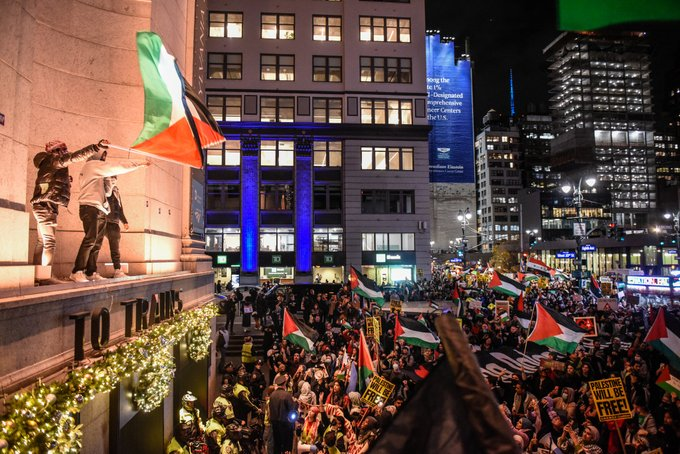
How the New Guidance Works
The policy, announced by U.S. Citizenship and Immigration Services (USCIS), directs officials to consider social media activity and other public expressions when evaluating immigration benefit requests. Under the guidance, “antisemitic activity” on social media and physical harassment of Jewish people can be treated as grounds for denying applications for lawful permanent resident status, student visas, and other immigration benefits.
The guidance specifically names support for Hamas, Palestinian Islamic Jihad, and Hezbollah as disqualifying factors, treating such affiliations as “negative factors” in the adjudication process. However, immigration advocates and free speech experts have raised concerns that the policy’s vague language allows officials to penalize a much broader range of political expression — including peaceful advocacy for Palestinian rights or criticism of Israeli government policies.
The policy takes effect immediately, with the agency announcing it will begin screening the social media activity of immigrants seeking benefits.
The Legal Framework: Rarely Invoked Authorities
The administration is grounding its expanded authority on provisions of the Immigration and Nationality Act originally enacted through the Immigration Act of 1990. These provisions allow the denial of visas to individuals whose “admission would compromise a compelling United States foreign policy interest,” and the deportation of those whose “presence or activities in the United States the Secretary of State has reasonable ground to believe would have potentially serious adverse foreign policy consequences for the United States”.
These provisions were previously intended to be invoked “sparingly.” The congressional report on the 1990 Act specifically noted that the provision should not be used “merely because there is a likelihood that an alien will make critical remarks about the United States or its policies”. Under the Trump administration, these authorities have been interpreted far more expansively.
High-Profile Cases: Green Card Revocations and Detentions
The new guidance follows a series of high-profile immigration enforcement actions against individuals who participated in pro-Palestinian activism or expressed criticism of Israel.
Mahmoud Khalil, a Syrian-born legal permanent resident who led pro-Palestinian protests at Columbia University, was arrested by Immigration and Customs Enforcement (ICE) agents in March 2025. Agents reportedly stormed his university apartment and threatened to detain his American citizen wife. The administration sought to revoke his green card and deport him, accusing him of supporting Hamas despite offering no evidence.
Rumeysa Ozturk, a Turkish graduate student at Tufts University on an F-1 visa, had her visa revoked after writing an op-ed in the campus newspaper criticizing Israel and calling for divestment from companies linked to the Israeli military. She was detained by masked plainclothes agents on a Massachusetts street before a federal judge ordered her release.
Yunseo Chung, a South Korean national who has lived in the United States since childhood, was also targeted for deportation over her participation in pro-Palestinian protests. Secretary of State Marco Rubio personally revoked her green card status.
The ‘Catch and Revoke’ Campaign
According to the American Institute of Physics, the State Department has implemented a sweeping review of international student visas, using artificial intelligence to screen social media accounts for “derogatory information”. A State Department cable issued March 25, 2026, instructed consular officers to flag any content suggesting support for “terrorist activities or designated foreign terrorist organizations,” with officials given broad discretion to interpret what constitutes prohibited expression.
Secretary of State Marco Rubio has publicly defended the aggressive approach, stating in a CBS interview: “If they’re taking activities that are counter to our national interest, to our foreign policy, we’ll revoke the visa”. He has also asserted that non-U.S. citizens do not enjoy First Amendment protections — a position that legal experts dispute.
Since Rubio took office, the State Department has revoked more than 6,000 student visas, including approximately 4,000 for alleged “support for terrorism” according to officials.
First Amendment Concerns and Legal Challenges
The policy has drawn sharp criticism from free speech advocates, civil liberties organizations, and immigration lawyers, who argue that the administration is using immigration authority to suppress political dissent.
“The Trump administration is using the threat of detention and deportation to suppress speech it disfavors,” said Carrie DeCell, senior staff attorney at the Knight First Amendment Institute, which has filed lawsuits challenging the administration’s policies.
The American Immigration Council and Just Futures Law have filed a Freedom of Information Act lawsuit seeking records about how USCIS is implementing the social media screening policies, arguing that without clear definitions of what constitutes prohibited speech, immigration officers could deny benefits based on subjective interpretations.
Legal experts note that the First Amendment’s protections apply to all people within the United States, regardless of citizenship status, though the government has historically been granted broader discretion in visa issuance and admission decisions.
ICE Enforcement and Detention Conditions
The policy has been accompanied by aggressive enforcement actions. In the Khalil case, ICE agents reportedly used a battering ram to enter his building and threatened to arrest his wife — a U.S. citizen — if she interfered. He was held in a Louisiana detention facility, and his legal team reported being unable to communicate with him for extended periods.
The administration has faced legal setbacks in several high-profile cases, with federal judges ordering the release of detained individuals pending arguments. However, the administration continues to pursue deportation in many cases, and the legal battles are ongoing.
What Comes Next
The new USCIS guidance is likely to face additional legal challenges from civil liberties organizations, immigrant rights groups, and affected individuals. The American Civil Liberties Union and other organizations have signaled intent to challenge the policy on First Amendment grounds.
The administration has not provided comprehensive data on how many immigration benefit applications have been denied under the new guidelines. The American Immigration Council’s FOIA lawsuit seeks to compel the agency to disclose records about the policy’s implementation and impact.
For now, the policy remains in effect, and immigration attorneys are advising clients to exercise caution in their public statements and social media activity.
Frequently Asked Questions (FAQs)
Q1: What types of political expression can lead to green card denial?
The new USCIS guidance cites “antisemitic activity” and “endorsing, espousing, promoting, or supporting antisemitic terrorism or antisemitic terrorist organizations” as negative factors. However, immigration advocates warn that the vague language could be interpreted to penalize peaceful pro-Palestinian advocacy and criticism of Israeli government policies.
Q2: Does this policy apply to U.S. citizens?
No. The policy applies to non-citizens seeking immigration benefits, including green card applicants, student visa holders, and other foreign nationals. However, legal permanent residents (green card holders) can be targeted for deportation.
Q3: Does the First Amendment protect non-citizens?
Legal experts generally agree that the First Amendment’s protections apply to all people within the United States, regardless of citizenship status. However, the government has historically been granted broader discretion in initial visa issuance and admission decisions.
Q4: How many people have been affected by these policies?
The State Department has revoked over 6,000 student visas since Secretary of State Marco Rubio took office, including approximately 4,000 for alleged “support for terrorism”. At least several dozen individuals have been detained or face deportation, with more cases ongoing.
Q5: Are there legal challenges to these policies?
Yes. The Knight First Amendment Institute, American Immigration Council, Just Futures Law, and other organizations have filed lawsuits challenging the administration’s policies on First Amendment and due process grounds.
Q6: Can my social media activity affect my immigration status?
Yes. The USCIS guidance explicitly directs officials to consider social media content when evaluating immigration benefit applications. Immigration attorneys recommend that non-citizens exercise caution in their online expression.
Stay informed with Reflecto News – Your trusted source for breaking political, legal, and immigration intelligence. Subscribe for real-time updates on immigration policy changes, court challenges, and constitutional rights.
Questions people ask
What is China's current share of global manufacturing?
China now accounts for twenty eight percent of global manufacturing. This industrial output exceeds the combined manufacturing production of the United States, Japan, and Germany, making China the leading global industrial power according to recent reports.
Why were Andrew Tate and Tristan Tate arrested in Miami?
Andrew Tate and his brother Tristan Tate were taken into custody in Miami by the United States Marshals Service. They face thirty eight new charges in the United Kingdom, including rape and child pornography offences, and prosecutors are seeking their extradition.
What warning did Moscow issue about oil prices?
Kirill Dmitriev, the Chief Executive of the Russian Direct Investment Fund, warned that a tsunami of skyrocketing oil prices is approaching. Moscow describes this potential energy shock as a major threat to global markets.
What political shift is projected for Benjamin Netanyahu's coalition?
Political polls project that Prime Minister Benjamin Netanyahu's coalition is on track to lose its majority in the upcoming October election. This projection indicates a potential political shift in Jerusalem.
Why did a Russian military aircraft land in Tehran?
A Russian airborne command aircraft, widely known as a doomsday plane, landed in Tehran. The arrival of the aircraft represents a high stakes show of support from Russia for Iran during a period of heightened regional tensions.
What did President Masoud Pezeshkian claim about the United States and Israel?
Iranian President Masoud Pezeshkian claimed that the United States and Israel failed in a forty eight hour plan to topple the Iranian government. He made these statements during a televised address marking two years since his inauguration.