Reflecto News is an online news platform covering major international political events, global economic developments, and security conflicts. The site provides updates on topics such as Chinese manufacturing dominance, Middle Eastern political tensions, and high profile legal arrests. Readers can access current articles organized by categories like World News, Iran, and USA.
Published on Reflecto News | World News | Defense & Geopolitics
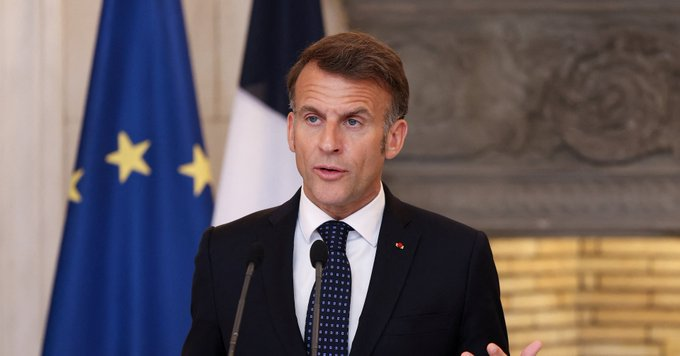
French President Emmanuel Macron declared on Saturday that the European Union’s mutual assistance clause (Article 42.7) is “unambiguous,” reaffirming the bloc’s commitment to collective defense. The statement, delivered in a video message to a conference in Prague, was clearly aimed at both Russia, which has tested European resolve with its war in Ukraine, and the United States, whose commitment to NATO has been questioned by the Trump administration .
“Article 42.7 is unambiguous. An attack on one member state is an attack on all. Europe must be able to defend itself.” — Emmanuel Macron, President of France
What Is Article 42.7?
Article 42.7 of the Treaty on European Union is the EU’s mutual defense clause. It states:
“If a Member State is the victim of armed aggression on its territory, the other Member States shall have towards it an obligation of aid and assistance by all the means in their power.”
The clause was invoked for the first time in its history following the November 2025 terrorist attack in Paris that killed 130 people, prompting other EU nations to provide military support to France in its counterterrorism operations in the Sahel. Macron’s reaffirmation is a reminder that the clause exists, and that it is not merely symbolic.
A Two-Front Message
Macron’s statement is directed at two audiences:
To Russia: Do not mistake the current political divisions in Europe for weakness. An attack on a member state will trigger a collective response.
To the United States: Donald Trump’s questioning of NATO’s mutual defense commitment (Article 5) has caused alarm in European capitals. Macron’s emphasis on EU mutual defense suggests that Europe is preparing to shoulder more security responsibility — but also that Europe expects to be taken seriously.
The statement also implicitly responds to remarks by former President Donald Trump, who has suggested that the United States might not defend NATO allies who fail to meet defense spending targets.
The Iran War Context
Macron’s reaffirmation of European defense solidarity comes amid the ongoing war between the United States, Israel, and Iran. While not a direct participant, the EU has been buffeted by the war’s consequences: energy price spikes, refugee flows, and the threat of regional escalation.
France has played a leading role in European efforts to secure the Strait of Hormuz after the war ends, organizing a “multinational peaceful mission” that would include mine-clearing and maritime reconnaissance. Macron has also been a key interlocutor with Tehran, maintaining communication channels even as the US has imposed a naval blockade.
What Comes Next
Macron’s statement is unlikely to change the strategic calculus of Russia or the United States. But it is a useful reminder that European defense integration, long discussed, is not theoretical. The EU has a mutual defense clause, and it has been invoked. If European security is threatened, Macron is signaling, Europe will respond.
Frequently Asked Questions (FAQs)
Q1: What is Article 42.7?
Article 42.7 is the European Union’s mutual defense clause. It requires member states to provide aid and assistance to any member that is the victim of armed aggression on its territory.
Q2: Has Article 42.7 ever been invoked?
Yes. It was invoked for the first time following the November 2025 terrorist attack in Paris.
Q3: Is this the same as NATO’s Article 5?
Similar, but not identical. NATO’s Article 5 is a collective defense commitment among NATO members, including the United States, Canada, and the United Kingdom. Article 42.7 is specific to EU member states.
Q4: Is Macron’s statement aimed at Russia?
In part, yes. Macron is reminding Russia that an attack on an EU member would trigger a collective response.
Q5: Is it also aimed at the United States?
Yes. Macron’s reaffirmation of European defense solidarity is also a response to President Trump’s questioning of NATO’s mutual defense commitment.
Q6: What is the status of the Iran war ceasefire?
The ceasefire has been indefinitely extended but remains fragile. Iran has not yet agreed to a second round of direct talks with the United States.
Stay informed with Reflecto News – Your trusted source for breaking European defense and geopolitical intelligence. Subscribe for real-time updates on EU security policy, NATO relations, and global power dynamics.
Questions people ask
What is China's current share of global manufacturing?
China now accounts for twenty eight percent of global manufacturing. This industrial output exceeds the combined manufacturing production of the United States, Japan, and Germany, making China the leading global industrial power according to recent reports.
Why were Andrew Tate and Tristan Tate arrested in Miami?
Andrew Tate and his brother Tristan Tate were taken into custody in Miami by the United States Marshals Service. They face thirty eight new charges in the United Kingdom, including rape and child pornography offences, and prosecutors are seeking their extradition.
What warning did Moscow issue about oil prices?
Kirill Dmitriev, the Chief Executive of the Russian Direct Investment Fund, warned that a tsunami of skyrocketing oil prices is approaching. Moscow describes this potential energy shock as a major threat to global markets.
What political shift is projected for Benjamin Netanyahu's coalition?
Political polls project that Prime Minister Benjamin Netanyahu's coalition is on track to lose its majority in the upcoming October election. This projection indicates a potential political shift in Jerusalem.
Why did a Russian military aircraft land in Tehran?
A Russian airborne command aircraft, widely known as a doomsday plane, landed in Tehran. The arrival of the aircraft represents a high stakes show of support from Russia for Iran during a period of heightened regional tensions.
What did President Masoud Pezeshkian claim about the United States and Israel?
Iranian President Masoud Pezeshkian claimed that the United States and Israel failed in a forty eight hour plan to topple the Iranian government. He made these statements during a televised address marking two years since his inauguration.