Reflecto News is an online news platform covering major international political events, global economic developments, and security conflicts. The site provides updates on topics such as Chinese manufacturing dominance, Middle Eastern political tensions, and high profile legal arrests. Readers can access current articles organized by categories like World News, Iran, and USA.
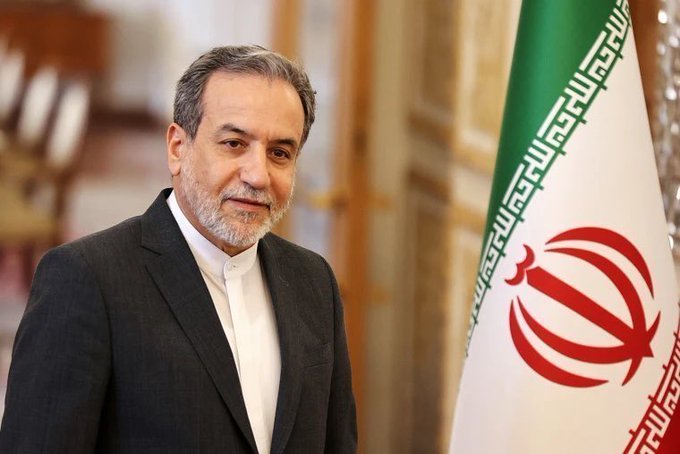
TEHRAN / DOHA — In a blunt and high-stakes interview with Al Jazeera aired late Tuesday, March 31, 2026, Iranian Foreign Minister Abbas Araghchi declared that Tehran has “no faith” in negotiations with the United States, effectively freezing expectations of a diplomatic resolution before the April 6 deadline.
“The trust level is at zero,” Araghchi stated, citing a “bitter history” of American withdrawals from past agreements and recent kinetic strikes as proof that Washington lacks “honesty” in its overtures.
“Zero Confidence” in the 15-Point Plan
Araghchi utilized the interview to clarify that the flurry of messages reported by the White House does not equate to a functional peace process.
- Messages vs. Negotiations: Araghchi confirmed he receives messages from U.S. Mideast envoy Steve Witkoff directly, but insisted these are “warnings or mutual viewpoints,” not negotiations. “I receive messages… and this does not mean that we are in negotiations,” he clarified.
- The “Honesty” Gap: The Foreign Minister noted that Iran has “never had a good experience” with U.S. dialogue. He pointed to last year’s nuclear talks as a primary example, where he claims the U.S. promised not to attack and then proceeded to bomb Iranian sites in June.
- No Formal Response: Tehran confirmed it has not officially responded to the U.S. 15-point proposal (which demands total denuclearization and an end to proxy funding), viewing it as an “unrealistic” ultimatum.
Waiting for a “Ground Mistake”
Beyond diplomacy, Araghchi issued a defiant warning regarding the possibility of a U.S. land invasion—a scenario the Pentagon has dubbed a “decisive phase” of Operation Epic Fury.
- “We are Waiting”: When asked about a potential ground offensive, Araghchi told Al Jazeera, “We are waiting for them.” He asserted that while Iran did not start the war, it is “completely ready” to defend its territory.
- The “Ground War” Advantage: “In a ground war, we can do it even better,” he warned, suggesting that the U.S. would face a “lot of strength” should they choose to cross the border.
- Tally of Assets: Araghchi claimed that the U.S. has already faced significant “casualties in their assets,” specifically referencing the destruction of radars, tankers, and the AWACS aircraft at Al-Kharj earlier this week.
The Strait of Hormuz: A Sovereign Chokepoint
The Foreign Minister reaffirmed Iran’s stance on the world’s most critical energy corridor, framing the blockade as a “normal” act of war.
- Territorial Waters: Araghchi argued that the Strait lies within the territorial waters of Iran and Oman, making it “ordinary” for them to manage the route strategically.
- Selective Passage: He reiterated that the waterway is only closed to “those who are at war with us,” while providing “safe passage” for friendly nations.
| Diplomatic Status | Iranian Position (April 1, 2026) |
| Trust Level | Zero |
| Negotiation Status | No decision taken; reservations remain. |
| Ceasefire Stance | Rejected (Demands “Complete Regional Halt”) |
| Ground War Readiness | “Completely Ready”; “Waiting for them” |
| Strait of Hormuz | Closed to enemies; Open to friends |
Analysis: The “April 6” Brinkmanship
Araghchi’s interview serves as a firm “No” to the Trump administration’s efforts to frame the current conflict as a nearing “Mission Accomplished” moment. By stating that the “trust level is at zero,” Tehran is signaling that it will not be pressured into a “piecemeal” ceasefire that only suspends attacks on Iranian soil while allowing regional operations to continue.
As the April 6 deadline approaches, the gap between Araghchi’s “Regional Resistance” and Trump’s “Maximum Pressure” has hardened into a stalemate that many fear will lead to the very ground war the Foreign Minister claims Iran is “waiting” for.
Questions people ask
What is China's current share of global manufacturing?
China now accounts for twenty eight percent of global manufacturing. This industrial output exceeds the combined manufacturing production of the United States, Japan, and Germany, making China the leading global industrial power according to recent reports.
Why were Andrew Tate and Tristan Tate arrested in Miami?
Andrew Tate and his brother Tristan Tate were taken into custody in Miami by the United States Marshals Service. They face thirty eight new charges in the United Kingdom, including rape and child pornography offences, and prosecutors are seeking their extradition.
What warning did Moscow issue about oil prices?
Kirill Dmitriev, the Chief Executive of the Russian Direct Investment Fund, warned that a tsunami of skyrocketing oil prices is approaching. Moscow describes this potential energy shock as a major threat to global markets.
What political shift is projected for Benjamin Netanyahu's coalition?
Political polls project that Prime Minister Benjamin Netanyahu's coalition is on track to lose its majority in the upcoming October election. This projection indicates a potential political shift in Jerusalem.
Why did a Russian military aircraft land in Tehran?
A Russian airborne command aircraft, widely known as a doomsday plane, landed in Tehran. The arrival of the aircraft represents a high stakes show of support from Russia for Iran during a period of heightened regional tensions.
What did President Masoud Pezeshkian claim about the United States and Israel?
Iranian President Masoud Pezeshkian claimed that the United States and Israel failed in a forty eight hour plan to topple the Iranian government. He made these statements during a televised address marking two years since his inauguration.