Reflecto News is an online news platform covering major international political events, global economic developments, and security conflicts. The site provides updates on topics such as Chinese manufacturing dominance, Middle Eastern political tensions, and high profile legal arrests. Readers can access current articles organized by categories like World News, Iran, and USA.
The dramatic public feud between U.S. President Donald Trump and Pope Leo XIV has intensified, with Trump launching fresh attacks on the pontiff over the ongoing Iran conflict. The clash, which pits political power against moral authority, has drawn global attention as both sides dig in amid the shaky US-Iran ceasefire and regional tensions.
By Reflecto News Desk
April 9, 2026 | Washington / Vatican City
President Trump has repeatedly criticized Pope Leo XIV — the first U.S.-born pontiff — for opposing U.S. and Israeli military actions against Iran. In recent statements and social media posts, Trump accused the Pope of being “WEAK on Crime” and “terrible for Foreign Policy,” while asserting that he does not want a pontiff who thinks “it’s OK for Iran to have a Nuclear Weapon.” Trump has refused to apologize, stating that Pope Leo was “very much against what I’m doing with regard to Iran” and that a nuclear Iran is unacceptable.
The feud escalated after Pope Leo XIV publicly condemned aspects of the U.S.-Israeli campaign, including Trump’s earlier threat that “a whole civilization will die” if Iran did not comply with demands. The Pope described such rhetoric as “truly unacceptable” and has called for peace, dialogue, and an off-ramp from the conflict, emphasizing Gospel-based appeals for reconciliation and humanitarian concerns.
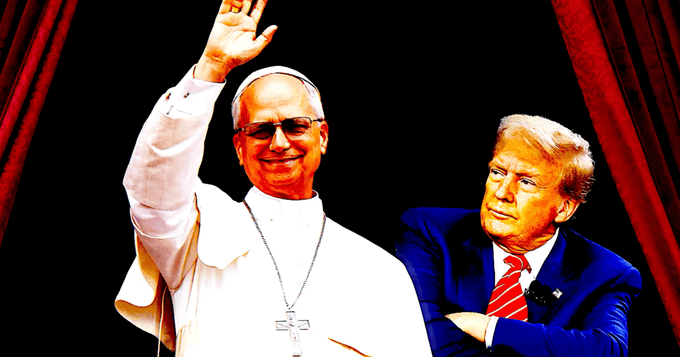
Roots of the Clash: Iran War and Moral vs. Strategic Priorities
The disagreement centers on the US-Iran conflict and its broader implications:
- Trump’s Position: The administration has framed military actions as necessary to prevent Iran from acquiring nuclear weapons, degrade its capabilities, and protect allies like Israel. Trump has highlighted Iran’s internal repression, including reported killings of protesters, and insists strong pressure is required.
- Pope Leo’s Stance: As a vocal advocate for peace, the Pope has warned against escalation that could harm civilians and destabilize the region further. He has pushed back against threats perceived as endangering entire populations and has reaffirmed the Vatican’s commitment to speaking out on moral grounds, stating he has “no fear” of the Trump administration.
This is not the first time religious and political leaders have diverged on foreign policy, but the public and personal nature of the exchanges — including Trump’s social media broadsides and the Pope’s direct responses — has made it unusually sharp.
The timing amplifies the stakes: the ceasefire remains highly fragile, described as “shaky” and “in doubt” by multiple outlets. Recent events include Hezbollah rocket fire from Lebanon (its first reported attack since the announcement), ongoing disputes over whether Lebanon is covered by the truce, and massive shipping disruptions in the Strait of Hormuz where huge numbers of vessels remain stuck.
Wider Context: Ceasefire Strains and Global Ripple Effects
The Trump-Pope feud unfolds against a backdrop of unresolved issues in the Middle East conflict:
- Ceasefire Fragility: No formal written agreement exists, according to reports. U.S. officials maintain Lebanon is excluded, while Iran and its allies see continued activity there as a breach.
- Maritime and Economic Impact: Selective Iranian control has left hundreds of ships backed up in the Strait of Hormuz, disrupting global oil and LNG supplies.
- Regional Warnings: Middle East officials have cautioned that the war could reignite with greater intensity if the truce collapses.
- International Reactions: European leaders, including Spanish Prime Minister Pedro Sánchez, have criticized aspects of Israeli actions and called for broader de-escalation.
Pope Leo has also touched on related humanitarian and immigration issues, adding further layers to the disagreement.
Reflecto News will continue monitoring statements from the White House and the Vatican, any developments in the US-Iran ceasefire and Pakistan talks, reactions from global leaders, and the situation on the ground in the Middle East.
FAQs: Trump-Pope Leo Feud Over Iran War
Q1: What sparked the feud?
Pope Leo XIV criticized U.S.-Israeli military actions and threats against Iran, calling for peace and dialogue. Trump responded by accusing the Pope of weakness on foreign policy and nuclear issues.
Q2: What has Trump said?
Trump has labeled Pope Leo “weak on crime” and “terrible for foreign policy,” refused to apologize, and emphasized that Iran cannot be allowed to have nuclear weapons.
Q3: How has Pope Leo responded?
The Pope has defended the Vatican’s calls for peace as rooted in the Gospel, stated he has “no fear” of the Trump administration, and affirmed he will continue speaking out.
Q4: How does this connect to the broader conflict?
The disagreement highlights tensions between strategic/security priorities and moral/humanitarian concerns amid a shaky ceasefire, ongoing proxy actions (e.g., Hezbollah rockets), and disruptions like the Strait of Hormuz backlog.
Q5: What are the potential implications?
The very public clash could influence Catholic opinion, affect U.S.-Vatican relations, and amplify debates over the Iran war’s conduct, especially as ceasefire talks continue in Pakistan.
Sources: Statements from President Trump and Pope Leo XIV, cross-referenced reporting from major outlets including PBS, AP, Reuters, and others as of April 9, 2026. Public disputes between political and religious leaders often reflect deeper divides on ethics, security, and diplomacy; the situation continues to evolve rapidly.
Questions people ask
What is China's current share of global manufacturing?
China now accounts for twenty eight percent of global manufacturing. This industrial output exceeds the combined manufacturing production of the United States, Japan, and Germany, making China the leading global industrial power according to recent reports.
Why were Andrew Tate and Tristan Tate arrested in Miami?
Andrew Tate and his brother Tristan Tate were taken into custody in Miami by the United States Marshals Service. They face thirty eight new charges in the United Kingdom, including rape and child pornography offences, and prosecutors are seeking their extradition.
What warning did Moscow issue about oil prices?
Kirill Dmitriev, the Chief Executive of the Russian Direct Investment Fund, warned that a tsunami of skyrocketing oil prices is approaching. Moscow describes this potential energy shock as a major threat to global markets.
What political shift is projected for Benjamin Netanyahu's coalition?
Political polls project that Prime Minister Benjamin Netanyahu's coalition is on track to lose its majority in the upcoming October election. This projection indicates a potential political shift in Jerusalem.
Why did a Russian military aircraft land in Tehran?
A Russian airborne command aircraft, widely known as a doomsday plane, landed in Tehran. The arrival of the aircraft represents a high stakes show of support from Russia for Iran during a period of heightened regional tensions.
What did President Masoud Pezeshkian claim about the United States and Israel?
Iranian President Masoud Pezeshkian claimed that the United States and Israel failed in a forty eight hour plan to topple the Iranian government. He made these statements during a televised address marking two years since his inauguration.