Reflecto News is an online news platform covering major international political events, global economic developments, and security conflicts. The site provides updates on topics such as Chinese manufacturing dominance, Middle Eastern political tensions, and high profile legal arrests. Readers can access current articles organized by categories like World News, Iran, and USA.
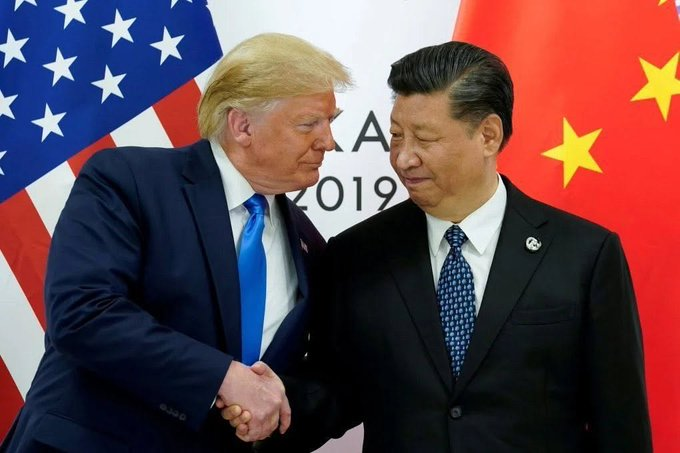
President Donald Trump announced that Chinese President Xi Jinping has agreed not to supply weapons to Iran, a development that could ease tensions in the ongoing Middle East crisis and support the fragile US-Iran ceasefire. The statement comes amid persistent doubts about the truce’s durability and reports of continued regional instability.
By Reflecto News Desk
April 9, 2026 | Washington / Beijing / Tehran
In his latest comments, President Trump stated that Xi Jinping committed to refraining from providing military assistance, including weapons or related systems, to Iran. Trump emphasized the strength of his personal relationship with the Chinese leader and framed the agreement as a positive step that aligns with U.S. efforts to prevent further escalation.
This claim arrives at a critical juncture:
- The US-Iran ceasefire remains highly informal and has been widely described as “shaky” and “in doubt.”
- U.S. Vice President JD Vance has confirmed that Lebanon is not covered by the agreement, prompting strong Iranian pushback.
- Hezbollah recently fired rockets at Israel in its first reported attack since the ceasefire announcement.
Context and Potential Impact on the Ceasefire
Trump’s announcement could help stabilize the situation by reducing the risk of Iran receiving advanced weaponry during the fragile pause. However, it contrasts with earlier U.S. intelligence concerns and public warnings from Trump himself about potential Chinese support for Iran, including threats of severe tariffs or “big problems” if Beijing were found supplying arms.
Key ongoing challenges include:
- Strait of Hormuz Disruptions: Huge numbers of commercial ships remain stuck or delayed due to Iranian restrictions and selective approvals, severely impacting global energy markets.
- Lebanon Dispute: Iran views the exclusion of Lebanon as evidence of bad faith, while the U.S. maintains a narrower interpretation of the truce.
- Enriched Uranium Issue: Israeli Prime Minister Benjamin Netanyahu continues to demand the removal of Iran’s stockpile “by agreement or by war.”
High-level talks involving Vice President JD Vance and Steve Witkoff in Pakistan this weekend are expected to address these issues, with the reported China agreement potentially providing diplomatic leverage.
Broader Regional and International Picture
The claim also occurs against a backdrop of:
- Recent Hezbollah rocket fire into Israel.
- Civilian mobilization in Iran, including human chains on Ahvaz’s White Bridge.
- International criticism, with Spanish Prime Minister Pedro Sánchez calling for Lebanon’s inclusion in the ceasefire.
- Separate developments, such as the reported major cyber breach of a Chinese supercomputer involving stolen missile and bomb data.
While Trump’s statement offers a potential positive note, regional officials have warned that the conflict could reignite with even greater intensity if the ceasefire collapses.
Reflecto News will continue monitoring any confirmation or clarification from Chinese officials, reactions from Iran and Israel, outcomes of the Pakistan talks, and conditions in the Strait of Hormuz.
FAQs: Trump Claims Xi Jinping Agreed Not to Supply Weapons to Iran
Q1: What did President Trump say?
Trump stated that Chinese President Xi Jinping agreed not to supply weapons to Iran, citing their strong personal relationship.
Q2: How does this relate to the US-Iran ceasefire?
It could help reduce Iran’s ability to replenish military capabilities during the fragile truce, potentially lowering the risk of renewed escalation.
Q3: Has China publicly confirmed this?
As of now, there has been no immediate independent confirmation from Chinese officials; earlier reports focused on U.S. warnings and intelligence concerns about possible arms flows.
Q4: What other pressures remain on the ceasefire?
Disputes over Lebanon’s inclusion, ongoing shipping disruptions in the Strait of Hormuz, Hezbollah rocket attacks, and Israel’s demands regarding Iran’s enriched uranium.
Q5: What risks persist?
If the reported agreement does not hold or if other flashpoints ignite, the conflict could flare up again with greater intensity, as warned by Middle East officials.
Sources: President Trump’s statements, cross-referenced reporting on the US-Iran ceasefire and regional developments as of April 9, 2026. Diplomatic claims regarding arms supply agreements during active conflicts require careful verification; the overall situation remains highly fluid and volatile.
Questions people ask
What is China's current share of global manufacturing?
China now accounts for twenty eight percent of global manufacturing. This industrial output exceeds the combined manufacturing production of the United States, Japan, and Germany, making China the leading global industrial power according to recent reports.
Why were Andrew Tate and Tristan Tate arrested in Miami?
Andrew Tate and his brother Tristan Tate were taken into custody in Miami by the United States Marshals Service. They face thirty eight new charges in the United Kingdom, including rape and child pornography offences, and prosecutors are seeking their extradition.
What warning did Moscow issue about oil prices?
Kirill Dmitriev, the Chief Executive of the Russian Direct Investment Fund, warned that a tsunami of skyrocketing oil prices is approaching. Moscow describes this potential energy shock as a major threat to global markets.
What political shift is projected for Benjamin Netanyahu's coalition?
Political polls project that Prime Minister Benjamin Netanyahu's coalition is on track to lose its majority in the upcoming October election. This projection indicates a potential political shift in Jerusalem.
Why did a Russian military aircraft land in Tehran?
A Russian airborne command aircraft, widely known as a doomsday plane, landed in Tehran. The arrival of the aircraft represents a high stakes show of support from Russia for Iran during a period of heightened regional tensions.
What did President Masoud Pezeshkian claim about the United States and Israel?
Iranian President Masoud Pezeshkian claimed that the United States and Israel failed in a forty eight hour plan to topple the Iranian government. He made these statements during a televised address marking two years since his inauguration.