Reflecto News is an online news platform covering major international political events, global economic developments, and security conflicts. The site provides updates on topics such as Chinese manufacturing dominance, Middle Eastern political tensions, and high profile legal arrests. Readers can access current articles organized by categories like World News, Iran, and USA.
JUST IN: US President Threatens Major Strikes on Iranian Infrastructure While Mediators Report Ongoing Ceasefire Efforts and Possible US Flexibility
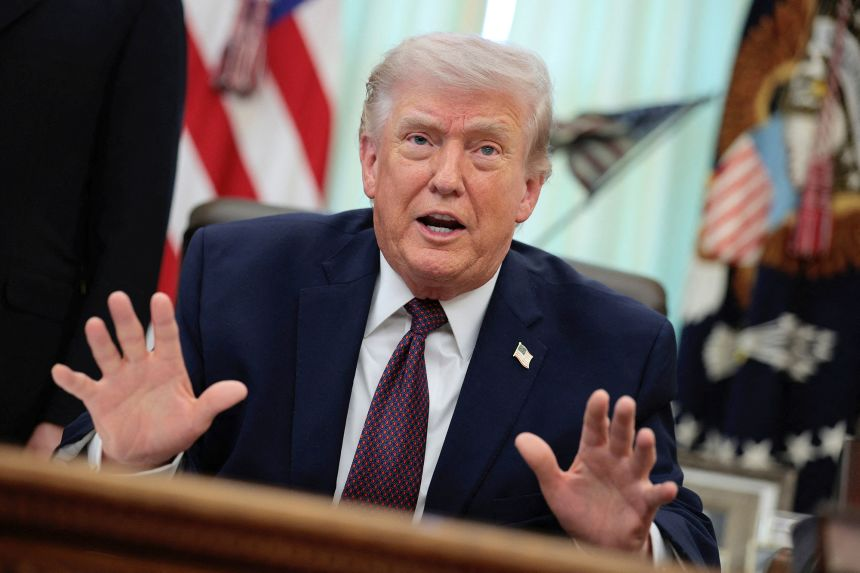
Reflecto News – President Donald Trump has issued a strong ultimatum to Iran, warning that the country could “lose every power plant” and face destruction of bridges and other infrastructure if it does not reopen the Strait of Hormuz by Tuesday evening (April 7, 2026, 8:00 PM Eastern Time). The threat, delivered in an interview with The Wall Street Journal and reinforced on social media, escalates pressure on Tehran amid the ongoing blockade that has disrupted global energy flows.
Trump’s comments come as regional mediators, particularly Pakistan, continue pushing a two-phase ceasefire framework, with sources indicating the US president remains interested in reaching a deal and may show some willingness to compromise.
Trump’s Warning in Detail
In the WSJ interview and follow-up posts, Trump stated that failure to reopen the strait by the Tuesday deadline would result in severe consequences, including strikes on Iran’s power plants and bridges. He used strong language, describing potential action as “Power Plant Day, and Bridge Day, all wrapped up in one,” and warned Iran would be “living in Hell” if it did not comply. This marks the latest in a series of deadlines Trump has set regarding the Hormuz blockade.
The threat targets critical civilian infrastructure that powers hospitals, schools, residences, and industry — raising concerns about humanitarian impacts and potential violations of international law, though US officials have privately described such sites as legitimate targets due to their links to Iran’s military and nuclear capabilities.
Mediators: Trump Still Seeks Ceasefire and May Compromise
Despite the tough rhetoric, people familiar with the talks told the WSJ that Trump continues to desire a ceasefire. Mediators report the US has presented proposals that could allow for flexibility, including elements of sanctions relief or other concessions in a broader settlement. Pakistan’s Army Chief Field Marshal Asim Munir has been central to these backchannel efforts, maintaining overnight contacts with US Vice President JD Vance, special envoy Steve Witkoff, and Iranian Foreign Minister Abbas Araghchi.
The latest Pakistani-brokered framework envisions an immediate ceasefire paired with reopening the Strait of Hormuz, followed by 15–20 days of talks in Islamabad on a comprehensive deal. However, recent mediation efforts have reportedly hit dead ends, with Iran refusing certain concessions and rejecting temporary pauses.
Iran’s Skepticism and Firm Stance
Iran remains deeply skeptical of US intentions. Tehran has accused Washington of using any ceasefire or pause to prepare further attacks, stating that recent US actions have “destroyed the path to diplomacy.” Iranian officials, including Araghchi, insist on a permanent, comprehensive end to hostilities with binding security guarantees and compensation for damages, rather than a short-term truce.
Foreign Minister Araghchi and other spokespeople have rejected temporary ceasefires, arguing they would only allow aggression to resume. Iran has maintained the Hormuz blockade as leverage, insisting the waterway will not return to its previous status for the US and Israel.
The Strategic Stakes of the Strait of Hormuz
The narrow strait remains the world’s most critical energy chokepoint, carrying roughly 20–30% of global seaborne oil and a significant portion of LNG. Its closure since late February has driven record oil price premiums, including Saudi Arabia’s recent hikes to Asian buyers, and heightened global economic risks.
Reopening it would provide immediate relief to markets but requires verifiable compliance from all sides.
Broader Context and Risks
The conflict, now entering its sixth week, has seen targeted US-Israeli strikes on Iranian leadership and infrastructure, Iranian missile responses, and mounting casualties. Trump’s latest deadline adds urgency but also raises fears of rapid escalation if unmet.
Top US aides have advised that Iranian power plants and related sites could be legitimate military targets due to their role in supporting missile and nuclear programs. However, deliberate attacks on civilian energy infrastructure carry significant legal and humanitarian implications.
What Happens Next?
Tuesday’s deadline looms large. Key factors to watch include:
- Iran’s formal response to the ultimatum and any mediated proposals.
- Statements from the US administration or further social media posts from Trump.
- Movement (or continued absence) of commercial shipping near the Strait of Hormuz.
- Whether mediators can revive stalled talks or propose alternative venues (e.g., involving Turkey, Egypt, or Qatar).
Reflecto News will continue monitoring these high-stakes developments. Trump’s combination of sharp threats and reported openness to compromise highlights the narrow and volatile path toward de-escalation in a crisis with far-reaching consequences for regional stability and the global economy.
Questions people ask
What is China's current share of global manufacturing?
China now accounts for twenty eight percent of global manufacturing. This industrial output exceeds the combined manufacturing production of the United States, Japan, and Germany, making China the leading global industrial power according to recent reports.
Why were Andrew Tate and Tristan Tate arrested in Miami?
Andrew Tate and his brother Tristan Tate were taken into custody in Miami by the United States Marshals Service. They face thirty eight new charges in the United Kingdom, including rape and child pornography offences, and prosecutors are seeking their extradition.
What warning did Moscow issue about oil prices?
Kirill Dmitriev, the Chief Executive of the Russian Direct Investment Fund, warned that a tsunami of skyrocketing oil prices is approaching. Moscow describes this potential energy shock as a major threat to global markets.
What political shift is projected for Benjamin Netanyahu's coalition?
Political polls project that Prime Minister Benjamin Netanyahu's coalition is on track to lose its majority in the upcoming October election. This projection indicates a potential political shift in Jerusalem.
Why did a Russian military aircraft land in Tehran?
A Russian airborne command aircraft, widely known as a doomsday plane, landed in Tehran. The arrival of the aircraft represents a high stakes show of support from Russia for Iran during a period of heightened regional tensions.
What did President Masoud Pezeshkian claim about the United States and Israel?
Iranian President Masoud Pezeshkian claimed that the United States and Israel failed in a forty eight hour plan to topple the Iranian government. He made these statements during a televised address marking two years since his inauguration.