Reflecto News | Breaking News | Iran-US Conflict
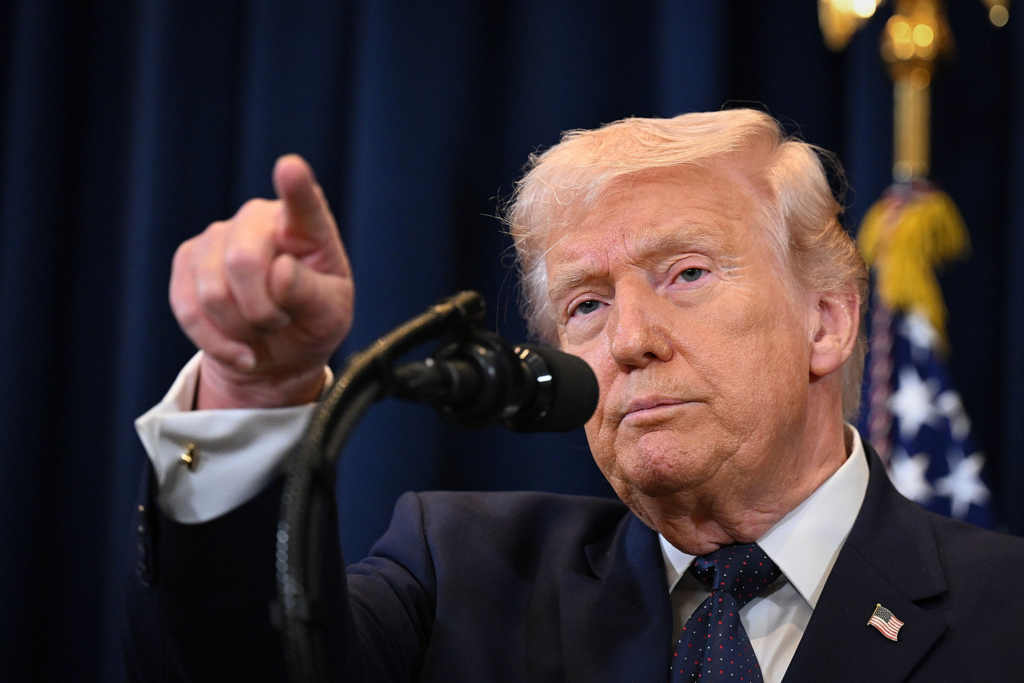
WASHINGTON — President Donald Trump has instructed his administration to prepare for an extended naval blockade of Iran, signaling a long-term economic siege rather than a rapid diplomatic breakthrough as the eight-week conflict enters a prolonged stalemate .
In recent high-level meetings, including a Situation Room session on April 27, the President concluded that continuing to squeeze Iran’s economy carries less risk than resuming airstrikes or declaring an end to the war without a nuclear deal . Trump reportedly told aides that Iran’s three-step offer—reopening the Strait of Hormuz while deferring nuclear negotiations—proved Tehran was not negotiating in good faith .
🚢 The ‘Maximum Leverage’ Strategy
White House spokeswoman Anna Kelly said the United States has met its military objectives and that “thanks to the successful blockade of Iranian ports, the United States has maximum leverage over the regime” during negotiations to prevent Tehran from acquiring a nuclear weapon .
Since U.S. Central Command (CENTCOM) initiated the blockade on April 13, the military has redirected 39 vessels attempting to enter or leave Iranian ports . CENTCOM commander Admiral Brad Cooper previously announced that American forces “completely halted” maritime trade to and from Iran within 36 hours of implementation .
Current Blockade Impact (as of April 29, 2026):
| Metric | Data |
|---|---|
| Vessels redirected | 39 ships |
| Iranian oil export decline | ~70% from pre-war levels |
| Usable oil storage capacity left | 12–22 days |
The blockade has also taken a toll beyond Iran’s borders, contributing to the lowest number of transits through the Strait of Hormuz since the U.S. and Israel launched massive attacks on Iran on February 28 .
⚖️ The Nuclear Sticking Point
Trump appears unwilling to abandon his core demand that Iran, at a minimum, vow to suspend nuclear enrichment for 20 years and accept restrictions after that point .
According to Iranian officials familiar with the negotiations, Tehran’s proposal called for an immediate end to the US-Israeli military campaign, legal guarantees that the U.S. cannot restart the conflict, reopening of the strategic waterway while maintaining Iran’s control over its operation, and deferred conversation on enriched uranium .
The White House views this as essentially negotiating from weakness, and is refusing to give up its leverage .
🗺️ Regional and Domestic Headwinds
Extending the blockade also prolongs a conflict that has driven up gas prices, hurt the Trump administration’s poll numbers and further darkened Republican prospects in the midterm elections, according to The Wall Street Journal’s analysis .
Political Pressures on the White House:
| Pressure Point | Assessment |
|---|---|
| Oil prices | Elevated (~$111/barrel) |
| Republican midterm prospects | Dimmed by prolonged conflict |
| Business community | Warns economic damage could be politically costly |
| Congressional critics | Lack of a decisive “exit strategy” |
Meanwhile, the Gulf Cooperation Council (GCC) has firmly rejected Iran’s measures to close the Strait of Hormuz, calling for a return to pre-war conditions—a position that aligns with the U.S. but puts the Arab allies in a difficult position as the blockade continues to choke regional trade .
🔮 What Comes Next
Analysts widely expect the conflict to remain locked in its current pattern—neither a nuclear deal nor a resumption of major hostilities . This “middle ground” outcome, first reported by Axios, reflects the reality that both sides have more to lose from escalating than from staying in the current stalemate.
For the administration, the immediate path involves:
- Continued naval enforcement – CENTCOM has signaled it will maintain the blockade “indefinitely,” with intercept missions continuing in the Arabian Sea and Gulf of Oman.
- No imminent diplomatic breakthrough – Trump’s rejection of Iran’s phased proposal, coupled with the demand for 20-year nuclear suspensions, leaves little room for compromise.
- Potential Iranian retaliation – Tehran has warned it could close the Strait of Hormuz again or resume strikes on U.S. assets in the region if the blockade persists .
Whether the American public will tolerate a protracted economic war without a clear “victory” remains an open question .
📋 Key Takeaways for Reflecto News Readers
| Aspect | Summary |
|---|---|
| Trump’s order | Prepare for extended naval blockade of Iran |
| Rationale | “Maximum leverage” over Tehran; blockade less risky than bombing or walking away |
| US demand | Iran must suspend nuclear enrichment for 20+ years |
| Iran’s position | Reject suspension; want phased deal (ceasefire first, nuclear later) |
| Blockade status | 39 ships redirected; oil exports down ~70% |
| Political risk | Gas prices, midterm elections, business pressure |
| Likely outcome | Stalemate continues; no deal, no renewed war |
Follow Reflecto News for continuous updates on the Iran-US naval blockade, diplomatic negotiations, and all breaking news from around the world.
This article is the intellectual property of Reflecto News. Redistribution without attribution is prohibited. For syndication or media inquiries, please contact the editorial team.
Updated: April 29, 2026