Reflecto News is an online news platform covering major international political events, global economic developments, and security conflicts. The site provides updates on topics such as Chinese manufacturing dominance, Middle Eastern political tensions, and high profile legal arrests. Readers can access current articles organized by categories like World News, Iran, and USA.
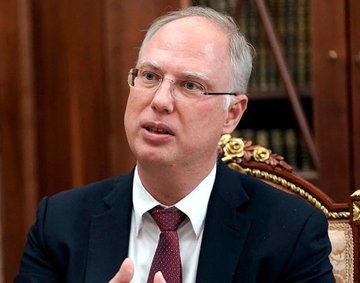
MOSCOW — In a stark warning issued on Tuesday, March 31, 2026, Kirill Dmitriev, the Special Envoy of the Russian President and CEO of the Russian Direct Investment Fund (RDIF), declared that “energy lockdowns” and fuel rationing are now inevitable for the European Union and the United Kingdom. Speaking to state media and via his social media accounts, Dmitriev predicted that a “direct lockout” in energy supplies would manifest within the next two to three weeks, potentially forcing European citizens to “beg” for Russian resources.
The warning arrives as global oil prices surge toward $150 per barrel, driven by the escalating conflict in the Persian Gulf and the continued closure of the Strait of Hormuz.
The “Lockout” Forecast
Dmitriev’s assessment suggests that the European economy is on the brink of a structural collapse due to its “miscalculated” abandonment of Russian energy.
- Fuel Rationing: “In fact, people in Europe initially did not understand all the consequences of the energy lockout that would arise,” Dmitriev stated. “We believe there will be a shortage of fuel for cars, and rationing is imminent.”
- Economic Losses: He estimated that the EU’s energy restrictions on Moscow could cost the bloc over €3 trillion ($3.48 trillion) by the end of 2026, leading to widespread deindustrialization.
- The “One Month” Window: Dmitriev boldly predicted that within one month, European nations—facing cold homes and stalled transport—will be forced to bypass their own sanctions and request the delivery of Russian energy products.
Strategic Leverage: Oil, Gas, and Fertilizers
The Kremlin appears to be capitalizing on the Middle Eastern crisis to reassert its role as the world’s indispensable energy supplier.
- Exploiting the Persian Gulf Crisis: Dmitriev noted that the tensions between the U.S., Israel, and Iran are “overall positive for Russia,” as they drive up the value of Russian reserves and allow Moscow to diversify its global supply routes.
- The Fertilizer Triangle: Russia is also leveraging its position as a top producer of fertilizers. Dmitriev warned that the crisis is not limited to heating and fuel but will soon hit the European agricultural sector, threatening global food security.
- A “Marvel” Critique: In a sharp personal jab at EU leadership, Dmitriev mocked the diplomatic qualifications of European bureaucrats on X (formerly Twitter), suggesting that “Marvel comics don’t teach diplomacy” and that the coming energy crisis will provide a “comprehensive education.”
European Response and the April 25 Deadline
Despite Dmitriev’s warnings, the European Union is moving forward with its REPowerEU roadmap.
- The Gas Ban: In January, EU countries formally adopted Regulation EU/261/2026, which aims to phase out Russian natural gas imports completely.
- The April 25 Threshold: A significant new ban on short-term LNG (Liquefied Natural Gas) purchases is set to take effect on April 25, 2026.
- National Diversification: EU member states were required to submit national diversification plans by March 1, though analysts warn that the loss of Gulf oil through the Strait of Hormuz has made these plans nearly impossible to execute in the short term.
| Energy Metric | Russia’s 2026 Forecast | EU Current Status |
| Oil Price | $150 – $200 / barrel | ~$105 and rising |
| Supply Status | “Direct Lockout” in 2-3 weeks | Strategic reserves being tapped |
| Projected EU Loss | $3.48 Trillion by year-end | Inflation at 10-year highs |
| Fuel Availability | Imminent rationing/lockdowns | Prices exceeding €2.50/liter |
Analysis: The Energy “Off-Ramp”
Dmitriev’s rhetoric serves a dual purpose: it is both a psychological operation intended to demoralize European publics and a genuine strategic forecast. By framing the crisis as a “lockout” that Europe brought upon itself, Moscow is signaling that it will only provide relief in exchange for the total lifting of sanctions and a “return to realism” regarding Russian security interests in Ukraine.
As the April 6 deadline for the U.S.-Iran conflict nears, the “energy lockdown” predicted by Dmitriev may become the decisive factor that forces European capitals to break with Washington’s “Maximum Pressure” campaign in favor of their own economic survival.
Questions people ask
What is China's current share of global manufacturing?
China now accounts for twenty eight percent of global manufacturing. This industrial output exceeds the combined manufacturing production of the United States, Japan, and Germany, making China the leading global industrial power according to recent reports.
Why were Andrew Tate and Tristan Tate arrested in Miami?
Andrew Tate and his brother Tristan Tate were taken into custody in Miami by the United States Marshals Service. They face thirty eight new charges in the United Kingdom, including rape and child pornography offences, and prosecutors are seeking their extradition.
What warning did Moscow issue about oil prices?
Kirill Dmitriev, the Chief Executive of the Russian Direct Investment Fund, warned that a tsunami of skyrocketing oil prices is approaching. Moscow describes this potential energy shock as a major threat to global markets.
What political shift is projected for Benjamin Netanyahu's coalition?
Political polls project that Prime Minister Benjamin Netanyahu's coalition is on track to lose its majority in the upcoming October election. This projection indicates a potential political shift in Jerusalem.
Why did a Russian military aircraft land in Tehran?
A Russian airborne command aircraft, widely known as a doomsday plane, landed in Tehran. The arrival of the aircraft represents a high stakes show of support from Russia for Iran during a period of heightened regional tensions.
What did President Masoud Pezeshkian claim about the United States and Israel?
Iranian President Masoud Pezeshkian claimed that the United States and Israel failed in a forty eight hour plan to topple the Iranian government. He made these statements during a televised address marking two years since his inauguration.