Reflecto News is an online news platform covering major international political events, global economic developments, and security conflicts. The site provides updates on topics such as Chinese manufacturing dominance, Middle Eastern political tensions, and high profile legal arrests. Readers can access current articles organized by categories like World News, Iran, and USA.
Published on Reflecto News | World News | Diplomacy & Conflict
In a dramatic escalation of the diplomatic war between Jerusalem and Madrid, Israeli Prime Minister Benjamin Netanyahu has ordered the immediate expulsion of Spanish representatives from the US-led Civil-Military Coordination Centre (CMCC) in Kiryat Gat. The move, announced on Friday, effectively bars Spain from participating in the international body responsible for monitoring the Gaza ceasefire and overseeing humanitarian aid flows into the Palestinian territory .
The decision, which forces the withdrawal of a small contingent of Spanish military personnel from the multi-national headquarters, represents the most severe diplomatic penalty imposed on a European nation since the current regional crisis began. Netanyahu justified the expulsion by accusing Spain of engaging in a “political war” against Israel and “slandering” the soldiers of the Israel Defense Forces (IDF) .
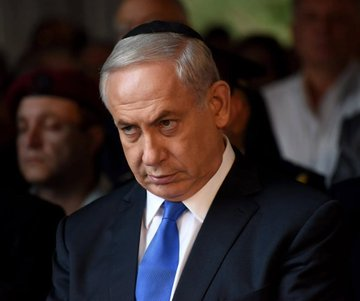
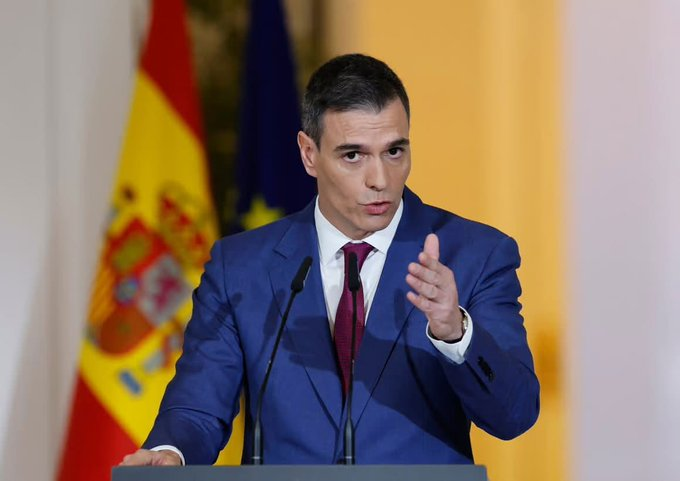
‘Hypocrisy and Hostility’: Netanyahu’s Official Statement
In a strongly worded statement posted on X (formerly Twitter), Netanyahu laid out his reasoning in stark terms, explicitly linking the diplomatic punishment to Spain’s recent political and military stances.
“The State of Israel will not remain silent in the face of those who attack us. Spain has slandered our heroes, the soldiers of the IDF, the soldiers of the most moral army in the world. And therefore I have instructed to expel Spain’s representatives from the coordination center in Kiryat Gat, after Spain has chosen time and again to stand against Israel.” — Prime Minister Benjamin Netanyahu
Netanyahu further warned that this action serves as a precedent for other nations considering a diplomatic offensive against his government. He stated that he is “not prepared to tolerate this hypocrisy and this hostility” and declared that he would not allow any country to wage a “political war” against Israel without paying an “immediate price” .
Foreign Minister Gideon Sa’ar echoed these sentiments, accusing the government of Spanish Prime Minister Pedro Sánchez of having an “anti-Israel obsession” so “egregious” that it has rendered Madrid incapable of serving as a constructive partner in implementing US President Donald Trump’s post-war peace plan for Gaza .
The ‘Kiryat Gat’ Hub: A Center of Post-War Power
The Civil-Military Coordination Centre (CMCC) in Kiryat Gat is a sensitive and powerful diplomatic asset. Established in October 2025 following the Israel-Hamas ceasefire, it operates under the auspices of US Central Command (CENTCOM) .
Its primary functions include:
- Monitoring the Ceasefire: Ensuring the pause in hostilities between Israel and Hamas holds.
- Humanitarian Coordination: Managing the logistics of aid entry into Gaza.
- Post-War Planning: Shaping the political and security future of the Strip under the framework of the Trump administration’s peace plan .
Currently, military personnel and diplomats from France, Britain, the UAE, Germany, and Egypt are present at the center . By expelling Spain, Israel is significantly diminishing Madrid’s ability to influence the post-war trajectory of the region, effectively shutting it out of the “decision-making mechanism on the ground” .
The Spanish Provocation: From Airspace Closure to Diplomatic Recognition
The expulsion is the culmination of more than two years of rapidly deteriorating relations between Jerusalem and Madrid. The immediate trigger appears to be Spain’s vocal condemnation of Israeli strikes on Lebanon earlier this week, but the roots of the conflict run much deeper .
Blocking the US War Effort
During the recent US-Israeli military campaign against Iran, Spain took the unprecedented step of closing its airspace to US aircraft involved in the strikes on Tehran. This went beyond its earlier refusal to allow the use of US military bases on Spanish soil, such as those at Rota and Morón de la Frontera .
Diplomatic Recognition and Ambassadors
Ties have been strained since Spain officially recognized a Palestinian state in 2024. Last month, Spain permanently withdrew its ambassador from Israel. In a move viewed by Jerusalem as particularly provocative, Madrid this week reinstated its ambassador to Iran while maintaining the freeze on its ambassador to Israel, signaling a shift in diplomatic alignment .
Arms Embargo and ‘Genocide’ Accusations
Israel’s Foreign Minister Gideon Sa’ar has previously accused the Spanish government of “standing with tyrants” by opposing the US-Israeli attacks on Iran and being “complicit in inciting genocide against Jews and war crimes” following its recognition of a Palestinian state. Spain has also prohibited the sale and purchase of military equipment with Israel, recently elevating this ban into law .
Sánchez’s Response: ‘Do Not Allow a New Gaza in Lebanon’
Prime Minister Pedro Sánchez has emerged as one of the most vocal European critics of Israel’s military campaigns. Just hours before Israel announced the expulsion, Sánchez called on the European Union to suspend its Association Agreement with Israel, urging the bloc not to allow a “new Gaza in Lebanon” .
In a post on X regarding the Lebanese strikes, Sánchez stated: “Just today, Netanyahu launches his harshest attack against Lebanon since the offensive began. His contempt for life and international law is intolerable… The European Union must suspend its Association Agreement with Israel. And there must be no impunity for these criminal acts” .
The Spanish government had previously shut its airspace to all flights linked to the US and Israeli military strikes on Iran, including those of third countries like the UK and France, in a move described as part of Spain’s “decision not to participate in or support this war” .
Broader Context: Israel’s ‘New Rules’ for Diplomacy
Netanyahu’s decision to expel Spain marks a distinct shift in Israeli foreign policy, moving from engagement to punitive action against critics. It reflects a broader strategy to isolate countries that are perceived as siding with “terrorist regimes” rather than with the US-led security architecture in the Middle East .
The move also highlights the fragility of international consensus regarding post-war Gaza. By orchestrating the expulsion of Spain, Israel and the United States (which was reportedly informed of the decision in advance) are actively curating which nations get a seat at the table to shape the Strip’s future .
What Comes Next?
The expulsion takes effect immediately, removing Spain from the physical planning rooms in Kiryat Gat. However, the diplomatic fallout is just beginning.
| Sector | Potential Impact |
|---|---|
| EU Unity | Spain is expected to push hard for EU-wide sanctions against Israel, including the suspension of the Association Agreement, testing European unity. |
| Bilateral Relations | The expulsion of military attaches is a severe diplomatic insult, likely leading to a prolonged freeze in security cooperation between Madrid and Jerusalem. |
| Post-War Gaza | Spain’s exclusion strengthens the influence of countries more aligned with the Trump plan (e.g., UAE, France) while sidelining European critics. |
As one Israeli official put it: “Whoever attacks the State of Israel instead of the terrorist regimes will not be our partner regarding the future of the region” . For Spain, that future has arrived immediately.
Frequently Asked Questions (FAQs)
1. What is the CMCC in Kiryat Gat?
The Civil-Military Coordination Centre (CMCC) is a US-led, multi-national headquarters in southern Israel established to monitor the Gaza ceasefire, coordinate humanitarian aid, and implement President Trump’s post-war peace plan for the Strip .
2. Why did Netanyahu expel Spain?
Netanyahu accused Spain of “slandering” IDF soldiers and engaging in “hypocrisy and hostility.” This follows months of escalating diplomatic tensions, including Spain’s recognition of a Palestinian state, its withdrawal of its ambassador from Israel, and its closure of airspace to US aircraft during the Iran war .
3. Which countries remain in the Gaza coordination hub?
Countries such as France, Britain, the United Arab Emirates, Germany, and Egypt maintain a presence at the CMCC .
4. How did Spain respond to the expulsion?
Prime Minister Pedro Sánchez has been highly critical of Israel, calling for the EU to suspend its trade agreement with Israel and condemning Netanyahu’s “intolerable” contempt for international law regarding strikes in Lebanon .
5. Does this affect the US-Iran ceasefire?
The expulsion is a direct result of the diplomatic fallout from the Iran war. Spain’s refusal to support US military actions (by closing airspace) was cited by Israeli Foreign Minister Gideon Sa’ar as a key factor in the decision .
Stay informed with Reflecto News – Your trusted source for breaking diplomatic and geopolitical intelligence. Subscribe for real-time updates on the Israel-Spain crisis and the future of the Gaza ceasefire.
Questions people ask
What is China's current share of global manufacturing?
China now accounts for twenty eight percent of global manufacturing. This industrial output exceeds the combined manufacturing production of the United States, Japan, and Germany, making China the leading global industrial power according to recent reports.
Why were Andrew Tate and Tristan Tate arrested in Miami?
Andrew Tate and his brother Tristan Tate were taken into custody in Miami by the United States Marshals Service. They face thirty eight new charges in the United Kingdom, including rape and child pornography offences, and prosecutors are seeking their extradition.
What warning did Moscow issue about oil prices?
Kirill Dmitriev, the Chief Executive of the Russian Direct Investment Fund, warned that a tsunami of skyrocketing oil prices is approaching. Moscow describes this potential energy shock as a major threat to global markets.
What political shift is projected for Benjamin Netanyahu's coalition?
Political polls project that Prime Minister Benjamin Netanyahu's coalition is on track to lose its majority in the upcoming October election. This projection indicates a potential political shift in Jerusalem.
Why did a Russian military aircraft land in Tehran?
A Russian airborne command aircraft, widely known as a doomsday plane, landed in Tehran. The arrival of the aircraft represents a high stakes show of support from Russia for Iran during a period of heightened regional tensions.
What did President Masoud Pezeshkian claim about the United States and Israel?
Iranian President Masoud Pezeshkian claimed that the United States and Israel failed in a forty eight hour plan to topple the Iranian government. He made these statements during a televised address marking two years since his inauguration.