Reflecto News is an online news platform covering major international political events, global economic developments, and security conflicts. The site provides updates on topics such as Chinese manufacturing dominance, Middle Eastern political tensions, and high profile legal arrests. Readers can access current articles organized by categories like World News, Iran, and USA.
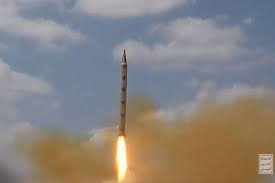
TEL AVIV / TEHRAN — Air raid sirens blared across central and southern Israel on Wednesday, April 1, 2026, as Iran launched a new wave of ballistic missiles targeting major population centers, including Tel Aviv, Bnei Brak, and Petah Tikva. The Israeli Defense Forces (IDF) confirmed that several salvos were detected originating from western Iran, marking a significant escalation just hours after massive U.S.-Israeli air strikes pounded Tehran.
The Home Front Command ordered millions of residents into bomb shelters as interceptor missiles from the Arrow and David’s Sling systems lit up the night sky over the Gush Dan region.
Impact and Casualties
While the majority of the missiles were reportedly intercepted or fell in unpopulated areas, the IDF noted that this wave featured “complex payloads” intended to stress air defense networks.
- Cluster Munition Reports: Preliminary reports from The Times of Israel indicate that at least one ballistic missile scattered cluster bomblets over central districts. Medics treated several individuals for light injuries caused by shrapnel and falling debris in Bnei Brak and Ramat Gan.
- Property Damage: Footage from the scene showed several vehicles on fire and minor structural damage to residential buildings in the suburbs of Tel Aviv.
- Psychological Attrition: Analysts suggest Tehran is shifting toward “staggered” launches—firing smaller batches throughout the day—to keep the Israeli civilian population in a state of constant alert and economic disruption.
The Multi-Front Surge
The ballistic missile wave from Iran coincided with a broader surge in regional proxy activity, stretching Israeli defenses to their limit.
- Hezbollah Rocket Fire: Parallel to the Iranian strike, Hezbollah launched approximately 100 rockets and drones into northern Israel, targeting military sites near the border.
- Yemeni Intervention: Earlier on Wednesday, the IDF intercepted a long-range missile launched by Houthi forces from Yemen, which was also aimed at central Israel.
- The “8:00 PM” Threat: This missile wave serves as a kinetic prelude to the IRGC’s 8:00 PM (Tehran time) deadline, in which the Aerospace Force has threatened to expand the “infrastructure war” to global U.S. technology and energy firms.
Strategic Context: The April 6 Countdown
The timing of the launch is being viewed as a direct response to President Trump’s recent claim that the U.S. could see the “finish line” of the war within 2-3 weeks.
- Araghchi’s Defiance: Foreign Minister Abbas Araghchi, seen walking the streets of Tehran earlier today, reiterated that “the trust level is zero” and that Iran is “waiting” for a ground invasion.
- The “Islamabad Track”: While the missiles were in the air, Pakistan and China continued to lobby for their 15-point peace proposal, which calls for an immediate “all-fronts” ceasefire. However, the intensity of today’s exchange suggests that both sides are still seeking “leverage through fire” before any formal negotiations begin.
| Conflict Metric | Status (April 1, 2026) |
| Primary Target | Central Israel (Tel Aviv / Gush Dan) |
| Missile Type | Ballistic (Reports of Cluster Payloads) |
| IDF Response | Arrow / David’s Sling Interceptions; Counter-battery strikes |
| Casualties | Multiple light injuries reported; Millions in shelters |
| Peace Deadline | Monday, April 6, 2026 |
Analysis: Testing the “Finish Line”
By launching these missiles despite the heavy bombardment of its own capital, Tehran is attempting to prove that its “strategic depth” and retaliatory capacity remain intact. For the Trump administration, these strikes challenge the narrative of a “shaken regime” and increase the pressure to either escalate to a ground confrontation or accept the more lenient terms of the Pakistani-led peace plan.
As the sun sets over Tel Aviv, the region remains on a knife-edge, with the focus now shifting to the potential for a massive U.S. retaliatory strike on Iranian launch sites before the day is out.
Questions people ask
What is China's current share of global manufacturing?
China now accounts for twenty eight percent of global manufacturing. This industrial output exceeds the combined manufacturing production of the United States, Japan, and Germany, making China the leading global industrial power according to recent reports.
Why were Andrew Tate and Tristan Tate arrested in Miami?
Andrew Tate and his brother Tristan Tate were taken into custody in Miami by the United States Marshals Service. They face thirty eight new charges in the United Kingdom, including rape and child pornography offences, and prosecutors are seeking their extradition.
What warning did Moscow issue about oil prices?
Kirill Dmitriev, the Chief Executive of the Russian Direct Investment Fund, warned that a tsunami of skyrocketing oil prices is approaching. Moscow describes this potential energy shock as a major threat to global markets.
What political shift is projected for Benjamin Netanyahu's coalition?
Political polls project that Prime Minister Benjamin Netanyahu's coalition is on track to lose its majority in the upcoming October election. This projection indicates a potential political shift in Jerusalem.
Why did a Russian military aircraft land in Tehran?
A Russian airborne command aircraft, widely known as a doomsday plane, landed in Tehran. The arrival of the aircraft represents a high stakes show of support from Russia for Iran during a period of heightened regional tensions.
What did President Masoud Pezeshkian claim about the United States and Israel?
Iranian President Masoud Pezeshkian claimed that the United States and Israel failed in a forty eight hour plan to topple the Iranian government. He made these statements during a televised address marking two years since his inauguration.