Reflecto News is an online news platform covering major international political events, global economic developments, and security conflicts. The site provides updates on topics such as Chinese manufacturing dominance, Middle Eastern political tensions, and high profile legal arrests. Readers can access current articles organized by categories like World News, Iran, and USA.
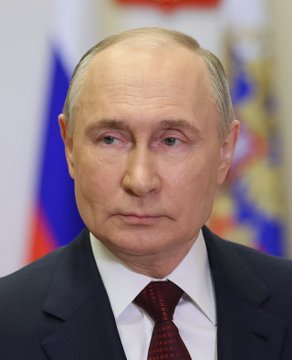
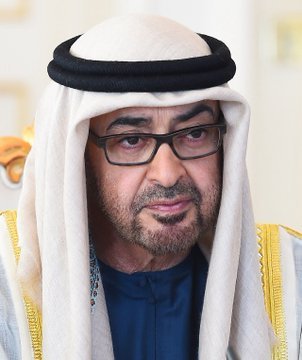
ABU DHABI / MOSCOW — In a high-stakes diplomatic intervention on Tuesday, March 31, 2026, Russian President Vladimir Putin and UAE President Sheikh Mohamed bin Zayed Al Nahyan (MBZ) held an emergency telephone conversation to address the “continuing deterioration” of the military and political situation in the Middle East. According to official readouts from both the Kremlin and the Emirates News Agency (WAM), the two leaders expressed “profound concern” over the mounting loss of civilian lives and the systematic destruction of regional energy and industrial infrastructure.
The call comes as the April 6 deadline for a regional settlement nears, with both leaders emphasizing that the current trajectory of the war poses a catastrophic risk to global maritime navigation and the international economy.
Key Points of the Discussion
The dialogue focused on the immediate necessity of pivoting from kinetic operations to a “political and diplomatic process.”
- Infrastructure Vulnerability: Both presidents noted with alarm the targeting of “energy, industrial, and other civilian infrastructure”—a reference to the recent IRGC threats against 18 U.S. companies and the ongoing air campaign by U.S. and Israeli forces against Iranian production hubs.
- Respect for Sovereignty: The leaders emphasized a resolution that respects the “legitimate interests of all states in the region,” a phrase often used by Moscow to advocate for a balance of power that includes Iran’s security concerns.
- Freedom of Navigation: The UAE side specifically highlighted the “negative repercussions” for international maritime navigation, as the Strait of Hormuz remains effectively closed to Western-aligned vessels.
The UAE’s Dual-Track Diplomacy
The conversation underscores the UAE’s delicate position as a key interlocutor between the West and the East.
- The Russian Link: MBZ and Putin noted with “particular satisfaction” the high level of Russia-UAE cooperation, which has remained resilient despite Western sanctions.
- The U.S. Pressure: Simultaneously, reports from the Wall Street Journal on April 1 suggest the UAE is lobbying for a UN Security Council resolution that would authorize military action to reopen the Strait of Hormuz, indicating that Abu Dhabi is preparing for “all contingencies” if diplomacy fails.
Russia’s Strategic Warning
President Putin has been active on the phone with several Gulf leaders this week, including Saudi Crown Prince Mohammed bin Salman. The Kremlin’s messaging has been consistent: the current U.S.-Israeli offensive against Iran is “fraught with catastrophic consequences” and risks drawing third countries into a wider conflagration.
| Diplomatic Metric | Status (April 1, 2026) |
| Call Date | March 31, 2026 |
| Primary Concern | Destruction of Energy Infrastructure & Civilian Loss |
| Consensus Point | Need for “Prompt Cessation of Hostilities” |
| Strait of Hormuz | Shared concern over maritime navigation disruption |
| Regional Stance | Seeking “Political and Diplomatic” resolution |
Analysis: A Search for “Guarantors”
Analysts suggest that Putin is positioning Russia as a potential “guarantor” for the security demands recently voiced by Iranian President Masoud Pezeshkian. By aligning with the UAE—a nation with deep ties to Washington—Moscow is attempting to build a regional consensus that can pressure the Trump administration into accepting the “Islamabad Track” peace proposal before the April 6 deadline.
As the U.S. remains focused on “Maximum Pressure,” the Putin-MBZ dialogue represents a growing “Neutral Bloc” that fears the economic cost of a prolonged war may soon outweigh the strategic benefits of degrading the Iranian regime.
Questions people ask
What is China's current share of global manufacturing?
China now accounts for twenty eight percent of global manufacturing. This industrial output exceeds the combined manufacturing production of the United States, Japan, and Germany, making China the leading global industrial power according to recent reports.
Why were Andrew Tate and Tristan Tate arrested in Miami?
Andrew Tate and his brother Tristan Tate were taken into custody in Miami by the United States Marshals Service. They face thirty eight new charges in the United Kingdom, including rape and child pornography offences, and prosecutors are seeking their extradition.
What warning did Moscow issue about oil prices?
Kirill Dmitriev, the Chief Executive of the Russian Direct Investment Fund, warned that a tsunami of skyrocketing oil prices is approaching. Moscow describes this potential energy shock as a major threat to global markets.
What political shift is projected for Benjamin Netanyahu's coalition?
Political polls project that Prime Minister Benjamin Netanyahu's coalition is on track to lose its majority in the upcoming October election. This projection indicates a potential political shift in Jerusalem.
Why did a Russian military aircraft land in Tehran?
A Russian airborne command aircraft, widely known as a doomsday plane, landed in Tehran. The arrival of the aircraft represents a high stakes show of support from Russia for Iran during a period of heightened regional tensions.
What did President Masoud Pezeshkian claim about the United States and Israel?
Iranian President Masoud Pezeshkian claimed that the United States and Israel failed in a forty eight hour plan to topple the Iranian government. He made these statements during a televised address marking two years since his inauguration.