Reflecto News is an online news platform covering major international political events, global economic developments, and security conflicts. The site provides updates on topics such as Chinese manufacturing dominance, Middle Eastern political tensions, and high profile legal arrests. Readers can access current articles organized by categories like World News, Iran, and USA.
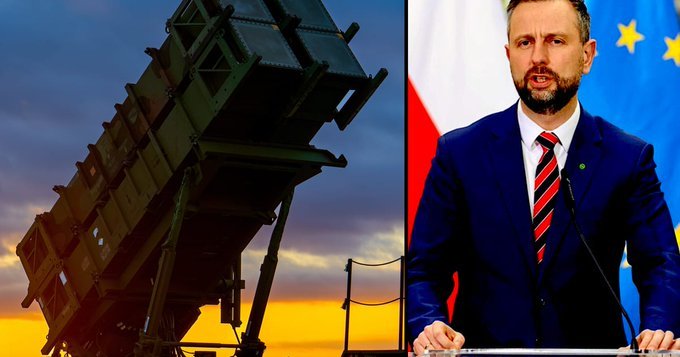
In a rare and public display of diplomatic friction within NATO, Poland officially rejected an “informal” request from the United States to redeploy a Patriot air defense battery to the Middle East. Polish Defense Minister Władysław Kosiniak-Kamysz took to social media on Tuesday, March 31, 2026, to confirm that Poland’s strategic assets will remain on the Eastern Flank, prioritizing national over regional security.
The refusal highlights the growing strain on global air defense stockpiles as the U.S.-led war against Iran enters its second month.
The “Unofficial” Approach
The tension began following reports in the Polish daily Rzeczpospolita, which revealed that Washington had quietly approached Warsaw to “borrow” one of its two operational Patriot batteries, along with advanced PAC-3 MSE interceptor missiles.
- The Objective: The U.S. sought to bolster its defenses in West Asia, where Iranian ballistic missile salvos have reportedly expended over 1,200 Patriot interceptors in just over two weeks of fighting.
- The Polish Assets: Poland currently possesses two Patriot batteries (comprising 16 launchers) that reached full operational readiness only at the end of 2025.
- The “No” on X: Minister Kosiniak-Kamysz issued a definitive statement on the social media platform X (formerly Twitter), making the private disagreement very public:
“Our Patriot batteries and their armaments are used to protect Polish airspace and NATO’s eastern flank. Nothing is changing in this regard and we are not planning to move them anywhere! Our allies are well aware of and understand how important our tasks are here. Poland’s security is an absolute priority.”
A Strategic “Salvo Competition”
Military analysts describe the current conflict as a “salvo competition,” where the sheer volume of Iranian drones and missiles is outstripping the West’s ability to produce high-end interceptors.
- Drained Stockpiles: The U.S. is reportedly scouring the globe for available systems. In early March, South Korean President Lee Jae Myung also opposed U.S. plans to redeploy Patriot and THAAD systems from the Korean Peninsula.
- Turkey’s Reinforcement: While Poland refused to move its own gear, NATO recently deployed a separate Patriot system to Malatya, Turkey, to protect the alliance’s southern border from potential Iranian overspill.
- The “50% Weakening” Argument: Deputy Defense Minister Cezary Tomczyk echoed the refusal, noting that moving one battery would effectively slash Poland’s modern air defense capability by half at a time of heightened tensions with Russia.
Domestic Consensus
In a rare moment of political unity, both the current Polish government and the opposition have backed the refusal. Former Defense Minister Mariusz Błaszczak stated that Warsaw “should not grant approval” for such a move, reflecting a national consensus that Poland cannot afford to be a “donor” of security while its own borders remain a primary concern for NATO.
| Defense Metric | Poland’s Patriot Status (March 31, 2026) |
| Total Batteries | 2 (16 Launchers) |
| Operational Readiness | 100% (Achieved late 2025) |
| U.S. Request | 1 Battery + PAC-3 MSE Missiles |
| Official Response | Public Refusal |
| Future Deliveries | 6 additional batteries expected in 2027 |
The “Allied Understanding”
While a senior NATO official claimed there was “no special pressure” on Poland and that the inquiry was sent to several allies, the public nature of the Polish refusal signals a shift in how European capitals are responding to the Trump administration’s “unpredictability” doctrine.
By taking the issue to social media, Warsaw has effectively drawn a red line: while it remains a committed NATO member, it will not compromise its domestic “iron dome” to fuel a conflict it views as a “resource grab” in the Middle East.
Questions people ask
What is China's current share of global manufacturing?
China now accounts for twenty eight percent of global manufacturing. This industrial output exceeds the combined manufacturing production of the United States, Japan, and Germany, making China the leading global industrial power according to recent reports.
Why were Andrew Tate and Tristan Tate arrested in Miami?
Andrew Tate and his brother Tristan Tate were taken into custody in Miami by the United States Marshals Service. They face thirty eight new charges in the United Kingdom, including rape and child pornography offences, and prosecutors are seeking their extradition.
What warning did Moscow issue about oil prices?
Kirill Dmitriev, the Chief Executive of the Russian Direct Investment Fund, warned that a tsunami of skyrocketing oil prices is approaching. Moscow describes this potential energy shock as a major threat to global markets.
What political shift is projected for Benjamin Netanyahu's coalition?
Political polls project that Prime Minister Benjamin Netanyahu's coalition is on track to lose its majority in the upcoming October election. This projection indicates a potential political shift in Jerusalem.
Why did a Russian military aircraft land in Tehran?
A Russian airborne command aircraft, widely known as a doomsday plane, landed in Tehran. The arrival of the aircraft represents a high stakes show of support from Russia for Iran during a period of heightened regional tensions.
What did President Masoud Pezeshkian claim about the United States and Israel?
Iranian President Masoud Pezeshkian claimed that the United States and Israel failed in a forty eight hour plan to topple the Iranian government. He made these statements during a televised address marking two years since his inauguration.