Reflecto News is an online news platform covering major international political events, global economic developments, and security conflicts. The site provides updates on topics such as Chinese manufacturing dominance, Middle Eastern political tensions, and high profile legal arrests. Readers can access current articles organized by categories like World News, Iran, and USA.
Reflecto News | Breaking News | Middle East
RIYADH — Saudi Arabia secretly launched multiple strikes against Iranian territory in late March 2026, marking the first known instance of the kingdom directly carrying out military action on Iranian soil in retaliation for attacks during the widening Middle East conflict, according to a Reuters investigation citing Western and Iranian officials .
The previously unreported strikes, carried out by the Royal Saudi Air Force, were described as “tit-for-tat strikes in retaliation for when Saudi (Arabia) was hit,” one Western official told Reuters . The exact targets of the Saudi military action have not been disclosed .
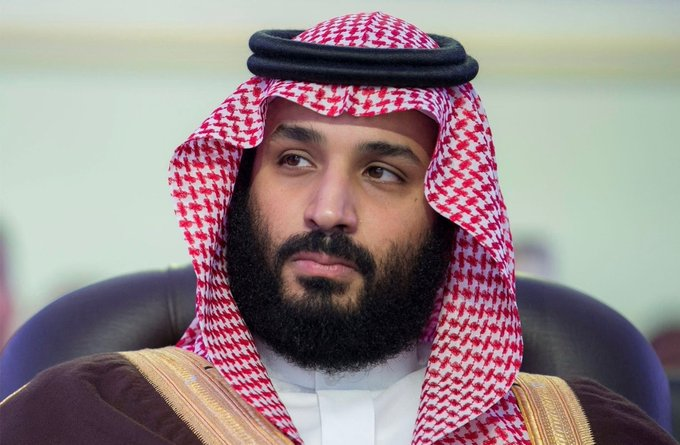
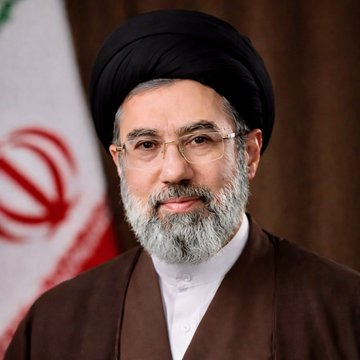
🔥 A Conflict Hidden from Public View
The Saudi strikes underscore how a war that began with joint U.S.-Israeli airstrikes on Iran on February 28 has drawn the broader Middle East into direct confrontation in ways that have largely remained hidden from public view .
Since the conflict began, Iran has struck all six Gulf Cooperation Council (GCC) states with missiles and drones, targeting U.S. military bases, civilian infrastructure, airports, oil facilities, and closing the strategic Strait of Hormuz, disrupting global trade . The Saudi retaliation marks a significant escalation in the kingdom’s posture, demonstrating a newfound willingness to directly confront its primary regional rival .
- A New Precedent: This marks the first publicly reported instance of Saudi military action on Iranian soil.
- Beyond the U.S. Umbrella: The move by Riyadh shows Gulf Arab states are taking more assertive defensive actions as the traditional U.S. security umbrella has been stretched by the war .
🤝 A Calculated Escalation: Strikes, Then De‑escalation
The retaliatory attacks were followed by an intense period of back‑channel diplomacy, according to the officials . Riyadh informed Tehran that it had carried out the strikes and threatened further retaliation, leading to a mutual understanding to de‑escalate tensions.
This informal agreement reportedly took effect in the week before Washington and Tehran agreed to a broader ceasefire on April 7 . Strikingly, official data appears to confirm the deal’s impact: a Reuters tally of Saudi defense ministry statements recorded more than 105 drone and missile attacks on Saudi Arabia in the last week of March, a number that fell to just over 25 between April 1-6 .
“This sequence of events would show not trust, but a shared interest in imposing limits on confrontation before it spiraled into a wider regional conflict.”
— Ali Vaez, Iran Project Director, International Crisis Group
The UAE has reportedly taken a more hawkish stance, actively striking back and engaging rarely in public diplomacy with Tehran . Saudi Arabia, while still retaliating, has maintained a more cautious posture, seeking to avoid an uncontrolled escalation while making clear it will defend itself .
📜 Official Silence and Warnings
Both Saudi and Iranian foreign ministries have not officially commented on the reports . However, the weeks leading up to the reported strikes saw a sharp rise in rhetoric. On March 19, Saudi Foreign Minister Prince Faisal bin Farhan stated the kingdom “reserved the right to take military actions if deemed necessary” . Three days later, Saudi Arabia expelled Iran’s military attaché and four other embassy staff .
The kingdom has framed its actions as self‑defense. Former Saudi intelligence chief Prince Turki al-Faisal wrote in an op‑ed that when Iran tried to “drag the kingdom into the furnace of destruction,” the leadership chose to “endure the pains caused by a neighbor in order to protect the lives and property of its citizens” .
📋 Key Takeaways
| Aspect | Summary |
|---|---|
| What Happened | Saudi Arabia launched covert, retaliatory strikes on Iranian territory in late March 2026 . |
| Why Now | In response to repeated Iranian drone and missile attacks on Saudi Arabia during the war with the U.S. and Israel . |
| The Response | Saudi Arabia, through back‑channels, informed Iran of the strikes and threatened further action, leading to a mutual understanding to de‑escalate . |
| The Outcome | Iranian attacks on the kingdom dropped significantly, from over 105 in one week in late March to just over 25 in early April . |
| Official Confirmation | Neither Saudi Arabia nor Iran has officially confirmed these attacks . |
| Strategic Context | The strikes represent a significant shift, showing the Gulf monarchies are now directly acting to defend themselves as the U.S. is engaged in its own conflict . |
Follow Reflecto News for continuous updates on the Middle East conflict, Gulf security, and all breaking news from around the world.
This article is the intellectual property of Reflecto News. Redistribution without attribution is prohibited. For syndication or media inquiries, please contact the editorial team.
Updated: May 13, 2026
Questions people ask
What is China's current share of global manufacturing?
China now accounts for twenty eight percent of global manufacturing. This industrial output exceeds the combined manufacturing production of the United States, Japan, and Germany, making China the leading global industrial power according to recent reports.
Why were Andrew Tate and Tristan Tate arrested in Miami?
Andrew Tate and his brother Tristan Tate were taken into custody in Miami by the United States Marshals Service. They face thirty eight new charges in the United Kingdom, including rape and child pornography offences, and prosecutors are seeking their extradition.
What warning did Moscow issue about oil prices?
Kirill Dmitriev, the Chief Executive of the Russian Direct Investment Fund, warned that a tsunami of skyrocketing oil prices is approaching. Moscow describes this potential energy shock as a major threat to global markets.
What political shift is projected for Benjamin Netanyahu's coalition?
Political polls project that Prime Minister Benjamin Netanyahu's coalition is on track to lose its majority in the upcoming October election. This projection indicates a potential political shift in Jerusalem.
Why did a Russian military aircraft land in Tehran?
A Russian airborne command aircraft, widely known as a doomsday plane, landed in Tehran. The arrival of the aircraft represents a high stakes show of support from Russia for Iran during a period of heightened regional tensions.
What did President Masoud Pezeshkian claim about the United States and Israel?
Iranian President Masoud Pezeshkian claimed that the United States and Israel failed in a forty eight hour plan to topple the Iranian government. He made these statements during a televised address marking two years since his inauguration.