Reflecto News is an online news platform covering major international political events, global economic developments, and security conflicts. The site provides updates on topics such as Chinese manufacturing dominance, Middle Eastern political tensions, and high profile legal arrests. Readers can access current articles organized by categories like World News, Iran, and USA.
Reflecto News | Breaking News | Iran-US Conflict
WASHINGTON — Saudi Arabia and Kuwait have lifted restrictions on the United States military’s use of their bases and airspace, removing a major obstacle that had forced the Trump administration to suspend “Project Freedom” — the operation to reopen the blockaded Strait of Hormuz to commercial shipping .
The decision, confirmed by U.S. and Saudi officials to The Wall Street Journal, follows direct talks between President Donald Trump and Saudi Crown Prince Mohammed bin Salman . The move comes just days after the Gulf allies had imposed the restrictions, leaving the Pentagon scrambling to adjust its posture in the region .
🔄 A Whiplash Reversal: From Pause to Restart
The now-resolved restrictions had triggered one of the most serious disputes between Washington and Riyadh in years . President Trump announced the pause of Project Freedom on Tuesday, May 5, just 36 hours after it had begun, publicly citing a request from Pakistan and “other countries” .
“Based on the request of Pakistan and other Countries, the tremendous Military Success that we have had during the Campaign against the Country of Iran and, additionally, the fact that Great Progress has been made toward a Complete and Final Agreement with Representatives of Iran, we have mutually agreed that, while the Blockade will remain in full force and effect, Project Freedom (The Movement of Ships through the Strait of Hormuz) will be paused for a short period of time to see whether or not the Agreement can be finalized and signed.”
— President Donald J. Trump, via Truth Social
However, reports later revealed that the pause was not merely diplomatic but a tactical necessity. Saudi Arabia, reportedly angered by a lack of consultation and concerned that the U.S. might not be able to defend the kingdom from Iranian retaliation, had blocked American access to key bases and airspace .
Kuwait similarly denied Washington access for the mission . The U.S. military relies heavily on these facilities, particularly Prince Sultan Air Base, to host fighter jets, aerial refueling tankers, and surveillance aircraft essential for establishing a protective “defensive umbrella” over the strait.
A subsequent phone call between President Trump and Crown Prince Mohammed bin Salman failed to immediately resolve the dispute, forcing the White House to pause the operation . The restrictions have now been lifted after further engagement between the two leaders .
🚢 Project Freedom: What It Entails
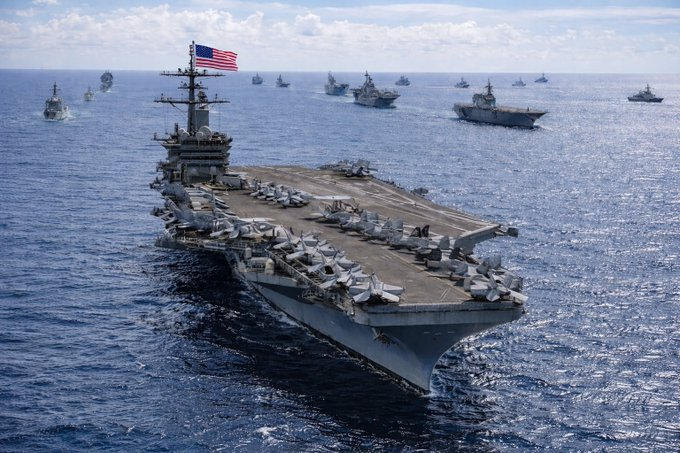
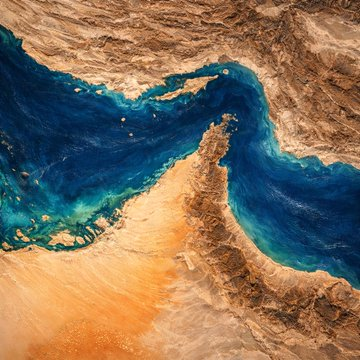
“Project Freedom” is the U.S. military operation designed to restore international navigation through the Strait of Hormuz, which Iran has effectively blockaded since the outbreak of the US-Israeli war on February 28 . The closure has trapped approximately 1,500 commercial vessels and 22,500 seafarers inside the Persian Gulf, disrupting one-fifth of the world’s oil supply .
Key components of the operation include:
| Asset | Details |
|---|---|
| Naval assets | Guided-missile destroyers |
| Aircraft | Over 100 land and sea-based aircraft |
| Personnel | 15,000 service members |
| Primary mission | Protecting innocent commercial shipping from Iranian aggression |
| Supporting mission | Enforcing the U.S. naval blockade of Iranian ports |
Before the conflict, approximately 125 to 140 vessels transited the strait daily; by April 30, that number had fallen to just 7 ships .
The operation is distinct from “Operation Epic Fury,” the initial U.S.-Israeli bombing campaign against Iran, which is currently in a fragile ceasefire . The Pentagon describes the mission as “defensive in nature, focused in scope, temporary in duration” .
🛡️ The Strategic Importance of Saudi and Kuwaiti Bases
The lifting of restrictions is critical for the mission’s success. Facilities in Saudi Arabia and Kuwait are essential for the command, control, and protection of the “defensive umbrella” over the strait.
Key U.S. assets in the region include:
- Prince Sultan Air Base (Saudi Arabia): Hosts U.S. fighter jets, aerial refueling tankers, and air defense assets
- Ali Al Salem Air Base (Kuwait): Key logistics hub for U.S. Air Force operations
- Camp Arifjan (Kuwait): Major U.S. Army logistics base
A senior U.S. military official confirmed that the restored access allows for a layered defense of the transit corridor, which has been cleared of mines. “American destroyers are on station, supported by hundreds of fighter jets, helicopters, drones, and surveillance aircraft, providing 24/7 overwatch for peaceful commercial vessels,” Defense Secretary Pete Hegseth said earlier this week .
❓ What Comes Next
Pentagon planners are now reassessing timelines for restarting the operation, with some officials indicating that activities could resume as early as this week .
Key factors will include:
- Final security assessments of the cleared transit corridor
- Coordination with commercial shipping and insurance companies
- Monitoring of Iranian military activity in the region (the IRGC has warned that any US attempt to enter the strait will be met with force)
Iranian officials have warned the US against restarting the operation. Ebrahim Azizi, chairman of the Iranian parliament’s national security committee, posted on X: “Making the same mistake again and again won’t get you a different answer; only a stronger one. Respect the new Maritime Regime of Iran” .
The resumption of operations also comes as the Trump administration simultaneously pursues a one-page memorandum of understanding with Tehran to end the war, reopen the strait, and begin 30 days of broader negotiations .
The administration now finds itself on two parallel tracks: diplomatic engagement in Geneva and military readiness in the Gulf. The decision to restart Project Freedom will be a test of whether Washington believes Tehran is negotiating in good faith — or whether it must force the strait open regardless of Iranian objections.
📋 Key Takeaways for Reflecto News Readers
| Aspect | Summary |
|---|---|
| What changed | Saudi Arabia and Kuwait lifted restrictions on US military access to bases and airspace |
| Why it matters | Access is essential for providing air cover and surveillance for Project Freedom |
| Previous restrictions | Imposed after the US launched Project Freedom without adequate Gulf consultation |
| Resolution | Restrictions lifted after direct talks between Trump and Crown Prince MBS |
| Current status | Pentagon assessing timelines; operation could restart this week |
| Project Freedom assets | 15,000 personnel, 100+ aircraft, guided-missile destroyers |
| Iranian warning | IRGC warns that “making the same mistake again” will be met with a “stronger” response |
| Diplomatic context | US and Iran negotiating a one-page MOU to end war and reopen the strait |
Follow Reflecto News for continuous updates on the Iran-US military standoff, the Strait of Hormuz crisis, and all breaking news from Washington and the Middle East.
This article is the intellectual property of Reflecto News. Redistribution without attribution is prohibited. For syndication or media inquiries, please contact the editorial team.
Questions people ask
What is China's current share of global manufacturing?
China now accounts for twenty eight percent of global manufacturing. This industrial output exceeds the combined manufacturing production of the United States, Japan, and Germany, making China the leading global industrial power according to recent reports.
Why were Andrew Tate and Tristan Tate arrested in Miami?
Andrew Tate and his brother Tristan Tate were taken into custody in Miami by the United States Marshals Service. They face thirty eight new charges in the United Kingdom, including rape and child pornography offences, and prosecutors are seeking their extradition.
What warning did Moscow issue about oil prices?
Kirill Dmitriev, the Chief Executive of the Russian Direct Investment Fund, warned that a tsunami of skyrocketing oil prices is approaching. Moscow describes this potential energy shock as a major threat to global markets.
What political shift is projected for Benjamin Netanyahu's coalition?
Political polls project that Prime Minister Benjamin Netanyahu's coalition is on track to lose its majority in the upcoming October election. This projection indicates a potential political shift in Jerusalem.
Why did a Russian military aircraft land in Tehran?
A Russian airborne command aircraft, widely known as a doomsday plane, landed in Tehran. The arrival of the aircraft represents a high stakes show of support from Russia for Iran during a period of heightened regional tensions.
What did President Masoud Pezeshkian claim about the United States and Israel?
Iranian President Masoud Pezeshkian claimed that the United States and Israel failed in a forty eight hour plan to topple the Iranian government. He made these statements during a televised address marking two years since his inauguration.