Reflecto News is an online news platform covering major international political events, global economic developments, and security conflicts. The site provides updates on topics such as Chinese manufacturing dominance, Middle Eastern political tensions, and high profile legal arrests. Readers can access current articles organized by categories like World News, Iran, and USA.
Reflecto News | Global Energy | Geopolitics
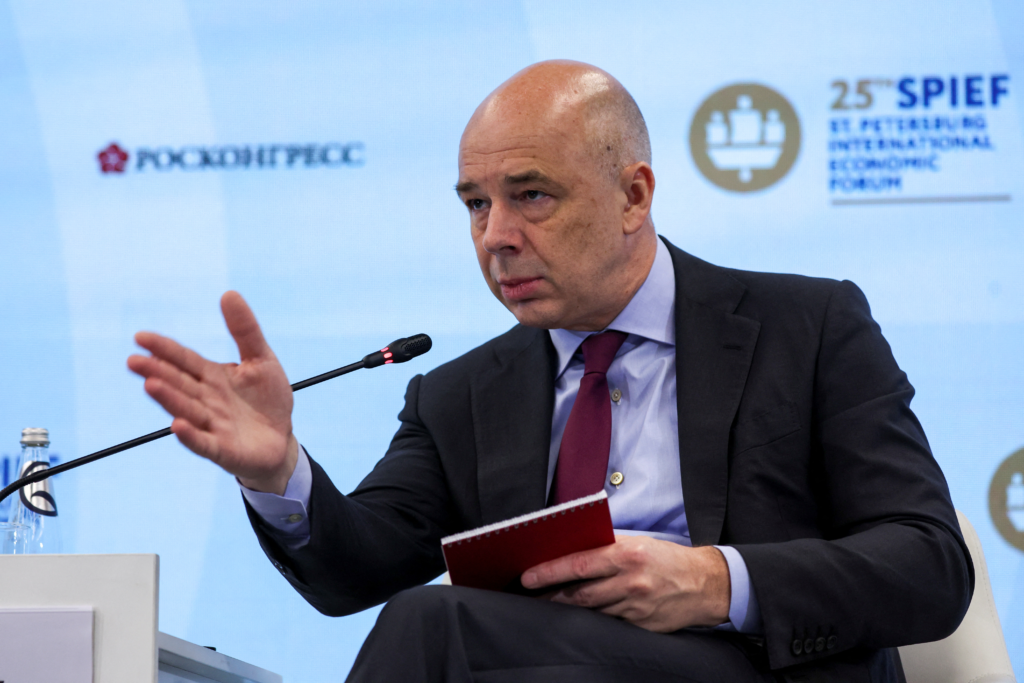
MOSCOW — Russian Finance Minister Anton Siluanov said on Wednesday that the United Arab Emirates’ decision to leave OPEC will allow the oil cartel’s remaining members to boost production, ultimately bringing down global oil prices once the current crisis in the Strait of Hormuz is resolved .
“Today we hear that one of the countries, the United Arab Emirates, is leaving OPEC. What does this mean? It means that the country can produce as much oil as its production capacities allow and release it onto the market.” > — Anton Siluanov, Russian Finance Minister
📉 ‘Prices Will Go Down Accordingly’
Siluanov’s assessment is based on the premise that if OPEC members—no longer bound by coordinated production targets—begin pumping at full capacity, the market will become oversupplied and prices will fall . “If OPEC countries conduct their policies in an uncoordinated manner and produce as much oil as their production capacities allow and as much as they want, prices will go down accordingly,” he said .
Notably, Siluanov acknowledged that his prediction of an oil glut applies only after the Strait of Hormuz is reopened. Currently, the waterway remains largely blocked due to the Iran war, effectively capping how much additional oil can reach global markets regardless of OPEC’s production decisions .
🛢️ How Much More Oil Could the UAE Produce?
The UAE is currently OPEC’s fourth-largest producer, but its actual production capacity far exceeds its OPEC+ quota. According to HSBC, while the UAE’s OPEC+ quota for May 2026 is approximately 3.4 million barrels per day, the Abu Dhabi National Oil Company could potentially raise production to more than 4.5 million bpd over the next 12 to 18 months .
The UAE has also announced plans to increase its production capacity to 5 million bpd by 2027, making it one of the few countries in the world with significant spare capacity that could be brought online quickly .
⚠️ The Key Caveat: Blockade and Pipeline Constraints
Despite the UAE’s ability to pump more oil, actually getting that oil to buyers remains a challenge. The Strait of Hormuz—through which approximately 20% of global oil supply normally passes—has been effectively closed since US-Israeli strikes on Iran began on February 28 .
The UAE does have one workaround: the Abu Dhabi Crude Oil Pipeline, which carries crude from the Habshan field to the port of Fujairah, bypassing the Strait. However, this pipeline has a capacity of roughly 1.8 million bpd and is already operating at or near full utilization . Any significant increase in UAE production would therefore depend on the eventual reopening of Hormuz.
🔮 Long-Term Implications: A Weakened OPEC
Beyond the immediate price effects, Siluanov’s comments highlight a deeper concern: the erosion of OPEC’s ability to manage global supply. Russian officials have warned that the UAE’s exit could trigger a destabilizing “free-for-all” among producers .
“The departure of a core Gulf member could test OPEC+ cohesion and credibility, making supply discipline harder to enforce,” HSBC analysts wrote. If other members follow the UAE’s lead or ignore production quotas, the cartel could lose its ability to stabilize prices during periods of weak demand .
In the longer term, experts warn that international oil markets could become significantly more volatile. As one analysis put it: “With OPEC’s ability to ease supply imbalances weakening, the global oil market may become more turbulent” .
📋 Key Takeaways for Reflecto News Readers
| Aspect | Summary |
|---|---|
| Siluanov’s Statement | UAE exit allows OPEC to boost production, leading to lower prices “accordingly” |
| Key Caveat | Current Hormuz blockade caps supply increases; effect applies only after strait reopens |
| UAE Production Potential | Could rise from ~3.4M bpd (quota) to 4.5M+ bpd, with 5M bpd target by 2027 |
| Pipeline Bypass | Fujairah pipeline can move ~1.8M bpd but is running near capacity |
| Long-Term Risk | OPEC+ cohesion could weaken, leading to price volatility and potential “price war” |
| Russia’s Position | Would need to maintain fiscal buffers for price volatility; could act as coordinator |
Follow Reflecto News for continuous updates on the UAE’s OPEC exit, global oil markets, and all breaking news from around the world.
This article is the intellectual property of Reflecto News. Redistribution without attribution is prohibited. For syndication or media inquiries, please contact the editorial team.
Questions people ask
What is China's current share of global manufacturing?
China now accounts for twenty eight percent of global manufacturing. This industrial output exceeds the combined manufacturing production of the United States, Japan, and Germany, making China the leading global industrial power according to recent reports.
Why were Andrew Tate and Tristan Tate arrested in Miami?
Andrew Tate and his brother Tristan Tate were taken into custody in Miami by the United States Marshals Service. They face thirty eight new charges in the United Kingdom, including rape and child pornography offences, and prosecutors are seeking their extradition.
What warning did Moscow issue about oil prices?
Kirill Dmitriev, the Chief Executive of the Russian Direct Investment Fund, warned that a tsunami of skyrocketing oil prices is approaching. Moscow describes this potential energy shock as a major threat to global markets.
What political shift is projected for Benjamin Netanyahu's coalition?
Political polls project that Prime Minister Benjamin Netanyahu's coalition is on track to lose its majority in the upcoming October election. This projection indicates a potential political shift in Jerusalem.
Why did a Russian military aircraft land in Tehran?
A Russian airborne command aircraft, widely known as a doomsday plane, landed in Tehran. The arrival of the aircraft represents a high stakes show of support from Russia for Iran during a period of heightened regional tensions.
What did President Masoud Pezeshkian claim about the United States and Israel?
Iranian President Masoud Pezeshkian claimed that the United States and Israel failed in a forty eight hour plan to topple the Iranian government. He made these statements during a televised address marking two years since his inauguration.