Reflecto News is an online news platform covering major international political events, global economic developments, and security conflicts. The site provides updates on topics such as Chinese manufacturing dominance, Middle Eastern political tensions, and high profile legal arrests. Readers can access current articles organized by categories like World News, Iran, and USA.
Reflecto News – In a swift development that has introduced fresh uncertainty into the fragile US-Iran two-week ceasefire, Israel has stated that the agreement does not extend to its ongoing military operations in Lebanon against the Iran-backed Hezbollah militia. Israeli Prime Minister Benjamin Netanyahu’s office issued the clarification shortly after the ceasefire announcement, directly contradicting claims by Pakistani Prime Minister Shehbaz Sharif and Iranian officials that the truce covers “everywhere, including Lebanon.”
The discrepancy highlights deep divisions over the scope of the temporary halt in hostilities, even as high-level talks between US and Iranian delegations are scheduled for Friday in Islamabad, Pakistan.
What Happened: The Ceasefire Announcement and Immediate Backtrack
On Tuesday, April 7, 2026, US President Donald Trump announced a two-week ceasefire with Iran, conditional on Tehran immediately reopening the Strait of Hormuz to safe international shipping and halting attacks on US, Israeli, and regional targets. Iran confirmed acceptance of the pause, describing it as effective immediately in coordination with its armed forces.
Pakistan, which played a central mediating role, went further. Prime Minister Shehbaz Sharif stated that the US, Iran, and their respective allies had agreed to “an immediate ceasefire everywhere including Lebanon and elsewhere.” Iranian sources echoed this position, emphasizing that ending hostilities in Lebanon was a core demand in Tehran’s 10-point proposal.
However, within hours, Israel pushed back. Netanyahu’s office welcomed the US decision to suspend strikes on Iran but explicitly declared: “The two-week ceasefire does not include Lebanon.” Israeli forces confirmed they would continue air and ground operations against Hezbollah, citing security needs along the northern border.
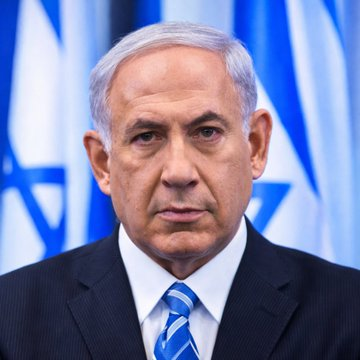
Israeli Prime Minister Benjamin Netanyahu. His office clarified that the US-Iran truce does not apply to operations in Lebanon.
Background: The Broader Conflict and Lebanon’s Role
The current tensions stem from a wider regional war that escalated in early 2026 between the US-Israel alliance and Iran, including direct strikes and proxy confrontations. Hezbollah, Iran’s most powerful ally in the “Axis of Resistance,” has been engaged in intensified fighting with Israel since late 2024, with Israeli forces conducting operations inside southern Lebanon.
Iran has long insisted that any comprehensive deal with the US must include a halt to Israeli actions in Lebanon. Tehran views Hezbollah as a strategic asset and has made protection of its Lebanese ally a red line. Pakistan’s mediation efforts appeared to incorporate this demand to secure Iranian buy-in for the temporary truce.
Israel, however, maintains that its campaign in Lebanon is separate from the direct US-Iran confrontation. Officials argue that operations against Hezbollah are essential to neutralize threats from rocket attacks and militant infrastructure near the border, regardless of the US-Iran agreement.
Pakistani Prime Minister Shehbaz Sharif, whose government mediated the ceasefire and claimed it included Lebanon.
Key Elements of the Two-Week Ceasefire
- Duration: Two weeks, intended to create space for negotiations toward a more permanent settlement.
- Core Conditions: Iran must ensure safe passage through the Strait of Hormuz (a vital chokepoint for global oil supplies) and stop attacks on US, Israeli, and allied targets.
- Scope Dispute: US and Israel agree on suspending direct strikes on Iranian territory. Iran and Pakistan claim the pause extends to proxy fronts, including Lebanon. Israel rejects this for Lebanon.
- Next Steps: US and Iranian delegations, possibly including high-level figures such as US Vice President JD Vance and Iranian Parliament Speaker Mohammad Bagher Ghalibaf, are expected in Islamabad on Friday, April 10, 2026, for further talks.
Map showing the strategically critical Strait of Hormuz, central to the ceasefire conditions.
Strategic Implications and Risks
This disagreement risks undermining the fragile truce before it can take full effect. If Israel continues operations in Lebanon, Iran may view it as a violation, potentially leading to renewed proxy attacks or complications in the Islamabad talks.
For global markets, any breakdown could spike oil prices due to renewed threats to the Strait of Hormuz. Humanitarian groups have already expressed concern over escalating violence in Lebanon, where civilian areas have been affected by ongoing strikes.
Analysts note that the exclusion of Lebanon reflects Israel’s determination to address what it sees as an existential threat from Hezbollah independently, even while coordinating with the US on the Iran file.
Map illustrating the Israel-Lebanon border region and areas of Hezbollah activity, a key flashpoint in the current tensions.
What’s Next?
The upcoming talks in Islamabad will be a critical test. Mediators will likely focus on bridging gaps over Lebanon, sanctions relief, Iran’s nuclear program, and regional security guarantees. Success could pave the way for de-escalation across multiple fronts; failure might see the two-week window close without progress, raising the specter of renewed escalation.
Reflecto News will continue to monitor developments closely, including reactions from Washington, Tehran, Jerusalem, and Beirut.
Frequently Asked Questions (FAQs)
Q1: Does the US-Iran ceasefire include Lebanon?
No, according to Israel. While Pakistan and Iran claim the truce covers “everywhere including Lebanon,” Israeli Prime Minister Netanyahu’s office has explicitly stated that operations against Hezbollah in Lebanon are not part of the agreement.
Q2: Why is Israel backtracking or clarifying the deal?
Israel supports the suspension of direct US-Iran hostilities but insists its campaign in Lebanon is a separate national security matter aimed at neutralizing Hezbollah threats. It does not accept linking the two conflicts in the current truce.
Q3: What triggered the ceasefire announcement?
President Trump agreed to a two-week pause in strikes on Iran after mediation by Pakistan, conditional on Iran reopening the Strait of Hormuz and halting attacks. The move came just before a US deadline.
Q4: When and where are the next talks?
US and Iranian delegations are expected to meet in Islamabad, Pakistan, on Friday, April 10, 2026, to negotiate a more lasting resolution.
Q5: What role did Pakistan play?
Pakistan acted as the primary mediator, facilitating communications between the US and Iran and proposing the two-week ceasefire framework.
Q6: What could happen if the disagreement over Lebanon persists?
It may complicate or delay broader negotiations, potentially leading Iran to reconsider its commitments or prompting renewed proxy actions by Hezbollah.
Q7: How does this affect global oil markets?
Any perceived instability around the Strait of Hormuz tends to drive up oil prices. The temporary ceasefire initially eased some concerns, but the Lebanon dispute has introduced new volatility.
For the latest updates on the US-Iran ceasefire, Middle East conflicts, and diplomatic developments in Islamabad, stay with Reflecto News—your trusted source for accurate, balanced, and in-depth coverage.
Questions people ask
What is China's current share of global manufacturing?
China now accounts for twenty eight percent of global manufacturing. This industrial output exceeds the combined manufacturing production of the United States, Japan, and Germany, making China the leading global industrial power according to recent reports.
Why were Andrew Tate and Tristan Tate arrested in Miami?
Andrew Tate and his brother Tristan Tate were taken into custody in Miami by the United States Marshals Service. They face thirty eight new charges in the United Kingdom, including rape and child pornography offences, and prosecutors are seeking their extradition.
What warning did Moscow issue about oil prices?
Kirill Dmitriev, the Chief Executive of the Russian Direct Investment Fund, warned that a tsunami of skyrocketing oil prices is approaching. Moscow describes this potential energy shock as a major threat to global markets.
What political shift is projected for Benjamin Netanyahu's coalition?
Political polls project that Prime Minister Benjamin Netanyahu's coalition is on track to lose its majority in the upcoming October election. This projection indicates a potential political shift in Jerusalem.
Why did a Russian military aircraft land in Tehran?
A Russian airborne command aircraft, widely known as a doomsday plane, landed in Tehran. The arrival of the aircraft represents a high stakes show of support from Russia for Iran during a period of heightened regional tensions.
What did President Masoud Pezeshkian claim about the United States and Israel?
Iranian President Masoud Pezeshkian claimed that the United States and Israel failed in a forty eight hour plan to topple the Iranian government. He made these statements during a televised address marking two years since his inauguration.