Reflecto News is an online news platform covering major international political events, global economic developments, and security conflicts. The site provides updates on topics such as Chinese manufacturing dominance, Middle Eastern political tensions, and high profile legal arrests. Readers can access current articles organized by categories like World News, Iran, and USA.
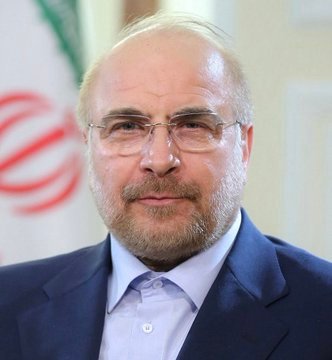
TEHRAN — In a sharp rebuttal to the White House, Iranian Parliament Speaker Mohammad Bagher Ghalibaf has accused President Donald Trump of using “out of context quotes” and “manufactured FOMO” (Fear Of Missing Out) to engage in global war profiteering. Speaking on Wednesday, April 1, 2026, Ghalibaf dismissed the President’s earlier claim that Iran had requested a ceasefire, labeling it a tactical maneuver designed to manipulate volatile oil and financial markets.
The statement adds a layer of intense psychological warfare to the physical conflict, just hours before the President’s scheduled 9:00 PM ET address to the American people.
1. The “Market Manipulation” Allegation
Ghalibaf’s critique centers on the economic impact of the President’s rhetoric. Since the start of Operation Epic Fury, global energy markets have been in a state of hyper-volatility, with oil prices swinging wildly based on social media posts from Washington.
- Manufacturing FOMO: Ghalibaf argued that the U.S. is creating a “false sense of progress” to stabilize domestic markets and provide cover for defense contractors and energy speculators. “The enemy uses manufactured FOMO to drive up their stocks while our infrastructure is under fire,” Ghalibaf stated in a message carried by the official IRNA news agency.
- Out of Context Quotes: Tehran contends that any diplomatic “messages” mentioned by the U.S. were either older communications or mid-level exchanges regarding humanitarian corridors, not a request for a total ceasefire.
- The “Quagmire” Narrative: Ghalibaf reiterated that Iran is prepared for a “long, global war” and that Trump’s claims of a desperate Iranian leadership are “pure fiction” intended to escape the political fallout of $4-a-gallon gas.
2. Tehran’s Official Stance: “No Negotiations”
The Parliament Speaker’s comments were echoed by the Iranian Foreign Ministry, which called the ceasefire report “false and baseless.”
- Deterrence over Dialogue: Foreign Minister Abbas Araghchi stated earlier today that “there are no grounds for negotiations” as long as U.S. and Israeli strikes continue. “You cannot speak to the people of Iran in the language of threats and deadlines,” Araghchi told Al Jazeera.
- Unity in the “Critical Stage”: Ghalibaf called for national unity, warning that the war is entering its “most critical stage.” He hinted that if the U.S. proceeds with the rumored ground attack, Iranian forces are “waiting to set them on fire.”
- Refusal of the 15-Point Plan: Tehran has formally rejected the reported U.S. “15-point proposal,” which includes the total reopening of the Strait of Hormuz and new nuclear concessions.
3. The Information War: Fact vs. Fiction
| Source | Claim (April 1, 2026) | Status / Context |
| Donald Trump | “Iran President… just asked the U.S. for a CEASEFIRE!” | Unverified; No corroboration from neutrals. |
| Ghalibaf (Iran) | “Fake news… designed to manipulate oil markets.” | Official Denial; Frames Trump as “Market Manipulator.” |
| International Media | Markets rallied 2-4% on ceasefire news. | Verified; Confirms the “War Profiteering” narrative. |
| Swiss Channel | Confirms exchange of “messages” occurred. | Ambiguous; Specific content remains classified. |
Analysis: The “Truth” as a Battlefield
Ghalibaf’s use of modern financial terms like “FOMO” and “War Profiteering” suggests a strategic attempt to appeal to a global audience—and a skeptical American public—concerned about the economic motives behind the war. By framing Trump as an unreliable narrator who uses “fake news” to boost the S&P 500, Iran is attempting to erode the President’s credibility ahead of his 9:00 PM speech.
As the April 6 deadline approaches, the world is left in a state of strategic confusion. Is Iran truly “desperate” for a deal as Trump claims, or is Tehran betting that the global energy crisis—described today by the IEA as worse than the 1970s—will eventually force the U.S. to blink first?
Questions people ask
What is China's current share of global manufacturing?
China now accounts for twenty eight percent of global manufacturing. This industrial output exceeds the combined manufacturing production of the United States, Japan, and Germany, making China the leading global industrial power according to recent reports.
Why were Andrew Tate and Tristan Tate arrested in Miami?
Andrew Tate and his brother Tristan Tate were taken into custody in Miami by the United States Marshals Service. They face thirty eight new charges in the United Kingdom, including rape and child pornography offences, and prosecutors are seeking their extradition.
What warning did Moscow issue about oil prices?
Kirill Dmitriev, the Chief Executive of the Russian Direct Investment Fund, warned that a tsunami of skyrocketing oil prices is approaching. Moscow describes this potential energy shock as a major threat to global markets.
What political shift is projected for Benjamin Netanyahu's coalition?
Political polls project that Prime Minister Benjamin Netanyahu's coalition is on track to lose its majority in the upcoming October election. This projection indicates a potential political shift in Jerusalem.
Why did a Russian military aircraft land in Tehran?
A Russian airborne command aircraft, widely known as a doomsday plane, landed in Tehran. The arrival of the aircraft represents a high stakes show of support from Russia for Iran during a period of heightened regional tensions.
What did President Masoud Pezeshkian claim about the United States and Israel?
Iranian President Masoud Pezeshkian claimed that the United States and Israel failed in a forty eight hour plan to topple the Iranian government. He made these statements during a televised address marking two years since his inauguration.