Reflecto News is an online news platform covering major international political events, global economic developments, and security conflicts. The site provides updates on topics such as Chinese manufacturing dominance, Middle Eastern political tensions, and high profile legal arrests. Readers can access current articles organized by categories like World News, Iran, and USA.
Reflecto News – Pope Leo XIV has warmly welcomed the two-week ceasefire between the United States and Iran, describing it as a “sign of great hope” amid the recent escalation that threatened wider regional conflict. The pontiff’s statement comes just hours after the truce was announced, following intense last-minute diplomacy that averted U.S. strikes on Iranian targets.
In remarks delivered from Castel Gandolfo, the Holy Father expressed relief that dialogue had prevailed over further military action and urged all parties to use the pause to build a lasting peace.
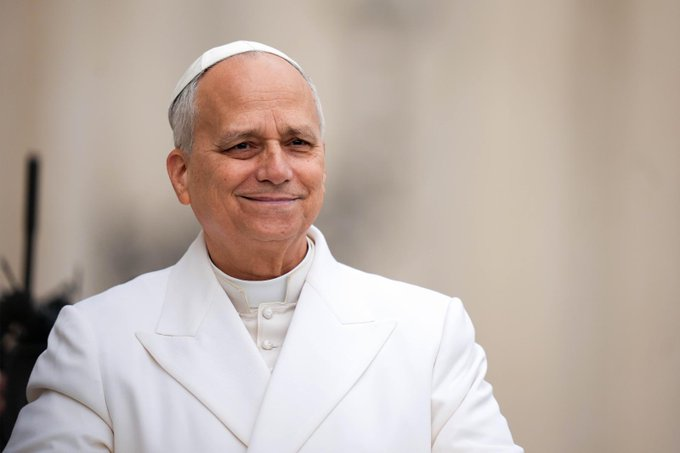
Pope Leo XIV’s Statement on the Ceasefire
Speaking to reporters, Pope Leo XIV said the agreement to halt direct hostilities and reopen the Strait of Hormuz represents a positive step away from escalation. He called the truce “a sign of great hope” for the people of the region, who have suffered from violence, displacement, and fear in recent weeks.
The pope reiterated his consistent calls for an immediate end to violence, protection of civilians, and a return to negotiations. He emphasized that “violence can never lead to the justice, stability, and peace that peoples are awaiting,” echoing earlier appeals during the conflict.
Pope Leo XIV, the first U.S.-born pontiff, has repeatedly advocated for de-escalation in the U.S.-Iran conflict.
Background: From Strong Appeals to Cautious Optimism
Throughout the recent crisis, Pope Leo XIV has been vocal in his opposition to military escalation. He publicly criticized threats of large-scale strikes, describing them as “truly unacceptable” on moral and humanitarian grounds, and warned against actions that could harm innocent civilians, including children and the elderly.
In earlier statements, the pope directly appealed to those responsible for the conflict: “Cease fire so that avenues for dialogue may be reopened.” He has consistently highlighted the plight of Christians and all communities in the Middle East, while calling on world leaders to prioritize peaceful solutions over force.
The two-week ceasefire, mediated largely by Pakistan with support from Egypt, Türkiye, and others, provides a window for high-level talks scheduled in Islamabad on Friday, April 10, 2026. Issues expected to dominate include sanctions relief, nuclear assurances, regional security, and freedom of navigation.
Pope Leo XIV addressing crowds and calling for peace, a recurring theme in his public ministry.
Lingering Challenges Despite the Truce
While welcoming the pause, Vatican observers note that significant hurdles remain:
- Dispute over Lebanon: Israel has clarified that its operations against Hezbollah are not included in the agreement.
- Nuclear language gap: Differences between Farsi and English versions of Iran’s 10-point proposal regarding uranium enrichment.
- Compensation demands: Qatar continues to seek full reparations for damages to its energy infrastructure.
- Verification and trust: Deep mistrust between Washington and Tehran requires robust monitoring mechanisms.
Pope Leo XIV has encouraged all sides to approach the upcoming negotiations with goodwill and a genuine commitment to reconciliation.
Pope Leo XIV in St. Peter’s Square, symbolizing the Vatican’s global call for peace and dialogue.
Broader Vatican Position on the Conflict
The Holy See has long maintained that military solutions in the Middle East exacerbate suffering without resolving underlying issues. Pope Leo XIV has stressed the moral imperative to protect innocent lives and has invited prayers for the region, entrusting the situation to the intercession of the Blessed Virgin Mary, Queen of Peace.
His latest comments align with the Catholic Church’s longstanding teaching on just peace and the preference for dialogue, even in the face of complex geopolitical tensions.
Reflecto News will continue monitoring reactions from the Vatican, as well as developments from the Islamabad talks and the implementation of the ceasefire across the region.
Frequently Asked Questions (FAQs)
Q1: What exactly did Pope Leo XIV say about the U.S.-Iran truce?
He welcomed the ceasefire as a “sign of great hope,” expressing relief that dialogue had prevailed and urging parties to use the pause for genuine peace-building.
Q2: Has the pope been critical of the conflict earlier?
Yes. He previously called certain threats “truly unacceptable,” condemned violence against civilians, and appealed directly for an immediate ceasefire and reopening of dialogue.
Q3: When did Pope Leo XIV make this statement?
The remarks came shortly after the announcement of the two-week ceasefire, building on his consistent advocacy for peace throughout the escalation.
Q4: What is the Vatican’s broader stance on the U.S.-Iran situation?
The Holy See prioritizes the protection of innocent lives, rejects war as a solution, and calls for diplomatic resolutions that address root causes, including humanitarian concerns in the Middle East.
Q5: Does the pope’s welcome mean the truce is permanent?
No. The pope views it as a hopeful first step, but stresses the need for sustained negotiations to achieve lasting stability, especially ahead of the Islamabad talks.
Q6: How does this fit with other international reactions?
It complements efforts by mediators like Pakistan while adding a moral and humanitarian voice to calls for de-escalation amid ongoing disputes over Lebanon, sanctions, and nuclear issues.
Q7: Will the Vatican play a further role in the talks?
While the Holy See is not a direct mediator, its moral authority continues to encourage all parties toward reconciliation and protection of civilians.
For continued coverage of the U.S.-Iran ceasefire, Vatican diplomacy, and Middle East peace efforts, follow Reflecto News — your source for accurate, balanced, and in-depth reporting.
Questions people ask
What is China's current share of global manufacturing?
China now accounts for twenty eight percent of global manufacturing. This industrial output exceeds the combined manufacturing production of the United States, Japan, and Germany, making China the leading global industrial power according to recent reports.
Why were Andrew Tate and Tristan Tate arrested in Miami?
Andrew Tate and his brother Tristan Tate were taken into custody in Miami by the United States Marshals Service. They face thirty eight new charges in the United Kingdom, including rape and child pornography offences, and prosecutors are seeking their extradition.
What warning did Moscow issue about oil prices?
Kirill Dmitriev, the Chief Executive of the Russian Direct Investment Fund, warned that a tsunami of skyrocketing oil prices is approaching. Moscow describes this potential energy shock as a major threat to global markets.
What political shift is projected for Benjamin Netanyahu's coalition?
Political polls project that Prime Minister Benjamin Netanyahu's coalition is on track to lose its majority in the upcoming October election. This projection indicates a potential political shift in Jerusalem.
Why did a Russian military aircraft land in Tehran?
A Russian airborne command aircraft, widely known as a doomsday plane, landed in Tehran. The arrival of the aircraft represents a high stakes show of support from Russia for Iran during a period of heightened regional tensions.
What did President Masoud Pezeshkian claim about the United States and Israel?
Iranian President Masoud Pezeshkian claimed that the United States and Israel failed in a forty eight hour plan to topple the Iranian government. He made these statements during a televised address marking two years since his inauguration.