Reflecto News is an online news platform covering major international political events, global economic developments, and security conflicts. The site provides updates on topics such as Chinese manufacturing dominance, Middle Eastern political tensions, and high profile legal arrests. Readers can access current articles organized by categories like World News, Iran, and USA.
Reflecto News – Just hours before U.S. President Donald Trump’s deadline to launch massive strikes on Iranian infrastructure, Iran’s Supreme Leader Mojtaba Khamenei personally instructed his negotiators to move toward a deal — marking the first such directive since the war began. Sources including an Israeli official, a regional official, and others confirmed the shift, with two describing Khamenei’s approval as “a breakthrough.” A regional source emphasized: “Without his green light, there wouldn’t have been a deal.”
The dramatic intervention, reported by Axios, occurred amid intense last-minute diplomacy and led directly to the two-week ceasefire agreement announced on Tuesday, April 7, 2026.
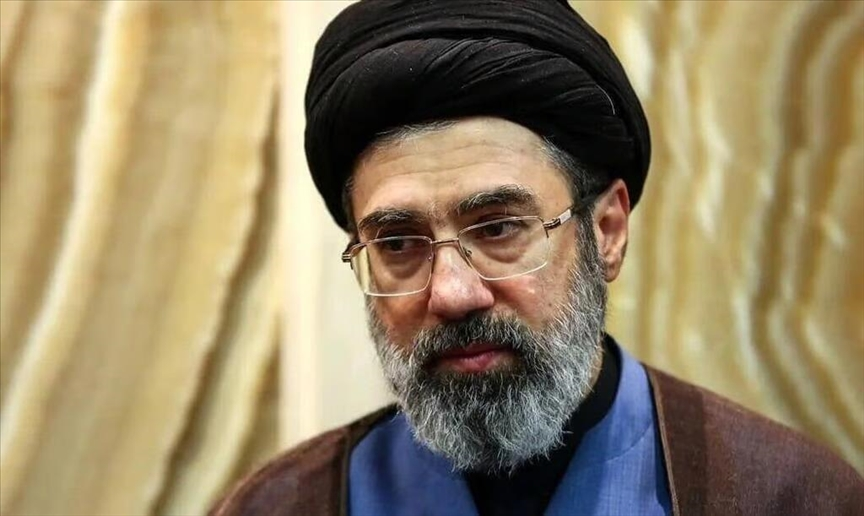
Khamenei’s Decisive Role Amid Security Threats
Mojtaba Khamenei, who succeeded his father Ali Khamenei after the latter’s death in early strikes, has largely remained out of public view. Due to ongoing assassination threats from Israel, he has been communicating primarily through handwritten notes carried by runners — a laborious and secretive process.
Sources say Khamenei was personally involved in key decisions on Monday and Tuesday. His instruction to negotiators represented a significant policy shift, breaking from Iran’s earlier hardline stance and opening the door to compromise on the U.S. demands, particularly the reopening of the Strait of Hormuz.
U.S. Special Envoy Steve Witkoff, who was central to the high-pressure negotiations leading to the ceasefire.
Foreign Minister Araghchi’s Dual Push
Iran’s Foreign Minister Abbas Araghchi played a pivotal role on multiple fronts. He actively managed the negotiations with U.S. and regional mediators while simultaneously pressing commanders of the Islamic Revolutionary Guard Corps (IRGC) to accept the emerging deal. His efforts helped align civilian diplomatic tracks with military realities inside Iran.
Iranian Foreign Minister Abbas Araghchi, who pushed both negotiations and IRGC commanders toward accepting the ceasefire framework.
The Final Hours: From Deadline Pressure to Agreement
Trump had issued a firm deadline — initially tied to Iran reopening the Strait of Hormuz or facing devastating strikes on power plants, bridges, and other infrastructure. As the clock ticked down, Pakistani mediators shuttled drafts, with support from Egypt, Türkiye, and quiet urging from China for an “off-ramp.”
By Monday night, a revised two-week ceasefire proposal had secured U.S. approval. The deal centered on Iran ensuring the “complete, immediate, and safe” reopening of the Strait of Hormuz in exchange for a pause in U.S. strikes. High-level talks are now set for Friday, April 10, 2026, in Islamabad, Pakistan.
Map highlighting the Strait of Hormuz — the critical chokepoint at the center of the ceasefire conditions.
Why Khamenei’s Approval Was a Turning Point
Until Monday, Iran had maintained a firm position, with some reports describing its 10-point response as “maximalist.” Khamenei’s intervention changed the dynamic, allowing negotiators the flexibility needed to reach a compromise just in time to avert escalation.
The two-week window is intended as a confidence-building phase to negotiate a more comprehensive settlement covering sanctions, nuclear issues, regional security, and other disputes. However, challenges persist — including Israel’s exclusion of Lebanon operations and Qatar’s compensation demands.
Pakistan has played the leading mediation role, facilitating the shuttle diplomacy that produced the last-minute agreement.
Reflecto News will continue tracking developments as delegations prepare for the Islamabad talks and the two-week ceasefire takes hold.
Frequently Asked Questions (FAQs)
Q1: Who is Mojtaba Khamenei and what role did he play?
Mojtaba Khamenei is Iran’s current Supreme Leader. He personally instructed negotiators to move toward a deal for the first time since the war began, providing the crucial “green light” that enabled the ceasefire.
Q2: Why was Khamenei communicating via handwritten notes?
Due to active assassination threats, particularly from Israel, he has avoided direct communication and relied on runners carrying notes for security reasons.
Q3: What was Abbas Araghchi’s contribution?
Iran’s Foreign Minister handled negotiations with mediators and the U.S. side while also convincing IRGC commanders to support the deal, helping bridge civilian and military positions.
Q4: How close was the deal to Trump’s deadline?
The agreement was reached just hours before the deadline for massive U.S. strikes, after Trump had extended it slightly and issued strong public warnings.
Q5: What are the main terms of the two-week ceasefire?
Iran commits to reopening the Strait of Hormuz safely; the U.S. pauses planned strikes. The pause creates space for deeper talks in Islamabad on Friday.
Q6: Is this a permanent end to the conflict?
No. It is a temporary two-week ceasefire intended to build confidence and allow negotiations toward a more comprehensive agreement.
Q7: What challenges remain?
Disputes over Lebanon, sanctions relief, nuclear enrichment language, compensation demands (e.g., from Qatar), and verification mechanisms could complicate the next phase.
For accurate, in-depth coverage of the U.S.-Iran ceasefire, the upcoming Islamabad talks, and related Middle East developments, stay with Reflecto News — your source for professional journalism.
Questions people ask
What is China's current share of global manufacturing?
China now accounts for twenty eight percent of global manufacturing. This industrial output exceeds the combined manufacturing production of the United States, Japan, and Germany, making China the leading global industrial power according to recent reports.
Why were Andrew Tate and Tristan Tate arrested in Miami?
Andrew Tate and his brother Tristan Tate were taken into custody in Miami by the United States Marshals Service. They face thirty eight new charges in the United Kingdom, including rape and child pornography offences, and prosecutors are seeking their extradition.
What warning did Moscow issue about oil prices?
Kirill Dmitriev, the Chief Executive of the Russian Direct Investment Fund, warned that a tsunami of skyrocketing oil prices is approaching. Moscow describes this potential energy shock as a major threat to global markets.
What political shift is projected for Benjamin Netanyahu's coalition?
Political polls project that Prime Minister Benjamin Netanyahu's coalition is on track to lose its majority in the upcoming October election. This projection indicates a potential political shift in Jerusalem.
Why did a Russian military aircraft land in Tehran?
A Russian airborne command aircraft, widely known as a doomsday plane, landed in Tehran. The arrival of the aircraft represents a high stakes show of support from Russia for Iran during a period of heightened regional tensions.
What did President Masoud Pezeshkian claim about the United States and Israel?
Iranian President Masoud Pezeshkian claimed that the United States and Israel failed in a forty eight hour plan to topple the Iranian government. He made these statements during a televised address marking two years since his inauguration.