Reflecto News is an online news platform covering major international political events, global economic developments, and security conflicts. The site provides updates on topics such as Chinese manufacturing dominance, Middle Eastern political tensions, and high profile legal arrests. Readers can access current articles organized by categories like World News, Iran, and USA.
Reflecto News – Spain has strongly criticized Israel’s ongoing military campaign in Lebanon, labeling it “unacceptable” even as a two-week U.S.-Iran ceasefire takes hold. Foreign Minister José Manuel Albares stated that “all fronts must cease,” explicitly including Lebanon, and warned that Israel’s actions in a sovereign country undermine regional stability.
The remarks, made in an interview with Spanish public radio RNE, highlight growing European frustration with the fragmented nature of the fragile truce and underscore persistent divisions over whether the agreement should extend to the Israel-Hezbollah front.
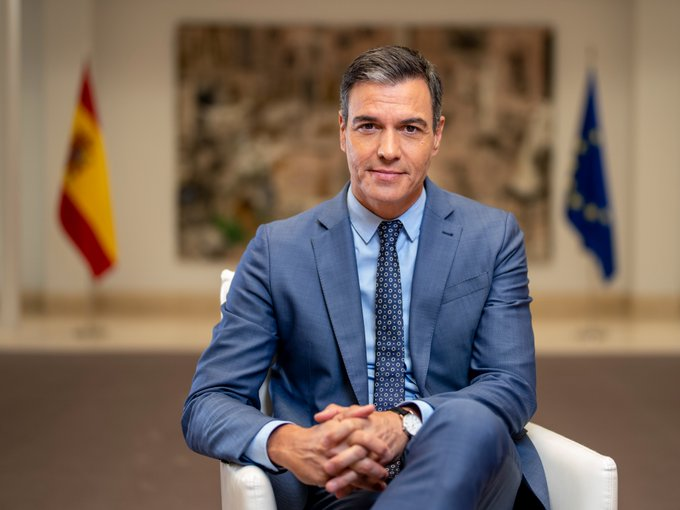
Albares’ Strong Statement
Speaking hours after the ceasefire announcement, Albares declared:
“All fronts must cease, and all fronts also means Lebanon. It is unacceptable that Israel’s war, Israel’s invasion of a sovereign country like Lebanon… continues.”
He emphasized that the temporary pause between the U.S. and Iran must not allow hostilities to persist on other fronts, particularly in Lebanon, where Israeli forces continue operations against Hezbollah.
Spain’s position aligns with its long-standing advocacy for full implementation of UN Security Council Resolution 1701 and respect for Lebanon’s territorial integrity and sovereignty.
Spanish Foreign Minister José Manuel Albares has been vocal in calling for an end to violence across the Middle East.
Context: The Ceasefire’s Limited Scope
The two-week U.S.-Iran ceasefire, mediated primarily by Pakistan, focuses on halting direct American strikes on Iran in exchange for Tehran ensuring safe passage through the Strait of Hormuz. However, Israeli Prime Minister Benjamin Netanyahu’s office has explicitly clarified that the agreement “does not include Lebanon.”
Israel maintains that its operations against Hezbollah — aimed at neutralizing rocket threats and militant infrastructure near its northern border — remain independent of the U.S.-Iran deal. The Israeli military has continued airstrikes and ground activities in southern Lebanon, despite the broader regional pause.
This stance has drawn criticism from several European countries, with Spain joining voices urging a comprehensive de-escalation across all interconnected fronts.
Spain’s Consistent Position on Lebanon
Spain has repeatedly condemned violence in Lebanon, both from Israeli strikes and Hezbollah rocket fire. Earlier joint statements with other European nations have called for:
- An immediate end to all military actions
- Full respect for Lebanese sovereignty
- Implementation of UN resolutions, including 1701
- Protection of civilians and UNIFIL peacekeepers
Albares has previously highlighted the humanitarian toll, including displacement of over a million people and damage to civilian infrastructure, describing such actions as violations of international humanitarian law.
Map of the Israel-Lebanon border region, a persistent flashpoint amid the broader regional tensions.
Broader Implications for Regional Diplomacy
Spain’s intervention comes as delegations prepare for high-level U.S.-Iran talks in Islamabad, Pakistan, on Friday, April 10, 2026. While the truce provides breathing room on the direct U.S.-Iran axis, the exclusion of Lebanon risks undermining the fragile momentum.
Analysts note that continued fighting in Lebanon could prompt Iran or its proxies to reconsider commitments, potentially destabilizing the two-week window. European calls for inclusivity reflect concerns that a partial ceasefire may only delay, rather than resolve, the interconnected conflicts.
Reflecto News will monitor reactions from Jerusalem, Beirut, Washington, and Tehran, as well as any impact on the upcoming Islamabad negotiations.
Frequently Asked Questions (FAQs)
Q1: What did Spain say about Israel’s actions in Lebanon?
Foreign Minister José Manuel Albares called Israel’s continued operations “unacceptable” and stated that “all fronts must cease,” explicitly including Lebanon.
Q2: Does the U.S.-Iran ceasefire cover Lebanon?
No. Israel has clearly stated that the two-week truce does not include its campaign against Hezbollah in Lebanon, despite some mediators initially suggesting broader coverage.
Q3: Why is Spain taking this position?
Spain has consistently advocated for de-escalation across the Middle East, respect for international law, protection of civilians, and full implementation of UN resolutions on Lebanon.
Q4: What is the current situation in Lebanon?
Israeli forces continue strikes and operations against Hezbollah targets, while cross-border tensions persist. The fighting has caused significant civilian displacement and infrastructure damage.
Q5: How does this affect the broader ceasefire?
The exclusion of Lebanon creates a potential vulnerability. Continued violence on this front could complicate efforts to turn the temporary pause into a lasting regional agreement during talks in Islamabad.
Q6: Has Spain criticized other parties in the conflict?
Yes. Spain has condemned Hezbollah rocket attacks and called on all sides to halt hostilities, while emphasizing respect for Lebanese sovereignty.
Q7: What are the next key developments?
High-level U.S.-Iran talks are scheduled for Friday in Islamabad. The scope of any final deal, particularly regarding Lebanon and nuclear issues, will be closely watched.
For the latest accurate coverage of the U.S.-Iran ceasefire, developments in Lebanon, and international diplomacy, stay with Reflecto News — delivering timely, balanced, and professional reporting.
Questions people ask
What is China's current share of global manufacturing?
China now accounts for twenty eight percent of global manufacturing. This industrial output exceeds the combined manufacturing production of the United States, Japan, and Germany, making China the leading global industrial power according to recent reports.
Why were Andrew Tate and Tristan Tate arrested in Miami?
Andrew Tate and his brother Tristan Tate were taken into custody in Miami by the United States Marshals Service. They face thirty eight new charges in the United Kingdom, including rape and child pornography offences, and prosecutors are seeking their extradition.
What warning did Moscow issue about oil prices?
Kirill Dmitriev, the Chief Executive of the Russian Direct Investment Fund, warned that a tsunami of skyrocketing oil prices is approaching. Moscow describes this potential energy shock as a major threat to global markets.
What political shift is projected for Benjamin Netanyahu's coalition?
Political polls project that Prime Minister Benjamin Netanyahu's coalition is on track to lose its majority in the upcoming October election. This projection indicates a potential political shift in Jerusalem.
Why did a Russian military aircraft land in Tehran?
A Russian airborne command aircraft, widely known as a doomsday plane, landed in Tehran. The arrival of the aircraft represents a high stakes show of support from Russia for Iran during a period of heightened regional tensions.
What did President Masoud Pezeshkian claim about the United States and Israel?
Iranian President Masoud Pezeshkian claimed that the United States and Israel failed in a forty eight hour plan to topple the Iranian government. He made these statements during a televised address marking two years since his inauguration.