Reflecto News is an online news platform covering major international political events, global economic developments, and security conflicts. The site provides updates on topics such as Chinese manufacturing dominance, Middle Eastern political tensions, and high profile legal arrests. Readers can access current articles organized by categories like World News, Iran, and USA.
Published on Reflecto News | World News | Politics & Geopolitics
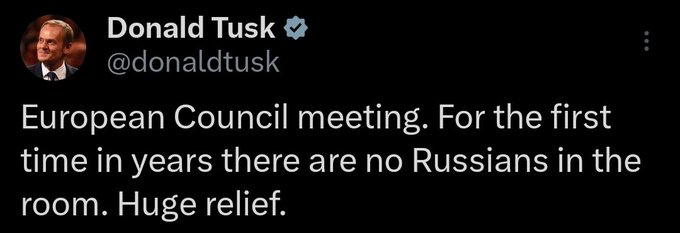
Polish Prime Minister Donald Tusk marked the opening of the European Council meeting on Thursday with a pointed remark about the absence of Russian representatives, stating it was a “huge relief” to hold the gathering without them for the first time in years. The comment, made as leaders arrived for the summit in Brussels, underscored the enduring rupture between the EU and Moscow following Russia’s full-scale invasion of Ukraine .
The European Council, which brings together the heads of state or government of the 27 EU member states, has become a forum for coordinating Western opposition to Russia’s war. Tusk’s observation, while brief, highlighted a significant shift in European institutional dynamics: the exclusion of Russian influence from the highest levels of European political decision-making.
“For the first time in years there are no Russians in the room. Huge relief.” — Donald Tusk, Prime Minister of Poland
A Stark Contrast to the Past
Tusk’s comment implicitly referenced an earlier era in European politics when Russian officials routinely participated in Council of Europe meetings and EU-Russia summits were regular occurrences. Prior to Russia’s full-scale invasion of Ukraine in 2022, the EU maintained a complex relationship with Moscow, balancing energy dependence with strategic competition .
Since February 2022, the EU has imposed 20 rounds of sanctions on Russia, frozen bilateral cooperation, and suspended Russian representation in key European bodies, including the Council of Europe (from which Russia was expelled in March 2022). The current European Council meeting has no Russian officials present — a fact Tusk noted with evident satisfaction .
The European Council Agenda: Security, Defense, and the Iran War
While Tusk’s remark grabbed headlines, the formal agenda of the European Council meeting reflects the immense pressure Europe is under from multiple crises:
| Agenda Item | Context |
|---|---|
| Ukraine support | The war is entering its fifth year, with European funding critical |
| Iran war fallout | Rising energy prices, Strait of Hormuz closure, regional instability |
| European defense | Calls for a “European army” are resurfacing |
| Middle East | Lebanon-Israel ceasefire fragility, humanitarian crisis |
The Iran war has compounded Europe’s existing energy crisis, with the closure of the Strait of Hormuz sending oil prices soaring. European leaders are also grappling with the implications of the US-Iran ceasefire and the separate Israel-Lebanon truce .
The Polish Perspective
Poland has been one of the most hawkish EU members regarding Russia, pushing for tougher sanctions and more military aid to Ukraine. Tusk, who returned to office in December 2025, has maintained that position. His “huge relief” comment reflects the deep-seated Polish fear of Russian expansionism, rooted in centuries of history .
Poland has also supported deeper European defense integration, seeing a stronger EU as a necessary hedge against both Russian aggression and potential US disengagement under the Trump administration .
What Comes Next
The European Council meeting will continue through Friday, with leaders expected to issue a joint statement on Ukraine and the Middle East. Key outcomes will include:
- Additional military aid to Ukraine (discussion of €5 billion package)
- Sanctions enforcement against Russia (20th package already in effect)
- Middle East statement on Lebanon-Israel ceasefire and humanitarian crisis
Tusk’s remark, while off the formal agenda, captures the mood in Brussels: relief that Russia is no longer at the table, and determination to keep it that way.
Frequently Asked Questions (FAQs)
1. What did Tusk mean by ‘no Russians in the room’?
Tusk was referring to the European Council meeting. In past decades, Russian officials occasionally participated in certain Europe-wide summits, and EU-Russia bilateral meetings were common. Since Russia’s 2022 invasion of Ukraine, such engagement has ended, and Tusk was noting that absence positively.
2. Is Tusk referring to a specific past meeting with Russians?
He did not specify a single meeting. The comment was a general observation about the complete absence of Russian officials from the current European political landscape.
3. Can Russia ever return to European Council meetings?
The EU has suspended all formal cooperation with Russia. A return would likely require a fundamental shift in Russian policy, including a halt to the war in Ukraine and withdrawal from occupied territories.
4. Why is Poland so strongly anti-Russian?
Poland has a long history of Russian domination, including partitions of Poland in the 18th century and Cold War Soviet control. The 2014 annexation of Crimea and the 2022 full-scale invasion of Ukraine reignited those fears.
5. What else is on the European Council agenda?
The meeting covers Ukraine military aid, the economic fallout from the Iran war, Middle East diplomacy, and European defense integration.
Stay informed with Reflecto News – Your trusted source for breaking European political and geopolitical intelligence. Subscribe for real-time updates on EU summits, Russia sanctions, and European security developments.
Questions people ask
What is China's current share of global manufacturing?
China now accounts for twenty eight percent of global manufacturing. This industrial output exceeds the combined manufacturing production of the United States, Japan, and Germany, making China the leading global industrial power according to recent reports.
Why were Andrew Tate and Tristan Tate arrested in Miami?
Andrew Tate and his brother Tristan Tate were taken into custody in Miami by the United States Marshals Service. They face thirty eight new charges in the United Kingdom, including rape and child pornography offences, and prosecutors are seeking their extradition.
What warning did Moscow issue about oil prices?
Kirill Dmitriev, the Chief Executive of the Russian Direct Investment Fund, warned that a tsunami of skyrocketing oil prices is approaching. Moscow describes this potential energy shock as a major threat to global markets.
What political shift is projected for Benjamin Netanyahu's coalition?
Political polls project that Prime Minister Benjamin Netanyahu's coalition is on track to lose its majority in the upcoming October election. This projection indicates a potential political shift in Jerusalem.
Why did a Russian military aircraft land in Tehran?
A Russian airborne command aircraft, widely known as a doomsday plane, landed in Tehran. The arrival of the aircraft represents a high stakes show of support from Russia for Iran during a period of heightened regional tensions.
What did President Masoud Pezeshkian claim about the United States and Israel?
Iranian President Masoud Pezeshkian claimed that the United States and Israel failed in a forty eight hour plan to topple the Iranian government. He made these statements during a televised address marking two years since his inauguration.