Reflecto News is an online news platform covering major international political events, global economic developments, and security conflicts. The site provides updates on topics such as Chinese manufacturing dominance, Middle Eastern political tensions, and high profile legal arrests. Readers can access current articles organized by categories like World News, Iran, and USA.
Published on Reflecto News | World News | Economy & Trade
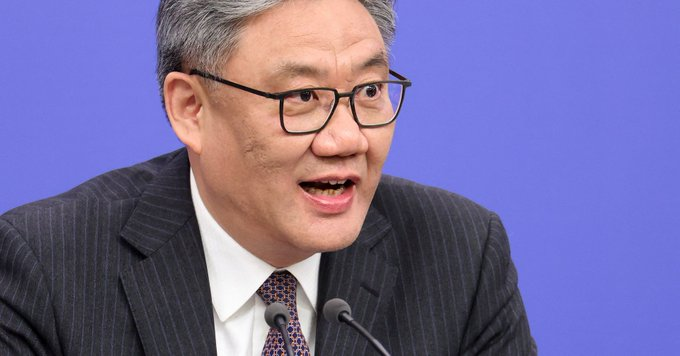
China’s Commerce Minister Wang Wentao met with Ola Källenius, President of the European Automobile Manufacturers’ Association (ACEA) and Chairman of Mercedes-Benz Group AG, in Beijing on April 23, 2026, to discuss simmering trade tensions over electric vehicles and the EU’s recent protectionist measures .
The meeting, which also included discussions with Airbus CEO Guillaume Faury, signals a concerted push by Beijing to engage directly with European industry leaders to prevent a full-blown trade war .
🔍 High-Level Engagement Amid Rising Tensions
The meeting convened as the EU has pushed forward with a series of restrictive trade measures. Having already imposed additional tariffs of up to 35.3% on Chinese-made EVs in late 2024, Brussels recently announced a new “Cybersecurity Act” and an “Industrial Accelerator Act,” which Beijing interprets as targeting Chinese technology and investment .
| Attendee | Position | Key Interest |
|---|---|---|
| Wang Wentao | Minister of Commerce of China | Urging EU to adjust “protectionist” policies |
| Ola Källenius | ACEA President & Mercedes-Benz Chairman | Defending German automakers’ access to China |
| Guillaume Faury | CEO of Airbus | Addressing aerospace cooperation and market access |
According to the Ministry of Commerce, Minister Wang expressed “serious concerns” over the EU’s recent protectionist-leaning restrictive measures, arguing they have caused “substantial harm” to bilateral economic ties . He warned that these actions threaten to damage the confidence of Chinese enterprises investing in Europe .
⚡ The EV Tariff Dispute
At the heart of the friction is the European Commission’s anti-subsidy investigation into Chinese EV imports. The EU has accused Chinese manufacturers of benefiting from “unfair” state support, threatening injury to domestic European automakers .
- Current Tariffs: The EU has imposed extra duties of up to 35.3% on top of the standard 10% import tariff .
- Minimum Price Alternatives: Both sides are reportedly exploring “minimum import price” commitments as an alternative to punitive tariffs .
- Technical Negotiations: EU Trade Commissioner Valdis Dombrovskis and Minister Wang recently acknowledged that “significant gaps” remain after eight rounds of technical talks, though dialogue continues .
Wang stressed this week that the EU has “recently introduced a series of economic and trade restrictions with a protectionist character,” and he urged Mercedes-Benz and the broader European automotive industry to use their influence within the bloc to help improve commercial ties .
🇪🇺 The German Perspective
Källenius’s presence at the meeting underscores the tension between Brussels’ regulatory stance and the business interests of German automakers, which rely heavily on the Chinese market. Mercedes-Benz sells nearly 800,000 vehicles annually in China, and local production is a key part of its strategy.
- Appeasing Both Sides: While publicly supporting “free and fair trade,” Källenius has warned that escalating trade barriers could be “extremely damaging.”
- Investment Pledge: According to MOFCOM, Källenius told Minister Wang that Mercedes will “deeply cultivate the Chinese market” and continue to “expand investment” in electrification and intelligence .
✈️ Broader Context: Aerospace and Investment
Beyond automobiles, Minister Wang also met with Airbus CEO Guillaume Faury. This signals that the friction extends beyond the automotive sector into aviation and potentially other high-tech industries .
- Airbus Cooperation: China remains one of Airbus’s largest markets. However, Beijing has expressed concern that the EU’s recent push to “de-risk” could impact aerospace cooperation .
- Investment Climate: Wang warned that the EU’s recent tightening of restrictions has “damaged the confidence of Chinese enterprises in investing in Europe,” a warning issued during the meeting with Faury as well .
🔮 Future Outlook
While Minister Wang publicly expressed hope that the EV dispute could be resolved, the tone of the meeting suggests that underlying structural tensions remain.
- Technical Talks: Negotiations on a price undertaking mechanism are ongoing, but both sides admit significant gaps remain .
- New Legislation: The EU is moving forward with new legislation that could impact Chinese digital infrastructure and industrial investment, widening the rift.
Wang concluded the meeting by urging the EU to “adjust inappropriate provisions” to create a non-discriminatory environment, while Källenius affirmed the industry’s willingness to act as a bridge to resolve trade frictions .
❓ Frequently Asked Questions (FAQs)
1. Why is China pressuring European automakers like Mercedes-Benz?
China wants influential German manufacturers to lobby Brussels against imposing high tariffs and protectionist measures. Germany has significant trade exposure to China, giving its auto giants leverage that Beijing hopes to use to soften EU policy.
2. What is the status of the EU-China EV tariff negotiations?
Negotiations are ongoing. The EU has imposed provisional duties but is considering a “minimum price undertaking” as an alternative. Both sides acknowledge that significant gaps remain .
3. Did the meeting produce any tangible commitments?
Yes. Ola Källenius reportedly reaffirmed Mercedes-Benz’s commitment to expanding investment and deepening cooperation in the Chinese market, particularly in electrification and intelligence .
Stay informed with Reflecto News – Your trusted source for breaking economic and geopolitical intelligence.
Questions people ask
What is China's current share of global manufacturing?
China now accounts for twenty eight percent of global manufacturing. This industrial output exceeds the combined manufacturing production of the United States, Japan, and Germany, making China the leading global industrial power according to recent reports.
Why were Andrew Tate and Tristan Tate arrested in Miami?
Andrew Tate and his brother Tristan Tate were taken into custody in Miami by the United States Marshals Service. They face thirty eight new charges in the United Kingdom, including rape and child pornography offences, and prosecutors are seeking their extradition.
What warning did Moscow issue about oil prices?
Kirill Dmitriev, the Chief Executive of the Russian Direct Investment Fund, warned that a tsunami of skyrocketing oil prices is approaching. Moscow describes this potential energy shock as a major threat to global markets.
What political shift is projected for Benjamin Netanyahu's coalition?
Political polls project that Prime Minister Benjamin Netanyahu's coalition is on track to lose its majority in the upcoming October election. This projection indicates a potential political shift in Jerusalem.
Why did a Russian military aircraft land in Tehran?
A Russian airborne command aircraft, widely known as a doomsday plane, landed in Tehran. The arrival of the aircraft represents a high stakes show of support from Russia for Iran during a period of heightened regional tensions.
What did President Masoud Pezeshkian claim about the United States and Israel?
Iranian President Masoud Pezeshkian claimed that the United States and Israel failed in a forty eight hour plan to topple the Iranian government. He made these statements during a televised address marking two years since his inauguration.