Reflecto News is an online news platform covering major international political events, global economic developments, and security conflicts. The site provides updates on topics such as Chinese manufacturing dominance, Middle Eastern political tensions, and high profile legal arrests. Readers can access current articles organized by categories like World News, Iran, and USA.
Published on Reflecto News | World News | Geopolitics & Strategy
On Thursday, former President Donald Trump retweeted a Washington Post column arguing that he doesn’t need a formal deal with Iran to get what he wants, adding his own succinct commentary: “Very true!!!” The post, which has been circulating widely in diplomatic and defense circles, may signal a significant shift in the administration’s approach to the conflict—one that prioritizes unilateral American gains over a messy, inconclusive negotiated settlement.
And as the situation in the Persian Gulf continues to devolve into a grinding low-intensity conflict—seized ships, mine threats, oil price shocks, and Iran’s fractured leadership—walking away with degraded Iranian capabilities and calling it a win may, in fact, be the least bad option left on the board.
The alternative is a quagmire: endless ceasefire extensions, continued economic warfare, and negotiating with a regime in Tehran that cannot even agree internally on what it wants.
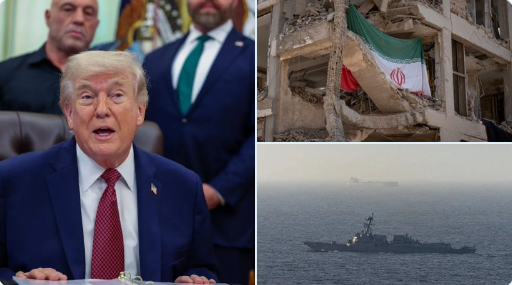
What the U.S. Has Already Achieved
By any objective measure, the six-week military campaign against Iran has already accomplished most of what a signed peace deal would have delivered—without the political baggage of concessions.
What the U.S. has done:
| Achievement | Details |
|---|---|
| Nuclear sites bombed | Fordow, Natanz, and Isfahan facilities degraded |
| Military degraded | 80% of air defenses, 90% of weapons factories, 92% of large naval vessels destroyed |
| Leadership decimated | Former supreme leader Ali Khamenei killed; successor Mojtaba severely wounded, in hiding |
| Naval blockade in place | Trump claims blockade is costing Iran $500 million per day in lost oil revenue |
| Shadow war ongoing | U.S. Navy intercepting Iranian tankers; limiting Tehran’s ability to sell crude |
As one senior administration official put it, “We’ve already taken the milk for free. Why buy the cow?”
Tehran Is Fractured, Disfigured, and in Hiding
Iran’s leadership is in disarray. The new supreme leader, Mojtaba Khamenei, has not been seen in public since the February 28 airstrike that killed his father . He is reportedly severely wounded—facial disfigurement, possible leg loss—and is governing via audio conference from an undisclosed location .
Iran’s internal fractures:
| Factor | Status |
|---|---|
| Supreme Leader | Incapacitated, in hiding |
| IRGC vs. civilians | Power struggle raging |
| Hardliners vs. pragmatists | No consensus on negotiations |
| Economic desperation | War damage estimated at $270B |
| Reconstruction needs | Cannot rebuild without sanctions relief |
The hardliners who remain have no realistic path to reconstruction without economic relief, but they also refuse to accept the U.S. terms for sanctions relief. This internal paralysis has already derailed a second round of peace talks in Islamabad .
As former Defense Secretary Robert Gates once observed, “You cannot make a deal with someone who cannot make a decision.” Iran, right now, cannot make a decision.
Walking Away: The Unspoken Advantage
If Trump declares victory and walks away, he would effectively:
- Pocket the wins: Nuclear program degraded, military crippled, leadership decapitated
- Shift the burden: Let Iran decide whether it wants to continue suffering or come back to the table on U.S. terms
- Avoid political costs: No formal deal means no concessions on sanctions relief, no domestic political blowback from “appeasing” Tehran
- Regain strategic flexibility: The U.S. could resume strikes if Iran attempts to reconstitute its nuclear program or escalate attacks on shipping
- Reframe the narrative: From “Trump failed to make a deal” to “Iran refused to negotiate and suffered the consequences”
The risk, of course, is that a formal diplomatic framework has advantages a unilateral declaration cannot provide—including verifiable limits on Iran’s nuclear program and a mechanism for sanctions relief that could encourage Iranian moderation. But given Tehran’s current dysfunction, those benefits may be illusory.
The Quagmire Alternative
The alternative is a slow bleed:
| Quagmire Indicator | Current Status |
|---|---|
| Ceasefire extensions | Already extended once; could continue indefinitely |
| Ship seizures | Both sides seizing commercial vessels |
| Mine threats | Iran laying mines; U.S. threatening “shoot and kill” |
| Oil prices | Elevated near $105/barrel |
| Inflation | Already elevated globally |
| Diplomatic talks | Stalled; Iran refuses to send delegation |
As one Pentagon official noted, “We are drifting into a ‘no war, no peace’ scenario—the worst of all worlds.”
The Washington Post Column: ‘He Doesn’t Need a Deal’
The column Trump retweeted, written by conservative commentator Marc Thiessen, argued that Trump has already achieved his core objectives in Iran without a signed agreement.
“Trump doesn’t need a deal. He has already bombed Iran’s nuclear sites, decimated its military, killed much of its leadership, and imposed a blockade that is strangling its economy. The only thing left is to declare victory and come home.”
— Marc Thiessen, Washington Post
The column went on to note that Iran’s new supreme leader is “disfigured and in hiding,” its economy is in shambles, and its military has been “hollowed out.” Thiessen concluded that Trump should “pocket the win” and let Tehran decide whether it wants to continue suffering.
Trump’s “Very true!!!” endorsement suggests the administration is seriously considering that path.
A Deal Was Always Going to Be Messy
A formal deal with Iran was never going to be clean. Even if negotiations had proceeded, any agreement would have faced opposition from:
- Israel: Netanyahu has made clear he wants Iran’s nuclear program eliminated entirely, not merely paused
- Gulf states: Saudi Arabia and the UAE are deeply skeptical of any deal that leaves Iran with residual nuclear capabilities
- Congress: Republicans would have attacked any concessions; Democrats would have demanded more
- Iran’s hardliners: They were never going to accept a deal that left the Islamic Republic intact
Given those constraints, the argument for walking away becomes compelling. Why accept a messy, incomplete, politically costly deal when you can simply declare that you have already won?
Calling It a Win: The Politics of Perception
Perception, in politics, is reality. By declaring victory and walking away, Trump could:
- Frame the narrative: “I took out Iran’s nuclear program and military. They are on their knees. The rest is up to them.”
- Shift blame for any future escalation: If Iran rebuilds its nuclear program, Trump can say, “They broke their word — and we can strike them again.”
- Avoid 1979-style hostage crisis: A formal deal would require the U.S. to release frozen assets and lift sanctions—giving Iran billions in cash that could be used to fund terrorism.
- Reassure Gulf allies: The U.S. would maintain its security umbrella, even without a formal agreement.
The risks are real, but so are the risks of a failed negotiation.
The World Will Clean Up the Mess
One way or another, the world will be left to clean up the remnants of the conflict.
- Europe will still have to deal with Iranian proxies in Lebanon and Syria
- Gulf states will still face the threat of Iranian missiles
- Global shipping will still need to navigate the Strait of Hormuz
- Oil markets will still be volatile
But those are problems for another day. Trump can declare victory, bring the troops home (or at least reduce their exposure), and let the next administration—or the next Iranian leadership—sort out the rest.
The Hardest Part: Walking Away
Walking away from a deal is psychologically and politically difficult. Presidents are expected to pursue peace, to resolve conflicts, to sign agreements in front of cameras. Declaring victory and walking away feels incomplete—like leaving a job half-finished.
But sometimes, the least bad option is the best option. And given the state of play—Iran fractured, its leader disfigured and in hiding, its economy in ruins, its military degraded—walking away may be exactly what the moment demands.
Trump has always prided himself on being a dealmaker. But the best dealmakers also know when to walk away from the table.
Frequently Asked Questions (FAQs)
1. What did Trump retweet about Iran?
Trump retweeted a Washington Post column arguing that he doesn’t need a formal deal with Iran to get what he wants, adding “Very true!!!” The column argued that Trump has already achieved his core objectives through military force and economic pressure.
2. What has the U.S. already achieved against Iran?
The U.S. has bombed Iran’s nuclear sites, degraded its military (including destroying 80% of air defenses and 92% of large naval vessels), killed much of its leadership (including former Supreme Leader Ali Khamenei), and imposed a naval blockade that Trump claims is costing Iran $500 million per day in lost oil revenue.
3. Why can’t Iran negotiate effectively right now?
Iran’s leadership is fractured. The new supreme leader, Mojtaba Khamenei, is severely wounded, disfigured, and in hiding, governing via audio conference from an undisclosed location. Hardliners and pragmatists are fighting over the path forward, and there is no consensus on whether to negotiate with the U.S.
4. What would a U.S. withdrawal from negotiations mean?
Trump could declare victory, pocket the gains from the military campaign, and walk away without a formal deal. The burden would then shift to Iran to decide whether it wants to continue suffering under the blockade or return to the table on U.S. terms.
5. Why is a formal deal problematic?
A formal deal would require the U.S. to concede sanctions relief and release frozen assets—giving Iran billions in cash that could be used to fund terrorism and rebuild its military. It would also face opposition from Israel, Gulf states, Congress, and Iran’s own hardliners.
6. What are the risks of walking away?
Walking away without a formal agreement means no verifiable limits on Iran’s nuclear program, no mechanism to ensure compliance, and no framework for sanctions relief. Iran could attempt to reconstitute its nuclear program, and the U.S. would have to decide whether to strike again.
7. What is the current status of US-Iran negotiations?
The second round of peace talks in Islamabad, planned for mid-April, never occurred. Iran has refused to send a delegation until the U.S. lifts its naval blockade of the Strait of Hormuz, and the U.S. has refused to lift the blockade until Iran agrees to a deal.
Stay informed with Reflecto News – Your trusted source for breaking geopolitical and strategic intelligence. Subscribe for real-time updates on the US-Iran crisis, Middle East diplomacy, and global security developments.
Questions people ask
What is China's current share of global manufacturing?
China now accounts for twenty eight percent of global manufacturing. This industrial output exceeds the combined manufacturing production of the United States, Japan, and Germany, making China the leading global industrial power according to recent reports.
Why were Andrew Tate and Tristan Tate arrested in Miami?
Andrew Tate and his brother Tristan Tate were taken into custody in Miami by the United States Marshals Service. They face thirty eight new charges in the United Kingdom, including rape and child pornography offences, and prosecutors are seeking their extradition.
What warning did Moscow issue about oil prices?
Kirill Dmitriev, the Chief Executive of the Russian Direct Investment Fund, warned that a tsunami of skyrocketing oil prices is approaching. Moscow describes this potential energy shock as a major threat to global markets.
What political shift is projected for Benjamin Netanyahu's coalition?
Political polls project that Prime Minister Benjamin Netanyahu's coalition is on track to lose its majority in the upcoming October election. This projection indicates a potential political shift in Jerusalem.
Why did a Russian military aircraft land in Tehran?
A Russian airborne command aircraft, widely known as a doomsday plane, landed in Tehran. The arrival of the aircraft represents a high stakes show of support from Russia for Iran during a period of heightened regional tensions.
What did President Masoud Pezeshkian claim about the United States and Israel?
Iranian President Masoud Pezeshkian claimed that the United States and Israel failed in a forty eight hour plan to topple the Iranian government. He made these statements during a televised address marking two years since his inauguration.