Reflecto News is an online news platform covering major international political events, global economic developments, and security conflicts. The site provides updates on topics such as Chinese manufacturing dominance, Middle Eastern political tensions, and high profile legal arrests. Readers can access current articles organized by categories like World News, Iran, and USA.
Reflecto News
In-depth analysis of the fragile two-week truce, Pakistan’s pivotal mediation, and prospects for permanent peace in the Middle East
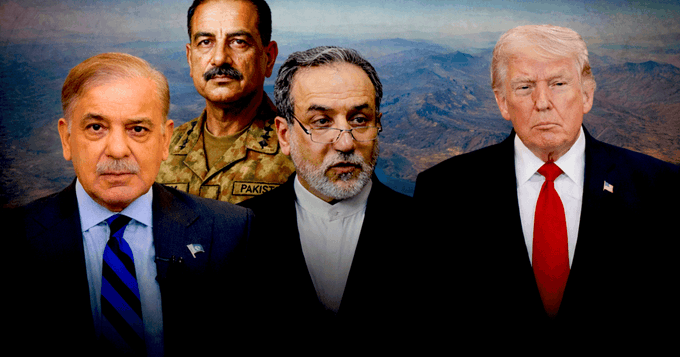
In a dramatic last-minute diplomatic breakthrough, Pakistan successfully brokered a two-week ceasefire between the United States and Iran, averting what could have been devastating US strikes on Iranian infrastructure. President Donald Trump suspended planned offensive operations just hours before his self-imposed deadline expired, after Iran committed to allowing safe, coordinated commercial shipping through the strategically vital Strait of Hormuz.
The agreement offers immediate temporary relief in a conflict that has already claimed over 2,000 lives and severely disrupted global oil supplies. It also sets the stage for high-level in-person negotiations in Islamabad, potentially beginning as early as Friday, with a possible US delegation led by or including Vice President JD Vance.
How Pakistan Engineered the Last-Minute Deal
Pakistan emerged as the central mediator in the crisis, with Prime Minister Shehbaz Sharif and senior military officials, including Army Chief Field Marshal Asim Munir, engaging in intensive backchannel diplomacy with both Washington and Tehran. Pakistani sources describe the effort as a “two-tier” or “Islamabad Accord” framework: an immediate ceasefire tied to reopening the Strait of Hormuz, followed by broader talks for a permanent resolution.
The deal was finalized less than two hours before Trump’s deadline, during which the US president had threatened severe consequences if the strait remained blocked. Iran agreed to controlled transit — potentially involving fees shared with Oman — in exchange for the US pausing attacks. Trump later described the outcome as “a big day for world peace” and suggested it could lead to a “Golden Age of the Middle East,” with reconstruction opportunities and US assistance in managing increased maritime traffic.
Key Terms of the Two-Week Ceasefire
- US Commitment: Suspension of all offensive military operations against Iran for two weeks.
- Iranian Commitment: Safe and coordinated reopening of the Strait of Hormuz for commercial shipping, easing the near-blockade that had spiked global energy prices.
- Scope Limitations: The truce focuses on direct US-Iran hostilities. Israeli Prime Minister Benjamin Netanyahu has explicitly stated it does not include operations in Lebanon against Hezbollah, where Israeli strikes continue.
- No Fixed Start Time: Implementation remains somewhat fluid, with ongoing missile exchanges between Iran and Israel adding uncertainty.
The ceasefire has already contributed to easing oil prices, providing breathing room for energy-dependent economies worldwide.
Human and Economic Toll of the Conflict
The war has resulted in significant casualties — exceeding 2,000 deaths according to various reports — along with widespread infrastructure damage, displacement, and humanitarian challenges, particularly in affected areas of Iran and Lebanon. The partial closure of the Strait of Hormuz, which handles roughly one-fifth of global oil transit, triggered supply chain disruptions and inflationary pressures far beyond the region.
Upcoming Negotiations in Islamabad
Pakistan will host the next phase of diplomacy, with US and Iranian delegations expected to engage in substantive talks. The agenda includes core disputes:
- US demands for Iran to remove all nuclear material, completely halt uranium enrichment, and curb or eliminate its ballistic missile program.
- Iran’s 10-point proposal, which calls for full sanctions relief, recognition of peaceful enrichment rights, security guarantees, and mechanisms for regional reconstruction.
China has also pledged to “play a constructive role” in restoring peace, aligning with its economic interests in stable oil flows and consistent with President Trump’s acknowledgment of Beijing’s helpful influence.
Diverging Reactions
- United States: Trump has framed the pause as a strategic success enabled by pressure and smart diplomacy, expressing optimism for long-term gains.
- Iran: Views the agreement as a step forward but stresses it does not end the underlying conflict and requires meaningful progress on its demands.
- Israel: Offers conditional support for the US-Iran pause while maintaining independent operations against perceived threats, including in Lebanon. Some hardline voices, such as Knesset National Security Committee Chairman Tzvika Foghel, have criticized the deal as insufficiently firm.
- Pakistan: Praised for its neutral and effective facilitation, positioning Islamabad as a key diplomatic hub.
Challenges Ahead
Despite the pause, risks remain high. Continued missile activity, differing interpretations of the truce’s scope, and deep divisions on nuclear and security issues could derail progress. The two-week window is short, and any major violation could lead to rapid escalation.
Global Implications
A successful permanent agreement could stabilize energy markets, reduce regional tensions, and open pathways for broader economic cooperation. Failure, however, risks renewed closure of the Strait of Hormuz and wider spillover.
FAQs: Pakistan-Brokered US-Iran Ceasefire
Q1: What was Pakistan’s exact role in the deal?
Pakistan acted as the primary mediator, proposing a framework for an immediate ceasefire tied to reopening the Strait of Hormuz and hosting follow-on talks in Islamabad. Intense backchannel efforts by Pakistani leadership helped bridge the gap hours before Trump’s deadline.
Q2: What does the ceasefire require from each side?
The US has suspended offensive strikes; Iran has agreed to safe commercial transit through the Strait of Hormuz. The pause does not automatically extend to Israeli operations in Lebanon.
Q3: When and where will further negotiations occur?
High-level talks are expected in Islamabad, Pakistan, potentially starting soon, with possible US participation by Vice President JD Vance and other senior officials.
Q4: What are the main issues for permanent resolution?
Core differences include Iran’s nuclear program (US seeks zero enrichment and material removal), ballistic missiles, sanctions relief, and regional security guarantees, including the status of proxies like Hezbollah.
Q5: How has the conflict impacted global oil supplies?
Restrictions on the Strait of Hormuz disrupted roughly 20% of global oil transit, contributing to price volatility. The ceasefire aims to ease these pressures through gradual reopening.
Q6: What role has China played?
China has encouraged de-escalation and vowed to continue a “constructive role,” consistent with its interests in regional stability and secure energy imports. President Trump has publicly credited Beijing’s influence.
This Pakistan-brokered pause represents a fragile but significant diplomatic opening in a conflict that has reshaped Middle East dynamics. Reflecto News will continue to provide accurate, timely updates on negotiations in Islamabad, military developments, and economic impacts as the situation evolves.
Questions people ask
What is China's current share of global manufacturing?
China now accounts for twenty eight percent of global manufacturing. This industrial output exceeds the combined manufacturing production of the United States, Japan, and Germany, making China the leading global industrial power according to recent reports.
Why were Andrew Tate and Tristan Tate arrested in Miami?
Andrew Tate and his brother Tristan Tate were taken into custody in Miami by the United States Marshals Service. They face thirty eight new charges in the United Kingdom, including rape and child pornography offences, and prosecutors are seeking their extradition.
What warning did Moscow issue about oil prices?
Kirill Dmitriev, the Chief Executive of the Russian Direct Investment Fund, warned that a tsunami of skyrocketing oil prices is approaching. Moscow describes this potential energy shock as a major threat to global markets.
What political shift is projected for Benjamin Netanyahu's coalition?
Political polls project that Prime Minister Benjamin Netanyahu's coalition is on track to lose its majority in the upcoming October election. This projection indicates a potential political shift in Jerusalem.
Why did a Russian military aircraft land in Tehran?
A Russian airborne command aircraft, widely known as a doomsday plane, landed in Tehran. The arrival of the aircraft represents a high stakes show of support from Russia for Iran during a period of heightened regional tensions.
What did President Masoud Pezeshkian claim about the United States and Israel?
Iranian President Masoud Pezeshkian claimed that the United States and Israel failed in a forty eight hour plan to topple the Iranian government. He made these statements during a televised address marking two years since his inauguration.