Reflecto News is an online news platform covering major international political events, global economic developments, and security conflicts. The site provides updates on topics such as Chinese manufacturing dominance, Middle Eastern political tensions, and high profile legal arrests. Readers can access current articles organized by categories like World News, Iran, and USA.
Reflecto News – In a significant development amid ongoing tensions in one of Africa’s most volatile regions, the Central African Republic (CAR) has released Joseph Figueira Martin, a dual Belgian-Portuguese humanitarian consultant working for the U.S.-based NGO FHI 360. The aid worker, detained since May 2024 on allegations of espionage and links to armed groups, was freed on Tuesday after nearly two years in custody. His family confirmed the release to international media, though CAR authorities have yet to issue an official statement.
This case highlights the complex challenges facing humanitarian organizations operating in conflict zones, where governments increasingly scrutinize foreign aid workers amid security concerns and geopolitical influences.
Who Is Joseph Figueira Martin?
Joseph Figueira Martin, often referred to in reports as a dedicated humanitarian researcher and consultant, holds dual citizenship from Belgium and Portugal. At the time of his arrest, he was employed by Family Health International (FHI 360), a prominent American non-governmental organization focused on global development, public health, and humanitarian assistance.
His work in the CAR centered on designing programs aimed at reducing poverty, expanding economic opportunities, and preventing gender-based violence—critical initiatives in a nation still recovering from years of instability. Prior to this role, Figueira Martin had contributed to research and analysis for international organizations, including the International Crisis Group.
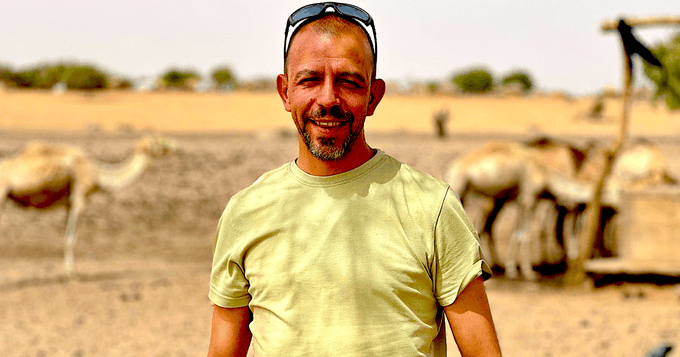
Portrait of Joseph Figueira Martin, the Belgian-Portuguese aid worker whose release marks the end of a high-profile detention case.
The Arrest: Wagner Involvement and Spying Allegations
Figueira Martin was arrested on May 26, 2024, in Zémio, a town in the southeastern Haut-Mbomou region of the CAR—a area long plagued by clashes between ethnic militias, anti-government rebels, and government forces.
According to reports, he was initially detained by fighters from the Russian Wagner Group (now often linked to Africa Corps), who accused him of holding dual passports and suspicious activities. He was later handed over to CAR authorities and transferred to Camp de Roux, a military prison in the capital Bangui known for holding high-profile detainees.
The CAR prosecutor’s office charged him with six counts, including:
- Espionage and spying
- Conspiracy to undermine state security
- Communication with armed groups to plot a coup
- Criminal association and incitement to hatred or rebellion
Authorities claimed evidence from his phone showed contacts with rebel fighters. Figueira Martin and his supporters maintained that any interactions were solely for personal safety in a dangerous operational area and denied all wrongdoing. FHI 360 emphasized that his activities aligned strictly with humanitarian goals and rejected the allegations as unfounded.
Initial detention conditions were described as relatively adequate, but after transfer to Camp de Roux, they deteriorated sharply. In July 2024, he began a hunger strike to protest poor conditions and assert his innocence. Reports also indicated he endured beatings and torture in the early days following his abduction.
Detention, Trial, and Sentencing
Figueira Martin spent over 17 months in pre-trial detention without consistent access to due process, drawing widespread criticism from human rights groups. In November 2025, a Bangui court sentenced him to 10 years of forced labor and a substantial fine of approximately 50 million CFA francs (around $81,000–$88,000 USD) for undermining state security and criminal association. Prosecutors had sought a longer term.
The prolonged detention occurred against a backdrop of CAR’s efforts to regulate foreign NGOs more strictly, particularly in rebel-prone zones. Following his arrest, officials issued warnings to aid organizations about activities that could “jeopardize national security.”
International Outcry and Advocacy Efforts
The case quickly gained international attention. Human Rights Watch, the European Parliament, and humanitarian coalitions launched petitions and resolutions calling for his unconditional release. In January 2026, the European Parliament passed a resolution condemning the arbitrary detention and urging medical evacuation if needed.
Family members, including his brother Georges Martin, publicly described the accusations as false and portrayed Figueira Martin as a “fervent defender of peace.” FHI 360 repeatedly advocated for due process and his swift release, stressing the humanitarian nature of his mission.
Advocates argued the detention reflected broader pressures on humanitarian space in the CAR, where Russian security influences have grown alongside efforts to limit Western NGO operations.
Map illustrating territorial control and armed group presence in the Central African Republic, highlighting the volatile southeast where Figueira Martin was arrested (as of recent assessments).
Release Announcement and Current Status
On Tuesday, April 7, 2026, Figueira Martin’s family informed The Associated Press that he had been freed. His brother stated the “rumor is real” and that he was expected to land in Lisbon, Portugal, within hours. As of the latest reports, the CAR government has neither confirmed the release nor commented on the legal case status.
Details surrounding the reasons for his release remain unclear, but the move comes after sustained diplomatic and advocacy pressure.
Broader Context: Conflict, Russian Influence, and NGO Challenges in the CAR
The Central African Republic has faced instability since 2013, when Muslim-led rebels ousted President François Bozizé, triggering a cycle of violence with Christian militias. A 2019 peace agreement reduced some fighting, but multiple armed groups remain active, controlling parts of the countryside.
President Faustin-Archange Touadéra, in power since 2016, has relied heavily on Russian mercenaries—initially Wagner Group forces—to bolster the military against rebels. This partnership has raised concerns about human rights and the shrinking operational freedom for international aid groups.
Arrests of foreign aid workers remain uncommon, but this case signals a tightening grip on NGOs working in sensitive areas. Humanitarian organizations warn that such incidents could deter essential aid delivery in a country where millions depend on external support for food, health, and protection.
FHI 360 field workers engaged in community health and development programs similar to those Figueira Martin supported—highlighting the vital role of NGOs in conflict-affected regions.
What’s Next for Humanitarian Work in Conflict Zones?
Figueira Martin’s release offers relief but underscores the risks humanitarian professionals face. Experts call for clearer guidelines protecting aid workers under international law while respecting national security.
As the CAR continues its fragile recovery, balancing security needs with humanitarian access will remain a critical challenge for the international community.
Reflecto News will continue monitoring developments in this story and related issues in Central Africa.
Frequently Asked Questions (FAQs)
Q1: Who is Joseph Figueira Martin?
Joseph Figueira Martin is a Belgian-Portuguese dual citizen and humanitarian consultant who worked for FHI 360 on poverty reduction, economic development, and gender-based violence prevention programs in the Central African Republic.
Q2: When and why was he arrested?
He was arrested on May 26, 2024, in Zémio, CAR, by Wagner Group fighters and later charged by authorities with espionage, conspiracy, and links to armed groups allegedly plotting against the state.
Q3: How long was he detained?
Nearly two years—from May 2024 until his release on April 7, 2026. He was held primarily at Camp de Roux military prison in Bangui.
Q4: Was he convicted?
Yes, in November 2025 he was sentenced to 10 years of forced labor and a fine following a trial on charges of undermining state security.
Q5: Why was he released?
The exact reasons are not yet publicly detailed by CAR authorities. His family confirmed the release following prolonged international advocacy by the EU, human rights organizations, and NGOs.
Q6: What does this mean for NGOs in the CAR?
The case illustrates growing scrutiny of foreign aid workers in conflict areas. It has prompted warnings to NGOs and raised concerns about the future of humanitarian operations in the region.
Q7: Where is he now?
According to family reports, he was en route to Lisbon, Portugal, shortly after release.
For the latest updates on Central African Republic news, humanitarian crises, and international aid developments, stay tuned to Reflecto News—your source for accurate, in-depth reporting.
Questions people ask
What is China's current share of global manufacturing?
China now accounts for twenty eight percent of global manufacturing. This industrial output exceeds the combined manufacturing production of the United States, Japan, and Germany, making China the leading global industrial power according to recent reports.
Why were Andrew Tate and Tristan Tate arrested in Miami?
Andrew Tate and his brother Tristan Tate were taken into custody in Miami by the United States Marshals Service. They face thirty eight new charges in the United Kingdom, including rape and child pornography offences, and prosecutors are seeking their extradition.
What warning did Moscow issue about oil prices?
Kirill Dmitriev, the Chief Executive of the Russian Direct Investment Fund, warned that a tsunami of skyrocketing oil prices is approaching. Moscow describes this potential energy shock as a major threat to global markets.
What political shift is projected for Benjamin Netanyahu's coalition?
Political polls project that Prime Minister Benjamin Netanyahu's coalition is on track to lose its majority in the upcoming October election. This projection indicates a potential political shift in Jerusalem.
Why did a Russian military aircraft land in Tehran?
A Russian airborne command aircraft, widely known as a doomsday plane, landed in Tehran. The arrival of the aircraft represents a high stakes show of support from Russia for Iran during a period of heightened regional tensions.
What did President Masoud Pezeshkian claim about the United States and Israel?
Iranian President Masoud Pezeshkian claimed that the United States and Israel failed in a forty eight hour plan to topple the Iranian government. He made these statements during a televised address marking two years since his inauguration.