Reflecto News is an online news platform covering major international political events, global economic developments, and security conflicts. The site provides updates on topics such as Chinese manufacturing dominance, Middle Eastern political tensions, and high profile legal arrests. Readers can access current articles organized by categories like World News, Iran, and USA.

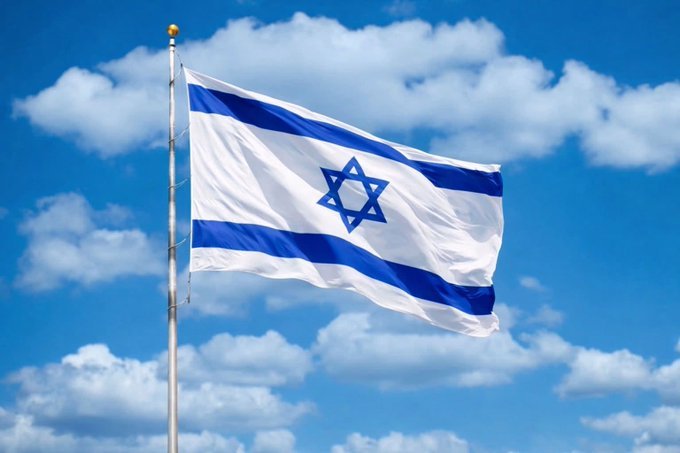
Spanish Prime Minister Pedro Sánchez issued a sharp rebuke to the Israeli government on Tuesday, March 31, 2026, following the Knesset’s approval of a law mandating the death penalty for Palestinians convicted of “terrorist” attacks. Sánchez described the legislation as an “asymmetrical measure” and a “step towards apartheid,” further straining the already fractured diplomatic relationship between Madrid and Jerusalem.
The “Same Crime, Different Punishment” Critique
In a statement released via social media, Prime Minister Sánchez highlighted what he termed the “discriminatory” nature of the law, which applies specifically to Palestinians in the occupied West Bank while effectively exempting Israeli citizens.
- Asymmetrical Justice: “Same crime, different punishment. That is not justice,” Sánchez stated. He pointed out that the law targets Palestinians tried in military courts but would not be applied to Israelis who commit identical acts of violence.
- Apartheid Warning: The Spanish leader warned that the move represents “another step toward apartheid,” echoing similar concerns raised by the United Nations and the European Union.
- Global Silence: Sánchez urged international action, declaring that “the world cannot remain silent” in the face of institutionalized discrimination.
The “Guillotine” Law: Mechanics of Execution
The legislation, passed by a 62-47 vote on Monday, was a central demand of Israel’s far-right National Security Minister, Itamar Ben-Gvir.
- Mandatory Sentencing: The law makes the death penalty—specifically by hanging—the default punishment for Palestinians convicted of intentional lethal attacks against Israelis with the aim of “denying the existence of the State of Israel.”
- No Unanimity Required: Unlike many legal systems that require a unanimous jury for capital punishment, the Israeli law allows a simple majority of judges in military courts to hand down a death sentence.
- 90-Day Window: Once sentenced, executions must be carried out within 90 days, with the law severely limiting avenues for appeal or clemency for those under military jurisdiction.
- The “Noose” Symbolism: During the legislative process, Ben-Gvir frequently wore a golden noose-shaped lapel pin, describing the law as a “day of justice” and a necessary deterrent.
A Diplomatic “Cold War”
Spain’s condemnation comes at a time of unprecedented tension between Madrid and the current U.S.-backed Israeli administration.
- Embassy Withdrawal: Spain officially withdrew its ambassador from Israel on March 11, 2026, following its opposition to the U.S.-Israeli military campaign in Iran.
- Genocide Allegations: Relations had already deteriorated following Spain’s vocal support for South Africa’s case at the ICJ, with Madrid labeling the 2023-2025 Gaza war as “genocide”—a term Israeli officials have dismissed as “antisemitic.”
- European Fracture: While Spain and Ireland have been the most vocal critics, Germany and France have also expressed “deep concern,” though they have stopped short of labeling the law as “apartheid.”
| Key Legislative Details | Status (March 31, 2026) |
| Primary Proponent | National Security Minister Itamar Ben-Gvir |
| Execution Method | Hanging (Hanging, Electric Chair, and Euthanasia were debated) |
| Application | Palestinians in the West Bank (Military Courts) |
| Appeal Rights | Effectively removed for military court defendants |
| International Stance | Condemned by Spain, Jordan, Egypt, UN, and EU |
Human Rights and Legal Challenges
The Association for Civil Rights in Israel has already filed an appeal with the Israeli Supreme Court, arguing the law is unconstitutional and violates the basic right to life. Meanwhile, Palestinian President Mahmoud Abbas called the law a “doomed bid” to intimidate the Palestinian people, asserting that it would not break their resolve for statehood.
As the Middle East remains engulfed in a broader regional war, this domestic legal shift in Israel is being viewed by international observers as a definitive pivot toward a “permanent security state” that ignores traditional Western legal norms.
Questions people ask
What is China's current share of global manufacturing?
China now accounts for twenty eight percent of global manufacturing. This industrial output exceeds the combined manufacturing production of the United States, Japan, and Germany, making China the leading global industrial power according to recent reports.
Why were Andrew Tate and Tristan Tate arrested in Miami?
Andrew Tate and his brother Tristan Tate were taken into custody in Miami by the United States Marshals Service. They face thirty eight new charges in the United Kingdom, including rape and child pornography offences, and prosecutors are seeking their extradition.
What warning did Moscow issue about oil prices?
Kirill Dmitriev, the Chief Executive of the Russian Direct Investment Fund, warned that a tsunami of skyrocketing oil prices is approaching. Moscow describes this potential energy shock as a major threat to global markets.
What political shift is projected for Benjamin Netanyahu's coalition?
Political polls project that Prime Minister Benjamin Netanyahu's coalition is on track to lose its majority in the upcoming October election. This projection indicates a potential political shift in Jerusalem.
Why did a Russian military aircraft land in Tehran?
A Russian airborne command aircraft, widely known as a doomsday plane, landed in Tehran. The arrival of the aircraft represents a high stakes show of support from Russia for Iran during a period of heightened regional tensions.
What did President Masoud Pezeshkian claim about the United States and Israel?
Iranian President Masoud Pezeshkian claimed that the United States and Israel failed in a forty eight hour plan to topple the Iranian government. He made these statements during a televised address marking two years since his inauguration.