Reflecto News is an online news platform covering major international political events, global economic developments, and security conflicts. The site provides updates on topics such as Chinese manufacturing dominance, Middle Eastern political tensions, and high profile legal arrests. Readers can access current articles organized by categories like World News, Iran, and USA.
Published on Reflecto News | World News | Diplomacy & Geopolitics
Israeli Prime Minister Benjamin Netanyahu has confirmed that US Vice President JD Vance personally reported to him on the high-stakes peace talks with Iran that collapsed over the weekend in Islamabad. Speaking to his cabinet on Monday, Netanyahu disclosed that Vance provided a detailed account of the negotiations, which ended after nearly 21 hours without an agreement .
The prime minister’s statement underscores the depth of US-Israel coordination even as the Trump administration pursues direct diplomacy with Tehran. Netanyahu said Vance “personally reported to me on the talks” and described a phone call in which the vice president explained why the negotiations ultimately failed .
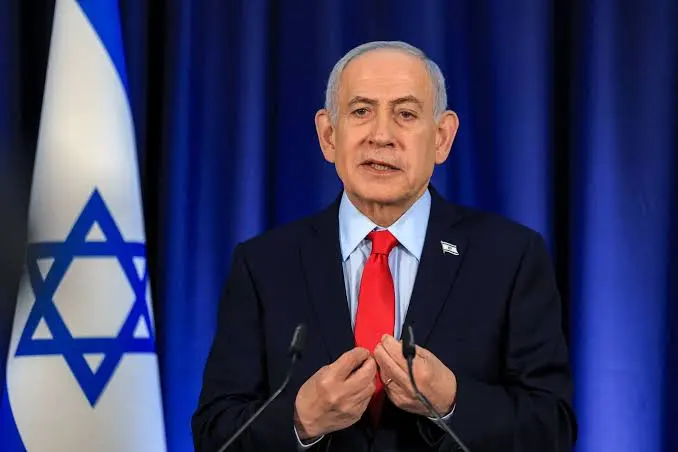
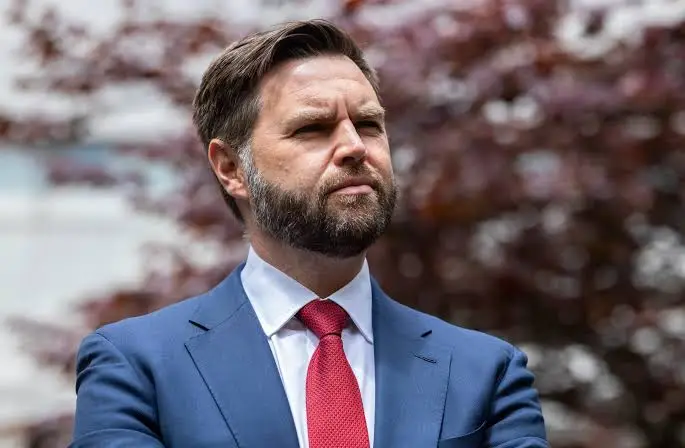
Vance’s Account: Iran Violated Ceasefire Terms
According to Netanyahu, Vance laid the blame for the collapse squarely on Tehran, telling the Israeli leader that the Iranians reneged on the core terms of the April 7 ceasefire.
“Vice President Vance told me that Iran violated the basic terms of the agreement from the start. They promised to open the Strait of Hormuz immediately, but they didn’t.” — Prime Minister Benjamin Netanyahu
The vice president reportedly explained that the American negotiating team could not accept what they viewed as a blatant violation of the truce’s central condition. The two-week ceasefire, brokered by Pakistan and announced by President Donald Trump, was explicitly conditioned on Iran’s agreement to the “COMPLETE, IMMEDIATE, and SAFE OPENING of the strategic waterway” .
Since the ceasefire took effect, maritime tracking data shows that only a handful of vessels — mostly Iranian-linked — have successfully transited the strait, while Iran has maintained that full reopening will only occur after a final peace agreement is reached .
US-Israel Coordination: ‘Unprecedented’
Netanyahu took the opportunity to push back against reports of a rift between Jerusalem and Washington, describing the current level of strategic coordination as “unprecedented” in the history of the alliance.
“The talk as if there is a disconnect between us is the complete opposite. This level of coordination has never existed before — not in the history of Israel, and not in the history of the Jewish people.” — Prime Minister Benjamin Netanyahu
The prime minister also confirmed that Israel fully supports President Trump’s decision to impose a naval blockade on Iranian ports — a move that went into effect Monday at 10 a.m. Eastern Time . The blockade is designed to cut off Iran’s oil exports and force Tehran back to the negotiating table .
Netanyahu said he and Trump are in “constant coordination” regarding the blockade and the broader military posture against Iran .
Why the Talks Failed: Nuclear and Regional Issues
According to Netanyahu, Vance also made clear that the central issue for Washington is Iran’s nuclear program. The vice president reportedly stated that the US seeks the “removal of all enriched material” from Iran and guarantees that Iran will not enrich uranium “for decades” .
| US Demand | Iranian Position | Status |
|---|---|---|
| End uranium enrichment | Insists on right to enrich for civilian purposes | Rejected |
| Surrender enriched uranium stockpile | Retain as sovereign property | Rejected |
| Dismantle nuclear facilities | Maintain for civilian research | Rejected |
| Cut support for regional proxies | Hamas, Hezbollah, Houthis are “inseparable” | Rejected |
| Fully reopen Strait of Hormuz | Only after final peace agreement | Rejected |
Sources: US and Iranian officials, multiple news reports
The talks, which took place in Islamabad and were mediated by Pakistan, represented the first direct US-Iran negotiations since the outbreak of the war on February 28 and the highest-level engagement between the two nations since the 1979 Islamic Revolution .
What Netanyahu Told His Cabinet
In his cabinet remarks, Netanyahu offered a stark assessment of the ceasefire’s future, warning that it could “flip like a coin” and collapse quickly .
“The ceasefire with Iran is fragile. It could end in a very short time. We are preparing for all scenarios.” — Prime Minister Benjamin Netanyahu
The prime minister also provided details of the Vance phone call to his ministers, describing how the vice president walked him through the sequence of events that led to the breakdown in Islamabad. Netanyahu said the “explosion” in negotiations came from the American side, which “could not tolerate Iran’s blatant violation of the agreement” .
The Broader Context: Naval Blockade and Military Options
Netanyahu’s disclosure of Vance’s personal briefing comes as the US enforces a naval blockade of Iranian ports and as the White House weighs limited military strikes on Iran .
| Development | Status |
|---|---|
| US naval blockade | Began April 13, 10 a.m. ET |
| Limited strike options | Under consideration by White House |
| Ceasefire | Fragile; could collapse “in a very short time” |
| Iran’s response | Dismisses blockade as “ridiculous”; threatens retaliation |
Iran has dismissed the blockade as a “bluff,” with senior officials mocking the US president’s credibility and warning that any “erroneous maneuver will trap the enemy in deadly whirlpools in the strait” . The Islamic Revolutionary Guard Corps (IRGC) has also warned that any military vessels approaching the strait will be considered a violation of the ceasefire and will face a “harsh and decisive” response .
What Comes Next
As the US naval blockade continues and diplomatic efforts remain stalled, Israel is reportedly preparing for a range of potential security outcomes .
| Scenario | Likelihood | Israeli Preparation |
|---|---|---|
| Ceasefire holds | Uncertain | Continued monitoring |
| Ceasefire collapses | Elevated | Preparing for return to hostilities |
| Iran retaliates against Israel | Possible | Air defense and military readiness |
| US-Israel coordinated action | Possible | “Unprecedented” coordination continues |
Netanyahu’s public confirmation of Vance’s personal briefing serves multiple purposes: it demonstrates the closeness of US-Israel ties, reinforces the narrative that Iran is to blame for the diplomatic failure, and signals to Tehran that Israel is fully informed and aligned with Washington’s strategy .
For now, the ceasefire holds — but as Netanyahu warned, it could “flip like a coin” at any moment .
Frequently Asked Questions (FAQs)
1. What did Netanyahu say about Vance briefing him on Iran talks?
Netanyahu confirmed that Vice President JD Vance “personally reported to me on the talks,” providing a detailed account of why the negotiations failed .
2. What did Vance tell Netanyahu about why the talks collapsed?
According to Netanyahu, Vance said Iran “violated the basic terms of the agreement from the start” by failing to immediately reopen the Strait of Hormuz, as required by the ceasefire .
3. Is there a rift between the US and Israel?
Netanyahu denied reports of a rift, stating that the level of strategic coordination between the two countries is “unprecedented” .
4. Does Israel support the US naval blockade of Iran?
Yes. Netanyahu confirmed that Israel “fully supports” President Trump’s decision to impose a naval blockade on Iranian ports .
5. What is the status of the ceasefire?
Netanyahu warned that the ceasefire is “fragile” and could “end in a very short time” or “flip like a coin” .
6. What were the main sticking points in the talks?
The main issues were Iran’s nuclear program (US demands end to enrichment; Iran refuses), support for regional proxies (Iran refuses to cut ties), and the Strait of Hormuz (Iran insists full reopening only after final peace deal) .
7. What happens next?
The US naval blockade continues, military options remain under consideration, and the ceasefire could collapse at any moment. Israel is preparing for multiple scenarios .
Stay informed with Reflecto News – Your trusted source for breaking diplomatic and geopolitical intelligence. Subscribe for real-time updates on US-Israel coordination, the Iran crisis, and regional security developments.
Questions people ask
What is China's current share of global manufacturing?
China now accounts for twenty eight percent of global manufacturing. This industrial output exceeds the combined manufacturing production of the United States, Japan, and Germany, making China the leading global industrial power according to recent reports.
Why were Andrew Tate and Tristan Tate arrested in Miami?
Andrew Tate and his brother Tristan Tate were taken into custody in Miami by the United States Marshals Service. They face thirty eight new charges in the United Kingdom, including rape and child pornography offences, and prosecutors are seeking their extradition.
What warning did Moscow issue about oil prices?
Kirill Dmitriev, the Chief Executive of the Russian Direct Investment Fund, warned that a tsunami of skyrocketing oil prices is approaching. Moscow describes this potential energy shock as a major threat to global markets.
What political shift is projected for Benjamin Netanyahu's coalition?
Political polls project that Prime Minister Benjamin Netanyahu's coalition is on track to lose its majority in the upcoming October election. This projection indicates a potential political shift in Jerusalem.
Why did a Russian military aircraft land in Tehran?
A Russian airborne command aircraft, widely known as a doomsday plane, landed in Tehran. The arrival of the aircraft represents a high stakes show of support from Russia for Iran during a period of heightened regional tensions.
What did President Masoud Pezeshkian claim about the United States and Israel?
Iranian President Masoud Pezeshkian claimed that the United States and Israel failed in a forty eight hour plan to topple the Iranian government. He made these statements during a televised address marking two years since his inauguration.