Reflecto News is an online news platform covering major international political events, global economic developments, and security conflicts. The site provides updates on topics such as Chinese manufacturing dominance, Middle Eastern political tensions, and high profile legal arrests. Readers can access current articles organized by categories like World News, Iran, and USA.
Published on Reflecto News | World News | Defense & Geopolitics
President Donald Trump has issued a stark warning that any Iranian “fast attack ships” that approach the newly established US naval blockade of Iranian ports will be “immediately eliminated.” The threat, posted on Truth Social, escalates tensions in the Strait of Hormuz as the US military begins enforcing a sweeping blockade following the collapse of peace talks in Islamabad .
“Warning: If any of these ships come anywhere close to our BLOCKADE, they will be immediately ELIMINATED, using the same system of kill that we use against the drug dealers on boats at Sea. It is quick and brutal.” — President Donald Trump
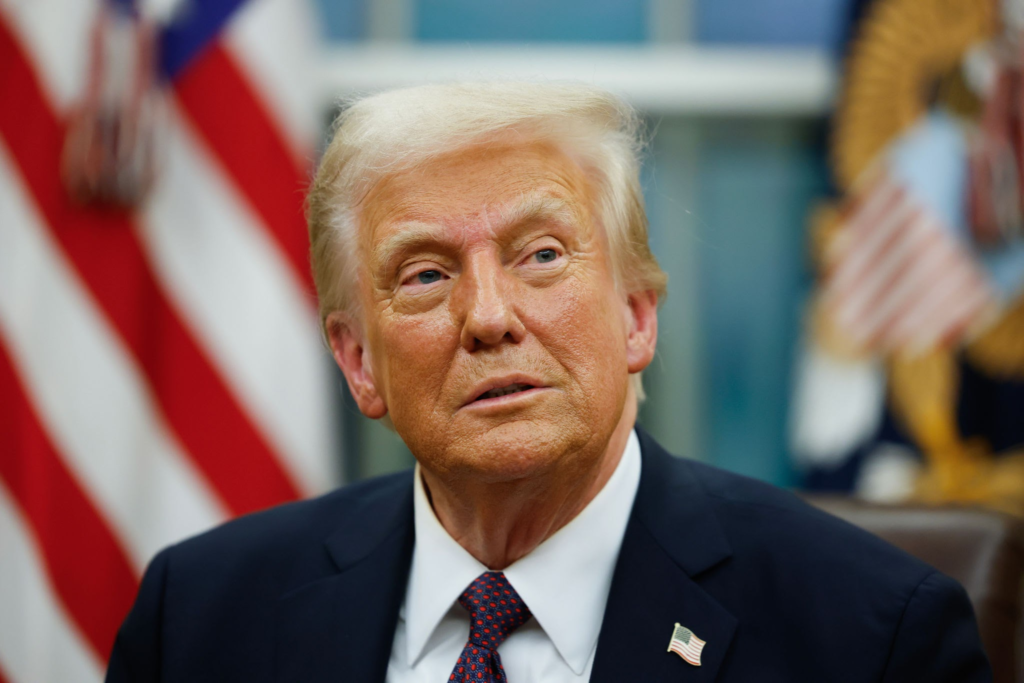
‘Completely Obliterated’ but ‘Fast Attack Ships’ Remain
President Trump described Iran’s conventional navy as already neutralized, but acknowledged that a specific threat remains.
“Iran’s Navy is laying at the bottom of the sea, completely obliterated – 158 ships. What we have not hit are their small number of, what they call, ‘fast attack ships,’ because we did not consider them much of a threat.” — President Donald Trump
According to military analysts, the Islamic Revolutionary Guard Corps (IRGC) maintains a fleet of small, high-speed vessels designed for asymmetric warfare in the narrow confines of the Gulf. Unlike larger warships, these fast attack craft prioritize speed, stealth, and agility, capable of firing missiles, deploying mines, and disrupting commercial shipping . The Strait of Hormuz is just around 20 miles wide at its narrowest point, providing these boats with a clear tactical edge .
The Blockade: Rules of Engagement
The US naval blockade officially began at 10:00 AM Eastern Time on Monday, April 13, 2026 . The operation, ordered by President Trump following the collapse of weekend peace talks in Islamabad, represents a dramatic escalation in the six-week war .
Key enforcement rules:
- Authorization: All vessels entering or departing the blockaded area must obtain prior authorization
- Impartial Enforcement: The blockade will be enforced against vessels of all nations entering or departing Iranian ports and coastal areas
- Neutral Vessel Transit: US forces will not impede freedom of navigation for vessels transiting the Strait of Hormuz to and from non-Iranian ports
- Consequences: Unauthorized vessels will be intercepted, diverted, and subject to capture
- Mariner Advisory: All mariners are advised to monitor Notice to Mariners broadcasts and contact US naval forces on bridge-to-bridge channel 16 when operating in the Gulf of Oman and Strait of Hormuz approaches
Why the IRGC’s Fast Attack Ships Remain a Threat
The US has largely destroyed Iran’s conventional navy. However, a crucial element of Iran’s maritime strength remains operational . The IRGC’s fast attack craft are tailored for the narrow waters of the Gulf and the Strait of Hormuz. Experts note that they are difficult to detect, often hidden within underground coastal facilities carved into rocky terrain .
Tom Sharpe, a retired Royal Navy commander, recently noted that Iran’s IRGC still has plenty of options, including fast-attack craft, mini submarines, mines, and even jet skis packed with explosives .
The Nuclear and Diplomatic Context
Trump’s warning comes just after the collapse of the first direct US-Iran negotiations in over a decade, which took place in Islamabad . Vice President JD Vance, who led the American delegation, said Iran “chose not to accept our terms,” with Washington’s core demand being that Tehran abandon its nuclear program .
Key US demands that were rejected include:
- End uranium enrichment: Iran insists on right to enrich for civilian purposes
- Surrender enriched uranium stockpile: Iran refuses to give up its nuclear material
- Dismantle nuclear facilities: Iran maintains facilities for civilian research
- Cut support for regional proxies: Iran views Hamas, Hezbollah, and Houthis as “inseparable”
- Fully reopen Strait of Hormuz: Iran insists only after final peace agreement
According to Netanyahu, Vice President Vance made it clear that the central issue for Washington is “removing all enriched material and ensuring that there will be no enrichment in the coming years — possibly for decades — inside Iran.”
Iran’s Response: ‘Ridiculous’ and ‘Illegal’
Iranian officials have dismissed the blockade as “ridiculous” while warning of severe consequences for any attempted enforcement .
“The threats of the US president to blockade Iran at sea … are very ridiculous and funny.” — Shahram Irani, Iranian Naval Commander
The Islamic Revolutionary Guard Corps (IRGC) Navy declared that the Strait of Hormuz remains under Iran’s “full control” and warned that any “erroneous maneuver will trap the enemy in deadly whirlpools in the strait” . The IRGC also warned that any military vessels attempting to approach the strait will be considered a violation of the fragile two-week ceasefire and will face a “harsh and decisive” response .
An Iranian armed forces spokesman called the US restrictions on international waters “illegal” and “tantamount to piracy” . Meanwhile, Tehran has warned that it will implement a “permanent mechanism” to control the Strait of Hormuz, stressing that if Iranian ports are compromised, then no port in the Gulf or the Gulf of Oman will be considered safe .
The Ceasefire: Fragile and Threatened
The blockade comes as the two-week ceasefire between the US and Iran, brokered by Pakistan and announced on April 7, remains in effect—but is increasingly fragile .
| Ceasefire Element | Status |
|---|---|
| Direct US-Iran hostilities | Paused (fragile) |
| US naval blockade | Began April 13 |
| Iran’s response | Threat to consider blockade a violation |
| Israel-Lebanon front | Active; no ceasefire |
| Diplomatic negotiations | Collapsed; no new talks scheduled |
The ceasefire was explicitly conditioned on Iran’s agreement to the “COMPLETE, IMMEDIATE, and SAFE OPENING” of the strategic waterway . Since the ceasefire took effect, maritime tracking data shows that only a handful of vessels — mostly Iranian-linked — have successfully transited the strait, while Iran has maintained that full reopening will only occur after a final peace agreement is reached .
What Comes Next: A Dangerous Standoff
As the US blockade takes effect and Iran threatens retaliation, the risk of direct military confrontation in the narrow waters of the Strait of Hormuz has significantly increased.
| Scenario | Likelihood | Implications |
|---|---|---|
| Iran tests blockade with fast attack craft | Elevated | US has promised “immediate elimination” |
| US intercepts Iranian tanker | Moderate | Risk of escalation |
| Iran retaliates with mine/drone attack | Moderate | Could trigger wider war |
| Blockade leads to oil price spike | High | Global economic impact |
| Diplomatic breakthrough | Low | Iran has rejected US terms |
The situation in the Gulf has moved rapidly toward a new and more dangerous threshold. Whether CENTCOM’s naval forces can enforce the blockade without triggering a direct military engagement with IRGC naval and air assets remains the central operational question . Iranian small-boat tactics, sea mines, and shore-based anti-ship missile batteries present real risks to any enforcement mission in the confined waters of the Arabian Gulf .
For now, the US Navy is enforcing the blockade—and the world is watching to see who blinks first.
Frequently Asked Questions (FAQs)
1. What did President Trump say about Iranian fast attack ships?
Trump warned that any Iranian “fast attack ships” that come close to the US blockade “will be immediately eliminated, using the same system of kill that we use against the drug dealers on boats at Sea. It is quick and brutal” .
2. What are Iranian ‘fast attack ships’?
These are small, high-speed vessels operated by the Islamic Revolutionary Guard Corps (IRGC), designed for asymmetric warfare in the narrow waters of the Gulf. They are capable of firing missiles, deploying mines, and disrupting commercial shipping .
3. When did the US naval blockade begin?
The blockade officially began at 10:00 AM Eastern Time on Monday, April 13, 2026, following a presidential proclamation .
4. What are the rules of the blockade?
US forces are authorized to stop, inspect, divert, and capture vessels entering or leaving Iranian ports. The blockade is enforced impartially against vessels of all nations, but US forces will not impede vessels transiting the strait to non-Iranian ports .
5. How has Iran responded to the blockade?
Iran has dismissed the blockade as “ridiculous” and “illegal,” warning that any military vessels approaching the strait will be considered a violation of the ceasefire and will face a “harsh and decisive” response .
6. Is the ceasefire still in effect?
The two-week ceasefire remains in effect but is increasingly fragile. Iran has warned that the blockade itself may be considered a violation .
7. What happens if Iran tests the blockade?
Trump has promised that any Iranian fast attack ships that approach the blockade will be “immediately eliminated.” Such an incident could trigger a wider military confrontation .
Stay informed with Reflecto News – Your trusted source for breaking defense and geopolitical intelligence. Subscribe for real-time updates on the Strait of Hormuz blockade, US-Iran military tensions, and global energy security.
Questions people ask
What is China's current share of global manufacturing?
China now accounts for twenty eight percent of global manufacturing. This industrial output exceeds the combined manufacturing production of the United States, Japan, and Germany, making China the leading global industrial power according to recent reports.
Why were Andrew Tate and Tristan Tate arrested in Miami?
Andrew Tate and his brother Tristan Tate were taken into custody in Miami by the United States Marshals Service. They face thirty eight new charges in the United Kingdom, including rape and child pornography offences, and prosecutors are seeking their extradition.
What warning did Moscow issue about oil prices?
Kirill Dmitriev, the Chief Executive of the Russian Direct Investment Fund, warned that a tsunami of skyrocketing oil prices is approaching. Moscow describes this potential energy shock as a major threat to global markets.
What political shift is projected for Benjamin Netanyahu's coalition?
Political polls project that Prime Minister Benjamin Netanyahu's coalition is on track to lose its majority in the upcoming October election. This projection indicates a potential political shift in Jerusalem.
Why did a Russian military aircraft land in Tehran?
A Russian airborne command aircraft, widely known as a doomsday plane, landed in Tehran. The arrival of the aircraft represents a high stakes show of support from Russia for Iran during a period of heightened regional tensions.
What did President Masoud Pezeshkian claim about the United States and Israel?
Iranian President Masoud Pezeshkian claimed that the United States and Israel failed in a forty eight hour plan to topple the Iranian government. He made these statements during a televised address marking two years since his inauguration.