Reflecto News is an online news platform covering major international political events, global economic developments, and security conflicts. The site provides updates on topics such as Chinese manufacturing dominance, Middle Eastern political tensions, and high profile legal arrests. Readers can access current articles organized by categories like World News, Iran, and USA.
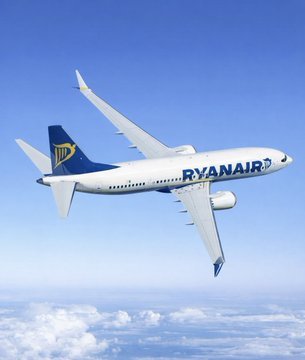
DUBLIN / LONDON — In a stark warning to the European aviation sector, Ryanair—the continent’s largest budget carrier—has cautioned that “significant fuel supply disruptions” are likely to hit its flight schedules as early as May 2026. The announcement, made on Wednesday, April 1, 2026, ties the potential grounding of aircraft directly to the ongoing U.S.-Israeli war with Iran, which has entered a volatile second month of “infrastructure targeting.”
The warning comes as global oil markets reel from the blockade of the Strait of Hormuz and the diversion of tankers around the Cape of Good Hope, a shift that has doubled transit times and sent the cost of Jet A-1 fuel to record highs.
1. The “May Squeeze”: Why the Delay?
While current fuel reserves have kept the “Easter Travel” window relatively stable, Ryanair CEO Michael O’Leary signaled that the cumulative impact of the war will manifest fully in the second quarter.
- Depleted Strategic Reserves: European refineries, which rely heavily on Middle Eastern crude and refined products, are seeing their “buffer” stocks vanish.
- The Logistics Bottleneck: With the Suez Canal effectively bypassed by most major carriers due to Yemeni missile strikes, the arrival of replacement fuel in European hubs like Dublin, Stansted, and Berlin is facing a 15-to-20-day delay.
- Price Volatility: Ryanair noted that while they are heavily hedged for 2026, “hedging doesn’t matter if the physical fuel isn’t at the airport.”
2. Impact on the 2026 Summer Season
The timing of the disruption is particularly critical for the tourism industry, which was expecting a record-breaking summer.
- Possible Cancellations: Ryanair has warned that if a ceasefire is not reached by the April 6 deadline set by the Trump administration, the airline may have to proactively cancel “low-load” flights in May to preserve fuel for primary routes.
- Surcharges Incoming: Industry analysts expect that even if flights remain operational, “War Risk Surcharges” could add €20–€50 to the price of a standard ticket to cover the skyrocketing cost of spot-market fuel.
- The “Domino Effect”: Other carriers, including Lufthansa and IAG (British Airways/Iberia), are reportedly monitoring the situation closely, with fears that the fuel shortage could trigger a coordinated reduction in European air capacity.
3. The Geopolitical Energy Map
The disruption highlights the extreme vulnerability of the European “just-in-time” energy model to a prolonged conflict in the Persian Gulf.
| Metric | Pre-War (Feb 2026) | Current (April 2026) | Forecast (May 2026) |
| Jet Fuel Price (per tonne) | ~$840 | ~$1,350 | ~$1,600 (Est.) |
| Tanker Transit (Gulf to EU) | 18 Days | 36+ Days | High Volatility |
| Ryanair Flight Stability | 99.8% | 94% (Strikes/Airspace) | 80% (Projected) |
| U.S. Gas Price | ~$3.10 / Gal | $4.00+ / Gal | $4.40+ / Gal |
Analysis: The “Cost of War” Hits the Consumer
Ryanair’s warning is the first major admission from the private sector that the U.S.-Iran war is moving from a regional military engagement to a global economic crisis. As President Trump prepares for his 9:00 PM ET address tonight, the “Ryanair Factor” adds to a growing pile of evidence that the war is becoming “unaffordable” for the Western consumer.
For travelers, the message is clear: the April 6 negotiations are no longer just about Middle Eastern security—they are about whether the 2026 summer vacation survives the fallout of Operation Epic Fury. If the “May Squeeze” becomes a reality, the travel industry may face its biggest crisis since the 2020 lockdowns, this time driven by the scarcity of energy rather than a virus.
Questions people ask
What is China's current share of global manufacturing?
China now accounts for twenty eight percent of global manufacturing. This industrial output exceeds the combined manufacturing production of the United States, Japan, and Germany, making China the leading global industrial power according to recent reports.
Why were Andrew Tate and Tristan Tate arrested in Miami?
Andrew Tate and his brother Tristan Tate were taken into custody in Miami by the United States Marshals Service. They face thirty eight new charges in the United Kingdom, including rape and child pornography offences, and prosecutors are seeking their extradition.
What warning did Moscow issue about oil prices?
Kirill Dmitriev, the Chief Executive of the Russian Direct Investment Fund, warned that a tsunami of skyrocketing oil prices is approaching. Moscow describes this potential energy shock as a major threat to global markets.
What political shift is projected for Benjamin Netanyahu's coalition?
Political polls project that Prime Minister Benjamin Netanyahu's coalition is on track to lose its majority in the upcoming October election. This projection indicates a potential political shift in Jerusalem.
Why did a Russian military aircraft land in Tehran?
A Russian airborne command aircraft, widely known as a doomsday plane, landed in Tehran. The arrival of the aircraft represents a high stakes show of support from Russia for Iran during a period of heightened regional tensions.
What did President Masoud Pezeshkian claim about the United States and Israel?
Iranian President Masoud Pezeshkian claimed that the United States and Israel failed in a forty eight hour plan to topple the Iranian government. He made these statements during a televised address marking two years since his inauguration.