Reflecto News is an online news platform covering major international political events, global economic developments, and security conflicts. The site provides updates on topics such as Chinese manufacturing dominance, Middle Eastern political tensions, and high profile legal arrests. Readers can access current articles organized by categories like World News, Iran, and USA.
Reflecto News – April 8, 2026
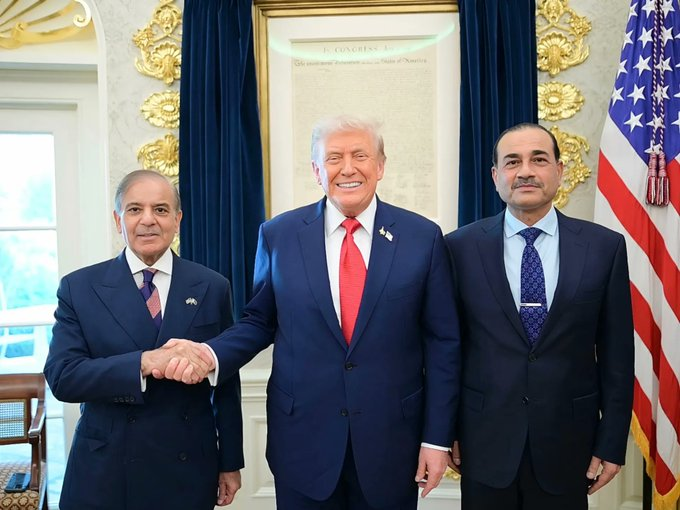
The White House actively pressed Pakistan to help broker a temporary two-week ceasefire with Iran, even as President Donald Trump publicly ramped up threats of devastating strikes against the Islamic Republic, according to a report by the Financial Times. The behind-the-scenes diplomatic push, which originated from Trump’s team, focused on securing a pause in fighting tied to the reopening of the Strait of Hormuz.
For weeks, senior US officials urged Pakistani leaders — including Prime Minister Shehbaz Sharif and Army Chief Field Marshal Asim Munir — to convince Tehran to accept a limited de-escalation. The proposal centered on Iran allowing safe commercial shipping through the critical waterway in exchange for the US holding off on major strikes, particularly on civilian infrastructure.
Dual-Track Strategy: Private Diplomacy, Public Pressure
The Financial Times cites people familiar with the talks, revealing that the idea for the pause came directly from Trump’s inner circle. While Trump issued stark warnings — including his 8 p.m. ET deadline and statements about a “whole civilization” potentially being destroyed — the administration worked quietly through Pakistani channels to avoid immediate escalation.
Pakistan’s role proved pivotal due to its geographic proximity to Iran, strong historical ties with Tehran, and growing relationship with the Trump administration. The back-channel efforts culminated in the announcement of the conditional two-week ceasefire late on April 7, just before the deadline.
Key Elements of the Ceasefire
The agreement, as described by US and Pakistani sources, includes:
- A two-week suspension of major US strikes on Iran.
- Iran committing to limited, military-coordinated reopening of the Strait of Hormuz for commercial shipping.
- Planned direct US-Iran talks in Islamabad on Friday, April 10.
However, significant disagreements persist. The White House has clarified that Iran’s publicly released 10-point plan is not the actual deal agreed upon, viewing it instead as an opening position for negotiations. Israel has also stated that the truce does not cover its ongoing operations against Hezbollah in Lebanon.
Current Challenges to the Truce
The ceasefire remains highly fragile:
- Iran has suspended tanker passage through the Strait of Hormuz in protest over continued Israeli strikes in Lebanon and has conditioned its full participation in Islamabad talks on a Lebanon ceasefire.
- Iranian sources have accused the UAE of involvement in today’s attack on the Lavan Island refinery using Mirage-2000-9 jets, though the US has denied any linkage to American or Israeli forces.
- Iran has threatened retaliatory action against Israel and warned it could withdraw from the agreement entirely.
Impact on Global Energy Markets
Any disruption to the planned limited reopening of the Strait of Hormuz risks worsening already severe energy shortages. Qatar’s Ras Laffan LNG complex has suffered lasting damage (approximately 17% capacity loss for 3–5 years), with global LNG shortfalls potentially reaching 35 million tons in 2026. India’s planned first Iranian oil shipment in seven years could also face delays.
Broader Diplomatic Context
Russia has condemned US-Israeli efforts to destabilize Iran “in the strongest possible terms,” while European leaders and Pope Leo XIV continue to call for restraint and civilian protection.
The coming days — including the potential Hormuz reopening on April 9–10 and the Islamabad talks — will test whether the dual-track US approach of private diplomacy and public pressure can deliver lasting stability or if diverging interpretations of the ceasefire will cause it to collapse.
FAQs on the US-Pakistan Brokered Ceasefire
Q1: Did the White House initiate the ceasefire idea?
Yes. According to the Financial Times, the concept for the temporary pause originated from Trump’s team, which then pushed Pakistan to mediate with Iran.
Q2: What was the main condition for the ceasefire?
Iran agreeing to reopen the Strait of Hormuz to commercial shipping in exchange for the US suspending major strikes for two weeks.
Q3: Why the public escalation alongside private talks?
The dual approach appears designed to maintain maximum leverage while creating space for diplomacy through trusted intermediaries like Pakistan.
Q4: Is the ceasefire holding?
It is highly fragile. Iran has suspended tanker traffic through the Strait of Hormuz and conditioned further steps on a Lebanon ceasefire, while Israel continues operations against Hezbollah.
Q5: What role did Pakistan play?
Pakistan served as the primary back-channel mediator, leveraging its relationships with both Washington and Tehran to facilitate the agreement.
Q6: How does this affect global energy markets?
Continued uncertainty over the Strait of Hormuz risks prolonging oil and LNG disruptions, exacerbating shortages and price volatility caused by damage to Qatari facilities.
Reflecto News will continue monitoring developments from the White House, Iranian responses, the situation in the Strait of Hormuz, Israeli actions in Lebanon, and any progress toward the Islamabad talks.
Stay informed with Reflecto News – Your source for accurate, timely coverage of the U.S.-Iran ceasefire dynamics, diplomatic maneuvers, and their global repercussions.
Questions people ask
What is China's current share of global manufacturing?
China now accounts for twenty eight percent of global manufacturing. This industrial output exceeds the combined manufacturing production of the United States, Japan, and Germany, making China the leading global industrial power according to recent reports.
Why were Andrew Tate and Tristan Tate arrested in Miami?
Andrew Tate and his brother Tristan Tate were taken into custody in Miami by the United States Marshals Service. They face thirty eight new charges in the United Kingdom, including rape and child pornography offences, and prosecutors are seeking their extradition.
What warning did Moscow issue about oil prices?
Kirill Dmitriev, the Chief Executive of the Russian Direct Investment Fund, warned that a tsunami of skyrocketing oil prices is approaching. Moscow describes this potential energy shock as a major threat to global markets.
What political shift is projected for Benjamin Netanyahu's coalition?
Political polls project that Prime Minister Benjamin Netanyahu's coalition is on track to lose its majority in the upcoming October election. This projection indicates a potential political shift in Jerusalem.
Why did a Russian military aircraft land in Tehran?
A Russian airborne command aircraft, widely known as a doomsday plane, landed in Tehran. The arrival of the aircraft represents a high stakes show of support from Russia for Iran during a period of heightened regional tensions.
What did President Masoud Pezeshkian claim about the United States and Israel?
Iranian President Masoud Pezeshkian claimed that the United States and Israel failed in a forty eight hour plan to topple the Iranian government. He made these statements during a televised address marking two years since his inauguration.