Published on Reflecto News | World News | Diplomacy & Conflict
In a sharp contradiction that has injected fresh uncertainty into the high-stakes Islamabad peace talks, the White House has officially denied that the United States has agreed to release any frozen Iranian assets. The denial came just hours after Iranian officials claimed that Washington had agreed to unfreeze billions of dollars in Iranian funds held in Qatar and other foreign banks as a sign of “seriousness” in reaching a deal .
A senior U.S. official, speaking to multiple news outlets on Saturday, flatly rejected the Iranian assertions, stating that the White House has not yet agreed to unfreeze Iran’s overseas assets . The denial came shortly after Reuters reported, citing a senior Iranian source, that the United States had agreed to release the funds—a move Tehran viewed as a critical test of goodwill and a new indication toward reaching a lasting agreement .

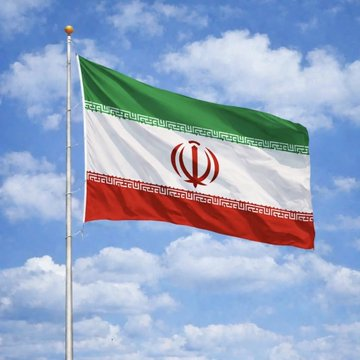
Conflicting Narratives on the Eve of Talks
The conflicting accounts emerged as both American and Iranian delegations assembled in Islamabad for the first face-to-face negotiations since the outbreak of hostilities on February 28. The Iranian delegation, led by Parliament Speaker Mohammad Bagher Ghalibaf and Foreign Minister Abbas Araghchi, had earlier signaled that the release of frozen assets was one of two key preconditions—alongside a ceasefire in Lebanon—that must be fulfilled before negotiations could begin .
A senior Iranian source told Reuters that the United States had agreed to release the funds, with a second Iranian source specifying that approximately $6 billion held in Qatari bank accounts would be unfrozen . The source described the purported U.S. move as a sign of “seriousness” and said the step was “directly linked to ensuring safe passage through the Strait of Hormuz,” a key global oil transit route central to the ongoing discussions .
However, a White House official swiftly denied the assertion, calling the claims “false” . A senior U.S. official told Xinhua that the White House has not yet agreed to unfreeze Iran’s overseas assets, creating a significant diplomatic gap as the talks prepared to commence .
The $6 Billion Question: Background on the Frozen Funds
The assets at the center of the dispute have a complex history dating back nearly a decade. The $6 billion in question stems from Iranian oil sales to South Korea and had been blocked in South Korean banks after then-President Donald Trump reimposed sanctions on Iran in 2018 and withdrew the United States from the Joint Comprehensive Plan of Action (JCPOA), the landmark nuclear deal between Iran and world powers .
The funds had been due for release in 2023 as part of a U.S.-Iranian prisoner swap mediated by Qatar. Under that agreement, the money was transferred to Qatari bank accounts, and five U.S. citizens detained in Iran were released in exchange for the funds’ release and the release of five Iranians held in the United States .
U.S. officials said at the time that the money was restricted to humanitarian use only—to be disbursed to approved vendors for food, medicine, medical equipment, and agricultural goods shipped into Iran under U.S. Treasury oversight . However, following the October 7, 2023 attacks on Israel by Hamas—an Iran-backed group—the Biden administration again froze the funds, stating that Iran would not be able to access the money for the foreseeable future .
| Asset Details | Information |
|---|---|
| Total amount | $6 billion |
| Origin | Iranian oil sales to South Korea |
| Current location | Qatari bank accounts |
| Original freeze date | 2018 (Trump sanctions reimposition) |
| 2023 status | Released as part of prisoner swap |
| Re-freeze date | Post-October 7, 2023 (Biden administration) |
| Purpose restriction | Humanitarian goods only (food, medicine, agricultural products) |
Sources: Reuters, multiple news reports
Iran’s Conditions: Assets and Lebanon Ceasefire
The asset release issue is intimately tied to Iran’s broader negotiating strategy. Parliament Speaker Ghalibaf had explicitly stated that two measures “mutually agreed upon between the parties have yet to be implemented: a ceasefire in Lebanon and the release of Iran’s blocked assets prior to the commencement of negotiations” .
The Iranian source who spoke to Reuters confirmed that unfreezing the assets was “directly linked to ensuring safe passage through the Strait of Hormuz,” suggesting that Tehran sees the asset release as part of a broader package that would include the reopening of the strategic waterway to normal commercial traffic .
However, the White House denial indicates that this linkage—at least from Washington’s perspective—has not been finalized. The conflicting signals suggest that negotiations remain fluid, with key details yet to be agreed upon or publicly acknowledged .
The Lebanon Precondition: Also Unfulfilled
Compounding the uncertainty, Iranian officials have also indicated that the second precondition—a ceasefire in Lebanon—has not yet been fully satisfied. According to a report from China’s state-run Xinhua news agency, an Iranian “informed source” told reporters on Saturday that conditions set by Tehran for the start of negotiations have not yet been met .
The source specifically noted that “the release of Iran’s frozen assets and a ceasefire in Lebanon—conditions set by Tehran for the start of the negotiations—have not yet been met” . This assessment aligns with the White House denial and suggests that, from Iran’s perspective, the preconditions for successful negotiations remain outstanding.
The Lebanon front remains highly active despite the two-week US-Iran ceasefire announced on April 7. Israeli strikes have continued against Hezbollah targets in Lebanon, with Lebanese health authorities reporting that over 1,900 people have been killed since the conflict began on March 2 . Hezbollah has continued rocket and missile attacks on Israeli territory, including a strike targeting the Ashdod naval base .
The United States and Israel have consistently maintained that the ceasefire does not apply to Lebanon, with President Trump describing the conflict there as “a separate skirmish” . This position directly contradicts Iran’s insistence that Lebanon is an “inseparable part” of any ceasefire agreement.
Vance’s Warning: ‘Don’t Play Us’
The asset denial comes as Vice President JD Vance, who is leading the American delegation in Islamabad, has struck a firm tone regarding the negotiations. Before departing for Pakistan, Vance warned that if Iran attempts to “play” the United States, the American negotiating team would not be receptive .
“If the Iranians are willing to negotiate in good faith, we’re certainly willing to extend the open hand. If they’re going to try to play us, then they’re going to find the negotiating team is not that receptive.” — Vice President JD Vance
President Trump has also weighed in, dismissing Iran’s leverage in the talks. In a post on Truth Social, Trump wrote that “the Iranians don’t seem to realize they have no cards, other than a short term extortion of the World by using International Waterways” .
The president has also made clear his top priority for the talks. Asked what a good deal with Iran would look like, Trump replied: “No nuclear weapon. That’s 99 percent of it” .
Iran’s ‘Complete Distrust’
For their part, Iranian officials have approached the negotiations with deep skepticism, citing decades of perceived U.S. betrayal. Foreign Minister Abbas Araghchi has stated that Iran is entering negotiations with “complete distrust,” citing repeated U.S. breaches and “betrayals of diplomacy” .
Foreign Ministry spokesperson Esmail Baghaei earlier expressed that Iran believes it has been “systematically deceived, bombed, and betrayed – not once, but twice – while sitting at the negotiating table” .
Iranian government spokesperson Fatemeh Mohajerani said on Saturday that Iran would participate in the talks with the “utmost caution,” adding that while Tehran is willing to engage in dialogue, it lacks trust in the American side. “We will negotiate with our fingers on the trigger,” she said .
The Talks Continue: A ‘Make or Break’ Moment
Despite the conflicting signals on asset release, the diplomatic process in Islamabad continues. Prime Minister Shehbaz Sharif has described the current moment as a critical juncture, stating that “an even more difficult stage lies ahead: the stage of achieving a lasting ceasefire, of resolving complicated issues through negotiations” .
Pakistani officials have indicated that the negotiation process is moving slower than expected and may take longer than initially anticipated. A Pakistani government official told reporters that “the US side seems eager to achieve something, while the Iranian side is in no rush” .
The talks at the Serena Hotel are expected to cover several sensitive subjects, including Iran’s nuclear enrichment program, the free flow of trade through the Strait of Hormuz, sanctions relief, and the scope of any Lebanon ceasefire .
As the delegations prepare to sit down at the negotiating table, the asset release dispute underscores the deep mistrust that continues to characterize US-Iran relations. Whether the Islamabad talks can overcome these differences—or whether the asset issue becomes another point of contention—remains to be seen.
Frequently Asked Questions (FAQs)
1. Has the US agreed to release Iran’s frozen assets?
No. The White House has officially denied that the United States has agreed to release any frozen Iranian assets. A senior U.S. official stated that the White House has not yet agreed to unfreeze Iran’s overseas assets, contradicting earlier claims from Iranian sources .
2. What did Iranian sources claim about the assets?
A senior Iranian source told Reuters that the US had agreed to release Iranian frozen assets held in Qatar and other foreign banks. A second Iranian source specified that the US had agreed to release $6 billion held in Qatari accounts. The source said the move was “directly linked to ensuring safe passage through the Strait of Hormuz” .
3. Where did the $6 billion come from?
The funds stem from Iranian oil sales to South Korea that were blocked in South Korean banks after President Trump reimposed sanctions on Iran in 2018. They were transferred to Qatari accounts as part of a 2023 prisoner swap but were frozen again following the October 7, 2023 attacks on Israel .
4. What are Iran’s preconditions for negotiations?
Iran has demanded two preconditions be met before negotiations begin: a ceasefire in Lebanon and the release of its frozen assets. According to Iranian sources, both conditions have not yet been fully satisfied .
5. How has the US responded to Iran’s conditions?
The White House has denied agreeing to asset release. On Lebanon, the US and Israel have explicitly stated that the ceasefire does not apply to Hezbollah, with President Trump describing the conflict there as “a separate skirmish” .
6. What has Vice President Vance said about the talks?
Vance has warned that if Iran attempts to “play” the United States, the American negotiating team will not be receptive. He expressed cautious optimism while emphasizing that the US has “pretty clear guidelines” for the negotiations .
7. Are the Islamabad talks still proceeding?
Yes. Despite the conflicting signals on asset release, both delegations are in Islamabad, and negotiations are expected to proceed. However, Pakistani officials have indicated the process is moving slower than expected and may take longer than initially anticipated .
Stay informed with Reflecto News – Your trusted source for breaking diplomatic and geopolitical intelligence. Subscribe for real-time updates from the Islamabad peace talks as negotiations unfold.