Reflecto News is an online news platform covering major international political events, global economic developments, and security conflicts. The site provides updates on topics such as Chinese manufacturing dominance, Middle Eastern political tensions, and high profile legal arrests. Readers can access current articles organized by categories like World News, Iran, and USA.
Published on Reflecto News | World News | Diplomacy & Conflict
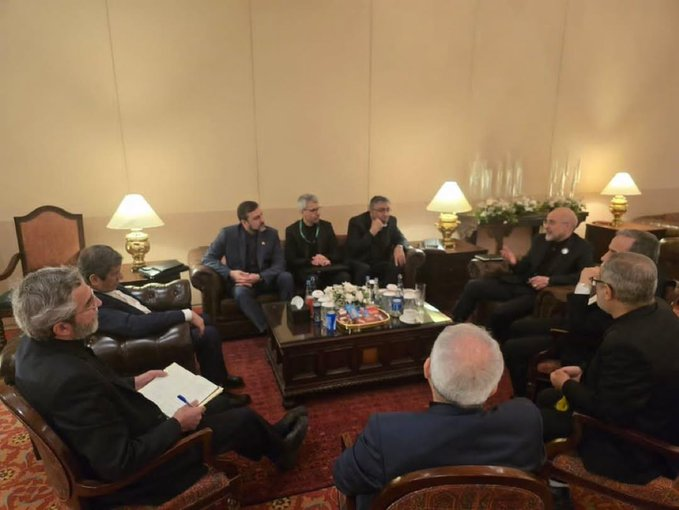
The Iranian negotiating team has held a high-level preparatory meeting in Islamabad, Pakistan, as both nations gear up for historic face-to-face negotiations aimed at ending the 40-day war. The meeting, which took place at the Iranian embassy, was chaired by Parliament Speaker Mohammad Bagher Ghalibaf and included Foreign Minister Abbas Araghchi and four senior commanders from the Islamic Revolutionary Guard Corps (IRGC) .
The preparatory session marks a critical step before the formal start of direct talks with the American delegation, led by Vice President JD Vance, at the heavily fortified Serena Hotel in Islamabad’s Red Zone .
Iran’s Strategy: ‘Final Assessment Stage’
According to Iranian officials, the preparatory meeting was focused on a “final assessment stage” to evaluate the seriousness of the United States in fulfilling its commitments before deciding whether to proceed with direct negotiations .
The Iranian team reviewed the status of two key preconditions that Tehran had set for entering talks: a ceasefire in Lebanon and the release of Iran’s blocked assets . According to Ghalibaf, both conditions have now been “accepted by the parties,” though their implementation remains uncertain .
“We have good intentions but we do not trust. Our experience in negotiating with the Americans has always been met with failure and broken promises.” — Mohammad Bagher Ghalibaf, Iranian Parliament Speaker
Foreign Minister Abbas Araghchi, who has extensive experience negotiating with Western powers from his role as lead nuclear negotiator for the 2015 Joint Comprehensive Plan of Action (JCPOA), is expected to lead the technical discussions during the formal talks .
The Delegation: Military Commanders at the Table
The composition of the Iranian team—which includes four senior IRGC commanders—signals the importance of military issues in the negotiations. The IRGC has been the primary force behind Iran’s military operations throughout the conflict, and its direct participation suggests that any agreement reached will carry the full weight of the Iranian establishment .
| Delegation Member | Position | Role |
|---|---|---|
| Mohammad Bagher Ghalibaf | Parliament Speaker | Lead negotiator; former IRGC commander |
| Abbas Araghchi | Foreign Minister | Chief diplomat; nuclear deal veteran |
| Majid Takht-Ravanchi | Deputy Foreign Minister | Senior diplomatic advisor |
| Mohammad Baqir Zulqadr | Secretary of Supreme National Security Council | National security lead |
| Four Senior Commanders | Islamic Revolutionary Guard Corps (IRGC) | Military advisors |
Sources: Government of Pakistan, multiple news reports
The Agenda: What Iran Wants
Ahead of the formal negotiations, Iranian officials have outlined their priorities for the talks. According to Iran’s 10-point peace proposal—which Tehran says the US has accepted as the “workable basis” for negotiations—Iran is seeking:
| Demand | Details |
|---|---|
| Cessation of aggression | End of war on all fronts, including against Hezbollah in Lebanon |
| Strait of Hormuz | Guarantees for safe navigation under Iranian coordination |
| Sanctions relief | Complete lifting of all primary and secondary sanctions |
| Asset release | Unfreezing of Iranian funds and properties abroad |
| US withdrawal | Removal of all US combat forces from Middle East bases |
| Reparations | Full compensation for damages suffered during the war |
| Nuclear commitment | Iran’s commitment not to seek nuclear weapons |
Source: Iran’s Supreme National Security Council, multiple news reports
The Supreme National Security Council has described Iran’s acceptance of its 10-point proposal by Washington as a “historic victory” and said the country had forced the United States to accept its negotiation framework .
The US Delegation: Arrived and Ready
The American delegation, led by Vice President JD Vance and including Jared Kushner and special envoy Steve Witkoff, arrived in Islamabad on Friday. Vance has expressed cautious optimism about the talks while also issuing pointed warnings to the Iranian side.
“If the Iranians are willing to negotiate in good faith, we’re certainly willing to extend the open hand. If they’re going to try to play us, then they’re going to find the negotiating team is not that receptive.” — Vice President JD Vance
Vance met with Prime Minister Shehbaz Sharif earlier today, with the Pakistani leader briefing the vice president on Islamabad’s “bridge-building efforts” to facilitate the dialogue .
Pakistan’s Diplomatic Balancing Act
The Iranian preparatory meeting came shortly after Pakistan’s Chief of Army Staff, General Asim Munir, received the Iranian delegation in full military uniform—a gesture of respect for the military-to-military relationship between Islamabad and Tehran .
General Munir later welcomed Vice President Vance in a business suit, a sartorial distinction that analysts have interpreted as a deliberate act of diplomatic calibration by Pakistan’s military establishment as it navigates the delicate role of mediator between two adversarial nations .
What Comes Next: Formal Talks to Begin
Following the Iranian preparatory meeting, both delegations are expected to move to the Serena Hotel for formal negotiations. According to government sources, the talks will involve a mix of direct face-to-face meetings and indirect contacts facilitated by Pakistani hosts .
The negotiations could extend beyond a single day and may continue for “several days” given the “complex nature of the issue,” according to Pakistani officials .
As the Iranian team completes its preparations and both delegations prepare to sit down at the negotiating table, the world watches to see whether the “Islamabad Talks” can succeed where so many previous efforts have failed.
Frequently Asked Questions (FAQs)
1. What did the Iranian negotiating team do in Islamabad?
The Iranian team held a preparatory meeting at the Iranian embassy in Islamabad, chaired by Parliament Speaker Mohammad Bagher Ghalibaf, to conduct a “final assessment stage” before formal talks with the US delegation .
2. Who is leading the Iranian delegation?
Parliament Speaker Mohammad Bagher Ghalibaf leads the Iranian delegation, accompanied by Foreign Minister Abbas Araghchi and four senior IRGC commanders .
3. What are Iran’s preconditions for negotiations?
Iran demanded a ceasefire in Lebanon and the release of its blocked assets before negotiations could begin. According to Ghalibaf, both conditions have now been “accepted by the parties” .
4. What is Iran’s 10-point peace proposal?
Iran’s proposal includes demands for a cessation of aggression on all fronts (including Lebanon), continued Iranian control over the Strait of Hormuz, complete sanctions relief, release of frozen assets, US military withdrawal from the region, war reparations, and a commitment not to seek nuclear weapons .
5. When will the formal US-Iran talks begin?
The formal negotiations are expected to begin shortly at the Serena Hotel in Islamabad’s Red Zone, following the Iranian preparatory meeting and ongoing consultations .
6. How long will the talks last?
There is no fixed timeframe. Pakistani officials have indicated the negotiations could last “several days” given the complexity of the issues .
Stay informed with Reflecto News – Your trusted source for breaking diplomatic and geopolitical intelligence. Subscribe for real-time updates from the Islamabad peace talks as negotiations unfold.
Questions people ask
What is China's current share of global manufacturing?
China now accounts for twenty eight percent of global manufacturing. This industrial output exceeds the combined manufacturing production of the United States, Japan, and Germany, making China the leading global industrial power according to recent reports.
Why were Andrew Tate and Tristan Tate arrested in Miami?
Andrew Tate and his brother Tristan Tate were taken into custody in Miami by the United States Marshals Service. They face thirty eight new charges in the United Kingdom, including rape and child pornography offences, and prosecutors are seeking their extradition.
What warning did Moscow issue about oil prices?
Kirill Dmitriev, the Chief Executive of the Russian Direct Investment Fund, warned that a tsunami of skyrocketing oil prices is approaching. Moscow describes this potential energy shock as a major threat to global markets.
What political shift is projected for Benjamin Netanyahu's coalition?
Political polls project that Prime Minister Benjamin Netanyahu's coalition is on track to lose its majority in the upcoming October election. This projection indicates a potential political shift in Jerusalem.
Why did a Russian military aircraft land in Tehran?
A Russian airborne command aircraft, widely known as a doomsday plane, landed in Tehran. The arrival of the aircraft represents a high stakes show of support from Russia for Iran during a period of heightened regional tensions.
What did President Masoud Pezeshkian claim about the United States and Israel?
Iranian President Masoud Pezeshkian claimed that the United States and Israel failed in a forty eight hour plan to topple the Iranian government. He made these statements during a televised address marking two years since his inauguration.