Reflecto News is an online news platform covering major international political events, global economic developments, and security conflicts. The site provides updates on topics such as Chinese manufacturing dominance, Middle Eastern political tensions, and high profile legal arrests. Readers can access current articles organized by categories like World News, Iran, and USA.
Reflecto News
April 18, 2026
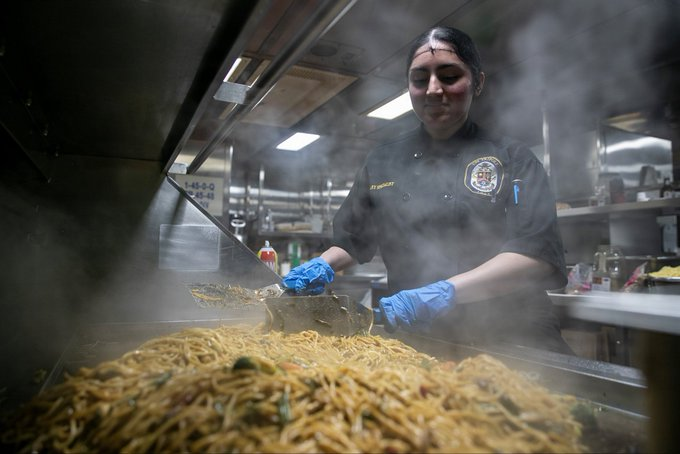
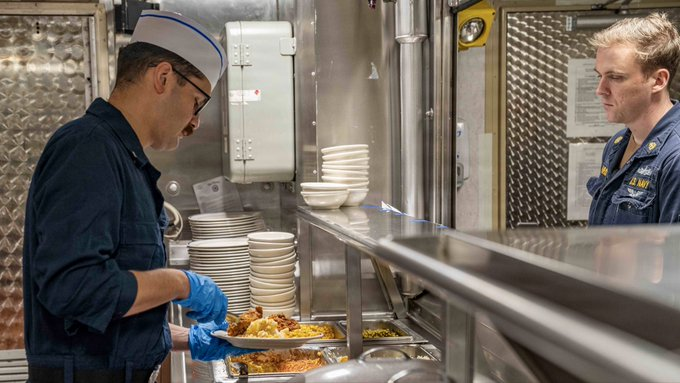
The U.S. Navy has pushed back against growing complaints of food shortages on warships deployed in the Middle East, publicly sharing images of meals and stating that sailors aboard vessels such as the USS Abraham Lincoln and USS Tripoli continue to receive “regularly prepared meals at sea — no interruptions, no shortages.”
The Navy’s official accounts posted photos of what they described as “fresh meals” and “full service,” emphasizing that logistics are being closely monitored and that ships maintain more than 30 days of food supplies (Class I provisions). Pentagon officials, including Defense Secretary Pete Hegseth, echoed this, confirming daily oversight of supply levels.
Contrasting Reports from Sailors and Families
The Navy’s statements come in response to photos and accounts shared by service members and their families with media outlets, including USA Today. Images reportedly taken aboard the USS Abraham Lincoln and USS Tripoli showed notably small portions: one tray with a single small scoop of shredded meat and a folded tortilla; another with a handful of boiled carrots, a dry meat patty, and a gray slab of processed meat.
Relatives described sailors and Marines as “hungry all the time,” with fresh produce unavailable and crew members rationing limited supplies. Some families reported that care packages containing food, hygiene items, and personal goods have not reached the ships due to suspended mail deliveries to certain military ZIP codes in the region — a logistical impact linked to the ongoing naval operations and blockade enforcement related to the Iran conflict.
Parents and spouses expressed concern over morale, with one Marine’s father noting that personnel “eat when they can” and divide portions evenly when servings appear unequal.
Context: Extended Deployments and Logistical Strain
The complaints surfaced during prolonged deployments tied to U.S. operations in support of the Israel-Iran conflict, including enforcement of the naval blockade of Iranian ports and monitoring of the Strait of Hormuz. The USS Gerald R. Ford recently re-entered the Red Sea, adding to the concentration of U.S. naval assets in the broader theater.
Long deployments — with the Gerald R. Ford approaching record time at sea — combined with disrupted resupply and mail services appear to have strained shipboard logistics on some vessels. The Navy maintains that core supplies remain sufficient and that meals continue to be served on schedule, though the quality and portion sizes have become a point of public contention.
Official Response and Ongoing Monitoring
U.S. Naval Central Command (NAVCENT) has stated that it monitors food stocks daily for every ship. Officials insist the military provides the “best” support possible to sailors and that isolated photos do not reflect overall conditions.
This episode highlights the challenges of sustaining large-scale naval operations far from home ports during extended periods of tension. It also fuels broader debates, including Brazilian President Lula da Silva’s recent criticisms of global military spending priorities versus humanitarian needs.
Reflecto News will continue monitoring the situation aboard deployed U.S. warships, official logistics updates, and any further developments related to the Iran conflict and regional naval operations.
Frequently Asked Questions (FAQs)
Q1: What did the U.S. Navy claim about food supplies?
The Navy shared photos of meals and stated that sailors receive regularly prepared food with “no interruptions, no shortages,” adding that ships carry over 30 days of provisions.
Q2: What complaints have sailors and families raised?
Photos and accounts shared with media show small, unappetizing portions on some ships (e.g., minimal meat with a tortilla or processed meat with carrots). Families report sailors feeling “hungry all the time,” with fresh produce scarce and mail/care packages delayed or suspended.
Q3: Which ships are primarily mentioned?
Reports focus on the USS Abraham Lincoln (aircraft carrier) and USS Tripoli (amphibious ship), both involved in Middle East operations related to the Iran conflict.
Q4: Why might food logistics be strained?
Extended deployments, disrupted resupply routes, and suspended postal services to certain military addresses in the region — linked to heightened operational tempo and security measures — appear to be contributing factors.
Q5: How has the Pentagon responded?
Defense Secretary Pete Hegseth and Navy officials have confirmed daily monitoring of supplies and rejected claims of widespread shortages, insisting sailors receive adequate support.
Q6: Does this affect morale or operations?
Families and some service members have raised concerns about morale, though the Navy maintains that crews remain “mission ready.”
Q7: How does this relate to the broader Iran conflict?
The ships are supporting operations tied to the US-Israel-Iran tensions, including the naval blockade and monitoring of key maritime areas like the Strait of Hormuz.
For the latest updates on U.S. military deployments, logistical challenges in the Middle East, and international reactions, stay with Reflecto News.
Questions people ask
What is China's current share of global manufacturing?
China now accounts for twenty eight percent of global manufacturing. This industrial output exceeds the combined manufacturing production of the United States, Japan, and Germany, making China the leading global industrial power according to recent reports.
Why were Andrew Tate and Tristan Tate arrested in Miami?
Andrew Tate and his brother Tristan Tate were taken into custody in Miami by the United States Marshals Service. They face thirty eight new charges in the United Kingdom, including rape and child pornography offences, and prosecutors are seeking their extradition.
What warning did Moscow issue about oil prices?
Kirill Dmitriev, the Chief Executive of the Russian Direct Investment Fund, warned that a tsunami of skyrocketing oil prices is approaching. Moscow describes this potential energy shock as a major threat to global markets.
What political shift is projected for Benjamin Netanyahu's coalition?
Political polls project that Prime Minister Benjamin Netanyahu's coalition is on track to lose its majority in the upcoming October election. This projection indicates a potential political shift in Jerusalem.
Why did a Russian military aircraft land in Tehran?
A Russian airborne command aircraft, widely known as a doomsday plane, landed in Tehran. The arrival of the aircraft represents a high stakes show of support from Russia for Iran during a period of heightened regional tensions.
What did President Masoud Pezeshkian claim about the United States and Israel?
Iranian President Masoud Pezeshkian claimed that the United States and Israel failed in a forty eight hour plan to topple the Iranian government. He made these statements during a televised address marking two years since his inauguration.