Reflecto News is an online news platform covering major international political events, global economic developments, and security conflicts. The site provides updates on topics such as Chinese manufacturing dominance, Middle Eastern political tensions, and high profile legal arrests. Readers can access current articles organized by categories like World News, Iran, and USA.
Published on Reflecto News | World News | Diplomacy & Conflict
In a sharp escalation of diplomatic rhetoric, the Kingdom of Spain has formally accused Israel of breaching international law following a series of military strikes targeting Lebanese territory. The Spanish government issued an official condemnation, citing concerns over civilian casualties, territorial sovereignty, and the principles of proportionality under the Geneva Conventions.
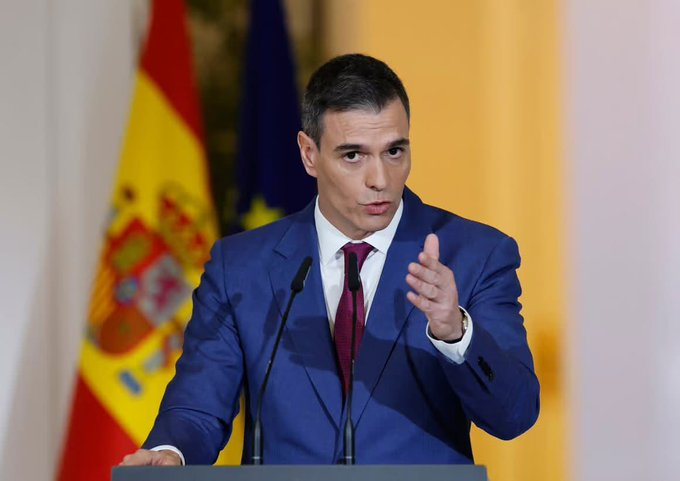
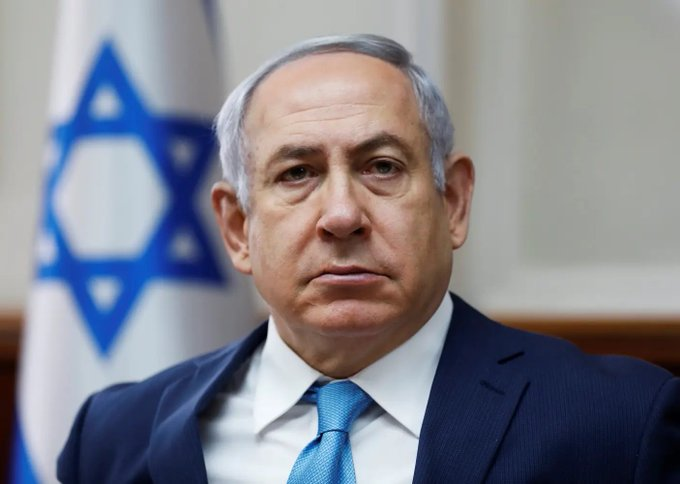
Spain’s Official Statement: A Breach of Legal Norms
Spanish Foreign Minister José Manuel Albares delivered the statement during a parliamentary briefing, asserting that Israel’s recent operations in Lebanon constitute a “clear violation of international humanitarian law.” While Spain has historically advocated for Israel’s right to self-defense, the government emphasized that such actions must align with internationally recognized legal frameworks.
“The indiscriminate nature of certain strikes, coupled with their expansion into sovereign Lebanese infrastructure, cannot be justified under existing UN Security Council resolutions,” Albares stated.
The Spanish government further called for an immediate de-escalation and urged all parties to respect United Nations Interim Force in Lebanon (UNIFIL) mandates and Resolution 1701, which prohibits military actions across the Blue Line separating Israeli and Lebanese forces.
Key Allegations Against Israel
Spain’s condemnation focuses on three primary legal and humanitarian concerns:
- Violation of Sovereignty – Spain argues that Israeli airstrikes deep within Lebanese territory, including near civilian-populated areas in Beirut’s southern suburbs, undermine Lebanon’s territorial integrity.
- Disproportionate Force – Madrid has highlighted reports of strikes near medical facilities and residential zones, arguing that such actions violate the principle of distinction under international humanitarian law.
- Collective Punishment – Spanish officials expressed alarm over the displacement of thousands of Lebanese civilians, warning that targeting infrastructure essential for civilian survival could amount to prohibited collective punishment.
International Reactions and Diplomatic Fallout
Spain’s rebuke aligns with a growing chorus of European nations expressing unease over the escalating cross-border violence. France and Italy have issued similar cautions, while the European Union’s foreign policy chief, Josep Borrell, has called for an emergency session of the UN Human Rights Council.
In contrast, the United States and the United Kingdom have reaffirmed support for Israel’s right to defend itself against Hezbollah, though both have privately urged restraint. Israel’s Ministry of Foreign Affairs has not yet issued a formal response to Spain’s accusations but has previously defended its operations as “targeted actions against terrorist infrastructure.”
Broader Context: The Israel-Hezbollah Conflict
The recent surge in hostilities follows months of low-intensity skirmishes along the Israel-Lebanon border, triggered by the Gaza war. Hezbollah, the Iran-backed Shiite militant group, has launched rockets into northern Israel, prompting Israeli retaliation. However, Spain’s condemnation singles out Israeli strikes that have reportedly killed Lebanese civilians, including journalists and emergency responders, as legally indefensible.
What International Law Says
Under the Fourth Geneva Convention and Additional Protocol I, occupying or attacking forces must:
- Distinguish between military objectives and civilian persons or property.
- Ensure attacks are proportional (not causing incidental loss of civilian life excessive to the anticipated military advantage).
- Avoid collective punishment of civilian populations.
Legal experts note that while Hezbollah’s actions are also violations, Spain’s statement focuses on Israel’s responsibility as a state actor with advanced military capabilities.
Spain’s Shifting Foreign Policy
The condemnation marks a notable hardening of Spain’s position under Prime Minister Pedro Sánchez. Since the Gaza war began, Spain has emerged as one of Europe’s most outspoken critics of Israeli military operations, recognizing a Palestinian state in May 2024 and suspending arms sales to Israel. This latest rebuke over Lebanon solidifies Spain’s role as a diplomatic counterweight to U.S.-aligned European powers.
Conclusion: A Call for Accountability
Spain has urged the International Criminal Court (ICC) to expedite its ongoing investigation into war crimes allegations in the region. While no formal sanctions have been proposed, Madrid has pledged to raise the issue at the next EU Foreign Affairs Council meeting.
As cross-border violence continues, Spain’s legal and moral condemnation adds diplomatic pressure on Israel, though it remains unclear whether such rhetoric will translate into concrete policy changes within the European Union.
Frequently Asked Questions (FAQs)
1. Why is Spain accusing Israel of violating international law?
Spain claims that Israeli airstrikes in Lebanon have targeted civilian areas, breached Lebanese sovereignty, and failed to meet the legal standards of proportionality and distinction required under the Geneva Conventions.
2. What specific actions by Israel does Spain condemn?
Spain condemns Israeli strikes deep inside Lebanese territory, particularly those near residential zones, medical facilities, and infrastructure essential for civilian survival, as well as the resulting displacement of thousands of civilians.
3. Has Israel responded to Spain’s accusations?
As of this report, Israel’s Ministry of Foreign Affairs has not issued a formal response. However, Israel has previously maintained that its operations are lawful, targeted, and aimed solely at Hezbollah military positions.
4. Does Spain support Hezbollah?
No. Spain has designated Hezbollah’s armed wing as a terrorist organization. The condemnation is solely focused on Israel’s methods and compliance with international humanitarian law, not on justifying Hezbollah’s rocket attacks.
5. What is UN Resolution 1701?
Adopted in 2006, UN Security Council Resolution 1701 calls for a cessation of hostilities between Israel and Lebanon, the disarmament of armed groups in southern Lebanon (including Hezbollah), and respect for the Blue Line border.
6. Could Spain take further action against Israel?
Spain may push for EU-wide diplomatic measures, such as a partial suspension of the EU-Israel Association Agreement, or support ICC investigations into potential war crimes.
7. Is this Spain’s first criticism of Israel?
No. Spain has consistently criticized Israeli military operations since the Gaza war began, including recognizing a Palestinian state and suspending arms export licenses to Israel in late 2024.
Stay updated with Reflecto News for more in-depth, unbiased coverage of global legal and diplomatic affairs. Follow us for breaking news alerts.
Questions people ask
What is China's current share of global manufacturing?
China now accounts for twenty eight percent of global manufacturing. This industrial output exceeds the combined manufacturing production of the United States, Japan, and Germany, making China the leading global industrial power according to recent reports.
Why were Andrew Tate and Tristan Tate arrested in Miami?
Andrew Tate and his brother Tristan Tate were taken into custody in Miami by the United States Marshals Service. They face thirty eight new charges in the United Kingdom, including rape and child pornography offences, and prosecutors are seeking their extradition.
What warning did Moscow issue about oil prices?
Kirill Dmitriev, the Chief Executive of the Russian Direct Investment Fund, warned that a tsunami of skyrocketing oil prices is approaching. Moscow describes this potential energy shock as a major threat to global markets.
What political shift is projected for Benjamin Netanyahu's coalition?
Political polls project that Prime Minister Benjamin Netanyahu's coalition is on track to lose its majority in the upcoming October election. This projection indicates a potential political shift in Jerusalem.
Why did a Russian military aircraft land in Tehran?
A Russian airborne command aircraft, widely known as a doomsday plane, landed in Tehran. The arrival of the aircraft represents a high stakes show of support from Russia for Iran during a period of heightened regional tensions.
What did President Masoud Pezeshkian claim about the United States and Israel?
Iranian President Masoud Pezeshkian claimed that the United States and Israel failed in a forty eight hour plan to topple the Iranian government. He made these statements during a televised address marking two years since his inauguration.