Reflecto News is an online news platform covering major international political events, global economic developments, and security conflicts. The site provides updates on topics such as Chinese manufacturing dominance, Middle Eastern political tensions, and high profile legal arrests. Readers can access current articles organized by categories like World News, Iran, and USA.
Published on Reflecto News | World News | Geopolitics & Energy Security
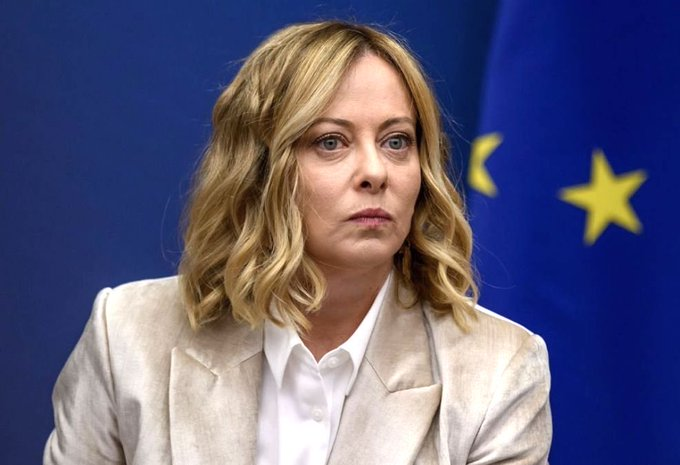
In a decisive foreign policy statement, Italian Prime Minister Giorgia Meloni has called for the immediate and complete reopening of the Strait of Hormuz, declaring that the vital waterway must remain accessible “without any restrictions.” The remarks, which signal a强硬 stance on maritime freedom of navigation, come amid heightened tensions in the Persian Gulf region.
Meloni’s declaration positions Italy alongside other Western nations advocating for unimpeded transit through one of the world’s most strategically significant chokepoints.
Meloni’s Statement: A Demand for Unrestricted Passage
Speaking during a press availability following bilateral talks, Prime Minister Meloni addressed growing concerns over recent interruptions and inspection regimes imposed near the strait. While she did not explicitly name any single actor, her comments were widely interpreted as a direct response to Iran’s periodic enforcement of naval patrols, vessel inspections, and temporary closures.
“The Strait of Hormuz is not a bargaining chip. It is a global artery. Italy insists that it must be fully opened to all commercial and military transit without any restrictions whatsoever,” Meloni stated.
She further emphasized that any obstruction—whether through de facto blockades, selective inspections, or threats of force—constitutes a violation of international maritime law and the United Nations Convention on the Law of the Sea (UNCLOS).
Why the Strait of Hormuz Matters
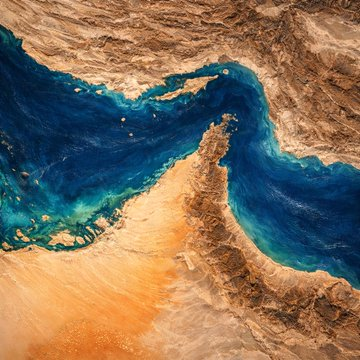
The Strait of Hormuz, located between Oman and Iran, connects the Persian Gulf with the Gulf of Oman and the Arabian Sea. Its significance cannot be overstated:
- Oil Transit: Approximately 20% of global petroleum consumption passes through the strait daily.
- LNG Exports: Nearly 25% of the world’s liquefied natural gas (LNG) transits the waterway.
- Global Economy Impact: A closure, even partial, could spike crude oil prices by 30–50% within weeks.
For Italy, which relies heavily on energy imports, stability in the strait is directly linked to national economic security.
Context: Rising Tensions in the Gulf
Meloni’s demand follows a series of recent incidents:
- Vessel Seizures: Iranian naval forces have intercepted multiple commercial tankers allegedly violating maritime regulations.
- Military Exercises: The Islamic Revolutionary Guard Corps (IRGC) has conducted live-fire drills near the strait, leading to temporary navigational warnings.
- Western Sanctions Enforcement: Increased US and EU sanctions on Iranian oil exports have prompted Tehran to threaten reciprocal restrictions on shipping lanes.
While Iran maintains that its actions are lawful and defensive, Western nations argue that such measures amount to illegal interference with freedom of navigation.
Italy’s Strategic Calculus
Meloni’s强硬 stance reflects a broader shift in Italian foreign policy:
| Factor | Italy’s Position |
|---|---|
| Energy dependence | Italy imports over 90% of its oil and gas; any disruption directly impacts prices. |
| NATO commitments | As a founding NATO member, Italy supports collective maritime security operations. |
| EU alignment | Rome seeks to harmonize its Gulf policy with Brussels while asserting independent leadership. |
| Commercial shipping | Italian shipping lines operate extensively through the strait; restrictions harm trade. |
Meloni’s government has also increased Italian naval presence in the region, participating in the European-led maritime surveillance mission EMASoH (European Maritime Awareness in the Strait of Hormuz).
International Reactions
Initial responses to Meloni’s statement have been mixed:
- United States: The State Department welcomed Italy’s “strong and principled position,” reaffirming Washington’s commitment to freedom of navigation.
- European Union: An EU spokesperson noted that “unrestricted access to international waterways is a core principle of the rules-based order.”
- Iran: Official state media has not yet issued a direct response, but Iranian diplomats previously argued that Gulf security must be managed by regional nations without external interference.
- China & Russia: Both nations have called for “pragmatic dialogue” but stopped short of endorsing Meloni’s demand for zero restrictions.
Legal Framework: UNCLOS and Freedom of Navigation
Under UNCLOS Article 37, the Strait of Hormuz qualifies as a strait used for international navigation, granting all vessels the right of transit passage. This right cannot be suspended or restricted unilaterally.
Iran has previously cited Article 21 regarding coastal state authority to enforce environmental or customs regulations. However, international legal experts generally agree that systematic inspections or de facto blockades exceed permissible limits.
What “Without Any Restrictions” Means in Practice
Meloni’s phrasing carries specific policy implications:
- No inspection regimes – Iran would be barred from stopping or searching commercial vessels outside exceptional, UN-sanctioned circumstances.
- No military exclusion zones – The IRGC cannot declare temporary closure for drills without prior international notice and alternative routing.
- No selective denial – Vessels of any flag, including those carrying oil to sanctioned destinations, would theoretically enjoy passage—though Italy likely differentiates between freedom of navigation and sanctions compliance.
Economic Risks of a Closure
Analysts estimate that a 30-day closure of the Strait of Hormuz would:
- Raise global oil prices to over $180 per barrel.
- Trigger emergency stockpile releases in the US, Japan, and EU nations.
- Disrupt LNG shipments to Europe, exacerbating winter energy shortages.
For Italy specifically, a closure could increase domestic electricity prices by 40% within two months, given the country’s reliance on imported gas from Qatar and the UAE—both of which use the strait.
Conclusion: A Test of Diplomatic Resolve
Meloni’s demand for unrestricted navigation in the Strait of Hormuz sets the stage for a potential diplomatic confrontation with Tehran. While Italy lacks the naval power to enforce such a demand unilaterally, its alignment with US and EU maritime coalitions amplifies its voice.
The coming weeks will reveal whether Iran responds with de-escalation or defiance. For now, Meloni has firmly placed energy security and international law at the center of Italy’s Gulf strategy—a move that resonates far beyond the waters of the strait.
Frequently Asked Questions (FAQs)
1. What exactly did Italian PM Meloni say about the Strait of Hormuz?
Meloni demanded that the Strait of Hormuz be “fully opened without any restrictions,” rejecting any form of inspections, blockades, or selective access imposed by regional powers.
2. Why is the Strait of Hormuz so important?
Approximately 20% of global oil and 25% of LNG pass through the strait daily. Any significant restriction could trigger a global energy crisis and sharp price increases.
3. Which country controls the Strait of Hormuz?
The strait lies within the territorial waters of Iran and Oman. However, under international law (UNCLOS), it is designated as a strait for international navigation, granting transit passage rights to all nations.
4. Is Italy taking military action?
Italy has not announced unilateral military action. However, Italy participates in the European EMASoH maritime surveillance mission and maintains naval assets in the region to support freedom of navigation.
5. How has Iran responded to Meloni’s statement?
As of this publication, Iran has not issued an official response. Previously, Iranian officials have argued that regional security should be managed by Gulf nations without external interference.
6. Could this lead to sanctions on Iran?
Meloni did not explicitly call for new sanctions. However, further restrictions on Iranian oil exports could be discussed at the EU or UN level if Iran is deemed to violate freedom of navigation.
7. What is UNCLOS, and why does it matter?
The United Nations Convention on the Law of the Sea (UNCLOS) is the international legal framework governing maritime rights. It guarantees transit passage through straits like Hormuz, which cannot be suspended.
8. Does this affect global oil prices immediately?
Meloni’s statement alone is unlikely to move markets. However, any actual restriction or military escalation in the strait would likely cause immediate price volatility.
Stay informed with Reflecto News – Your trusted source for breaking geopolitical and economic intelligence. Subscribe for real-time updates.
Questions people ask
What is China's current share of global manufacturing?
China now accounts for twenty eight percent of global manufacturing. This industrial output exceeds the combined manufacturing production of the United States, Japan, and Germany, making China the leading global industrial power according to recent reports.
Why were Andrew Tate and Tristan Tate arrested in Miami?
Andrew Tate and his brother Tristan Tate were taken into custody in Miami by the United States Marshals Service. They face thirty eight new charges in the United Kingdom, including rape and child pornography offences, and prosecutors are seeking their extradition.
What warning did Moscow issue about oil prices?
Kirill Dmitriev, the Chief Executive of the Russian Direct Investment Fund, warned that a tsunami of skyrocketing oil prices is approaching. Moscow describes this potential energy shock as a major threat to global markets.
What political shift is projected for Benjamin Netanyahu's coalition?
Political polls project that Prime Minister Benjamin Netanyahu's coalition is on track to lose its majority in the upcoming October election. This projection indicates a potential political shift in Jerusalem.
Why did a Russian military aircraft land in Tehran?
A Russian airborne command aircraft, widely known as a doomsday plane, landed in Tehran. The arrival of the aircraft represents a high stakes show of support from Russia for Iran during a period of heightened regional tensions.
What did President Masoud Pezeshkian claim about the United States and Israel?
Iranian President Masoud Pezeshkian claimed that the United States and Israel failed in a forty eight hour plan to topple the Iranian government. He made these statements during a televised address marking two years since his inauguration.