Reflecto News is an online news platform covering major international political events, global economic developments, and security conflicts. The site provides updates on topics such as Chinese manufacturing dominance, Middle Eastern political tensions, and high profile legal arrests. Readers can access current articles organized by categories like World News, Iran, and USA.
Published on Reflecto News | World News | Security & Geopolitics
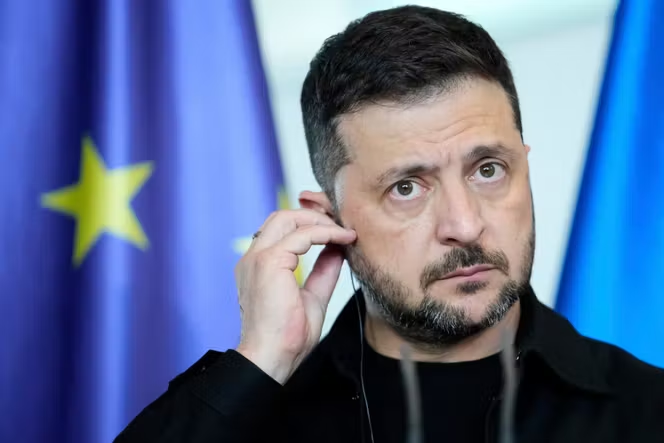
In a significant shift in Ukraine’s long-standing security posture, President Volodymyr Zelensky has formally proposed hosting US and European military bases on Ukrainian territory as part of a comprehensive security guarantee framework. The proposal, which marks a departure from Ukraine’s previous neutral stance, comes as Kyiv seeks concrete assurances against future Russian aggression amid ongoing peace negotiations .
Speaking to reporters on April 9, Zelensky stated that such a deployment would allow Ukraine to face “fewer risks” and would form a critical component of any lasting peace agreement with Russia .
The Proposal: American and European Troops on Ukrainian Soil
Zelensky’s proposal envisions the establishment of both American and joint American-European military bases within Ukraine’s borders. The Ukrainian leader emphasized that the decision ultimately rests with the United States, but he confirmed ongoing discussions with President Donald Trump’s administration and European “coalition of the willing” nations .
“With an American or joint American-European military base in Ukraine, we will face fewer risks.” — President Volodymyr Zelensky
According to Zelensky, the security guarantees must extend beyond just troop deployments to include:
- Western air defense systems “in sufficient quantities”
- Continued funding for Ukrainian armed forces
- A framework for military exercises with guarantor countries
“We agreed that we will present our vision, and our partners will respond to such a proposal,” Zelensky noted, indicating that formal discussions are already underway .
A Shift from Neutrality: Ukraine’s Evolving Position
The proposal represents a significant evolution in Ukraine’s negotiating stance. During earlier rounds of peace talks in 2022, Ukrainian negotiators had proposed a status of “permanent neutrality” under which Ukraine would not host foreign military bases or enter into military-political alliances .
That earlier proposal, presented during talks in Istanbul, suggested a 15-year consultation period on the status of Russian-annexed Crimea and identified Israel, Canada, Poland, and Turkey as potential security guarantors . Ukraine had offered to codify its non-aligned status in exchange for binding security guarantees.
The current proposal for hosting US and European bases represents a hardening of Ukraine’s position, likely driven by the failure of the 2015 Budapest Memorandum-style assurances to prevent the 2022 invasion. Zelensky has consistently argued that only concrete, enforceable guarantees—not paper promises—can deter future Russian aggression .
The Security Guarantee Framework: What’s on the Table
Zelensky’s base proposal is part of a broader security architecture he has been advocating for months. His “victory plan,” presented to EU and NATO leaders in late 2025 and early 2026, includes several key components :
| Component | Details |
|---|---|
| NATO invitation | Immediate invitation to join the alliance (considered unrealistic by most members) |
| Non-nuclear deterrence | Deployment of a “non-nuclear strategic deterrence package” on Ukrainian territory |
| Weapons restrictions lifted | Western allies to lift restrictions on using long-range weapons to target Russian military sites |
| Territorial integrity | Rejection of any territorial concessions |
The base proposal appears to be a pragmatic alternative to immediate NATO membership—a pathway that has been repeatedly blocked by the United States and Germany, who fear it would effectively put the alliance at war with nuclear-armed Russia .
NATO Secretary-General Mark Rutte has reiterated the alliance line that “Ukraine will be a member of NATO in the future,” but has not endorsed Zelensky’s “whole plan” and has cautioned that an invitation is not imminent .
The European Dimension: A New Security Architecture
Zelensky has also proposed the creation of a broader European-centered security bloc that would include Ukraine, the EU, the UK, Turkey, and Norway. Speaking amid concerns about potential US withdrawal from NATO, Zelensky argued that Europe needs to take greater responsibility for its own defense .
“Without Ukraine and Turkey, Europe will not have an army comparable to the Russian one. With Ukraine, Turkey, Norway, and Britain, you will control security at sea—and not just one.” — President Volodymyr Zelensky
This proposal reflects growing unease in European capitals about the reliability of US security guarantees under the Trump administration. President Trump has repeatedly threatened to withdraw the United States from NATO, claiming he has the authority to do so—though under US law, only Congress can vote to exit the treaty .
Zelensky has also called for the creation of a “United European Armed Forces,” criticizing European nations for inadequate defense efforts. He pointed out that Europe has deployed only 30-40 troops to Greenland—a number he considers insufficient to protect the region from potential threats posed by Russia and China .
The US Position: A Contested Landscape
The Trump administration’s position on Ukraine security guarantees has been complicated and at times contradictory. While Vice President JD Vance has stated that Washington is looking for a “durable, lasting peace,” other US officials have signaled that Ukraine should not expect NATO membership or the return of all occupied territory .
A 28-point peace plan reportedly advanced by US Special Envoy Steve Witkoff would have required Ukraine to:
- Cap the size of its armed forces
- Amend its constitution to commit to not joining NATO
- Forbid the deployment of NATO troops in Ukraine
- Recognize Russian sovereignty over Crimea, Donetsk, and Luhansk
The plan, which prompted concern among Ukraine and its European allies, was seen as overly favorable to Russia . While the White House denied the plan was prepared with Moscow, President Trump stated he “supports this plan” .
Zelensky has rejected any agreement that would compromise Ukraine’s sovereignty or security. “There can be no decisions outside the framework of our sovereignty, the security of our people, or our red lines—now or ever,” said Ukraine’s security council chief and negotiator Rustem Umerov .
Russia’s Response: A Non-Starter
From Moscow’s perspective, the proposal to host US and European military bases in Ukraine is likely to be a non-starter. Russia has consistently demanded, as part of its maximalist position, that Ukraine commit to not joining NATO and that no foreign troops be deployed on its territory .
Kremlin spokesman Dmitry Peskov has warned that the “space for the freedom of decision-making is shrinking” for Zelensky as Russian forces continue to gain territory on the battlefield .
Russian Deputy Defense Minister Alexander Fomin has previously indicated that Moscow would consider scaling down operations only in exchange for Ukrainian neutrality—a position directly contradicted by Zelensky’s current proposal .
The Path Forward: Diplomatic Hurdles
Zelensky’s proposal faces significant hurdles on multiple fronts:
1. US Commitment
While discussions are ongoing, President Trump has not committed to deploying American troops to Ukraine. The White House has offered a US security deal, but Trump has made it explicit that the deal “won’t go through” until Ukraine gives up remaining territory in the Donetsk region—a red line for Zelensky .
2. European Capacity
European nations have struggled to offset the end of direct US weapons deliveries to Ukraine, now operating under a program where Europe pays for US-provided weapons. The creation of a “European army” has been mooted for years without gaining traction .
3. NATO Consensus
NATO members remain divided on Ukraine’s path to membership. While Eastern European nations like Poland support a stronger posture, the United States and Germany have led opposition to immediate entry .
4. Russian Opposition
Any deployment of US or European forces in Ukraine would be viewed by Moscow as a direct provocation, potentially escalating rather than ending the conflict.
5. Domestic Ukrainian Support
While 68.9% of Ukrainians support joining NATO, only 54.7% say they trust the alliance. Some 41.5% express distrust, with many viewing NATO as having acted too slowly and indecisively during the war .
Conclusion: A Bold Proposal at a Critical Moment
Zelensky’s proposal to host US and European military bases in Ukraine represents a bold gambit at a critical moment in the conflict. With peace talks ongoing, Russian forces advancing on the battlefield, and Western support showing signs of fatigue, Kyiv is seeking to lock in concrete security guarantees that would prevent a future Russian invasion.
The proposal reflects a fundamental lesson Ukraine has drawn from the war: that paper promises are worthless, and only a permanent Western military presence can deter Russian aggression. Whether Washington and its European allies are willing to make that commitment—and whether Russia can be brought to accept it—remains to be seen.
As Zelensky has repeatedly emphasized: “Ukraine will never accept deals made behind our backs without our involvement” . The base proposal ensures that Ukraine’s voice will be heard in any final settlement—even as the contours of that settlement remain highly uncertain.
Frequently Asked Questions (FAQs)
1. What exactly did Zelensky propose?
Zelensky proposed hosting US and European military bases on Ukrainian territory as part of a security guarantee framework. He stated that “with an American or joint American-European military base in Ukraine, we will face fewer risks” .
2. Is this a change from Ukraine’s previous position?
Yes. During earlier peace talks in 2022, Ukraine had proposed a status of “permanent neutrality” under which it would not host foreign military bases. The current proposal represents a significant hardening of Ukraine’s security demands .
3. Has the US agreed to this proposal?
Not yet. Zelensky confirmed that discussions are ongoing with the Trump administration, but emphasized that the final decision “will be made by the United States” .
4. How has Russia responded?
Moscow has not yet officially responded to this specific proposal, but Russia has consistently demanded that Ukraine commit to not joining NATO and that no foreign troops be deployed on its territory as part of any peace agreement .
5. What other security guarantees is Ukraine seeking?
Beyond hosting bases, Ukraine is seeking Western air defense systems “in sufficient quantities,” continued funding for its armed forces, and a framework for military exercises with guarantor countries .
6. Is Ukraine still seeking NATO membership?
Zelensky’s “victory plan” included an immediate invitation to join NATO, but this has been widely seen as unrealistic. The base proposal may represent an alternative pathway to security guarantees without full NATO membership .
7. What is the European response to the proposal?
European leaders have expressed support for Ukraine’s security concerns but remain divided on concrete commitments. Zelensky has also proposed the creation of a “United European Armed Forces” and a broader European-centered security bloc .
Stay informed with Reflecto News – Your trusted source for breaking geopolitical and security intelligence. Subscribe for real-time updates on Ukraine peace negotiations and European security architecture developments.
Questions people ask
What is China's current share of global manufacturing?
China now accounts for twenty eight percent of global manufacturing. This industrial output exceeds the combined manufacturing production of the United States, Japan, and Germany, making China the leading global industrial power according to recent reports.
Why were Andrew Tate and Tristan Tate arrested in Miami?
Andrew Tate and his brother Tristan Tate were taken into custody in Miami by the United States Marshals Service. They face thirty eight new charges in the United Kingdom, including rape and child pornography offences, and prosecutors are seeking their extradition.
What warning did Moscow issue about oil prices?
Kirill Dmitriev, the Chief Executive of the Russian Direct Investment Fund, warned that a tsunami of skyrocketing oil prices is approaching. Moscow describes this potential energy shock as a major threat to global markets.
What political shift is projected for Benjamin Netanyahu's coalition?
Political polls project that Prime Minister Benjamin Netanyahu's coalition is on track to lose its majority in the upcoming October election. This projection indicates a potential political shift in Jerusalem.
Why did a Russian military aircraft land in Tehran?
A Russian airborne command aircraft, widely known as a doomsday plane, landed in Tehran. The arrival of the aircraft represents a high stakes show of support from Russia for Iran during a period of heightened regional tensions.
What did President Masoud Pezeshkian claim about the United States and Israel?
Iranian President Masoud Pezeshkian claimed that the United States and Israel failed in a forty eight hour plan to topple the Iranian government. He made these statements during a televised address marking two years since his inauguration.