Reflecto News is an online news platform covering major international political events, global economic developments, and security conflicts. The site provides updates on topics such as Chinese manufacturing dominance, Middle Eastern political tensions, and high profile legal arrests. Readers can access current articles organized by categories like World News, Iran, and USA.
Published on Reflecto News | World News | Russia-Ukraine War
In a significant humanitarian development timed to coincide with Orthodox Easter celebrations, Russia and Ukraine have conducted a large-scale prisoner exchange, each side releasing 175 prisoners of war. The swap, which took place on Saturday, April 11, 2026, also included the release of seven civilians on each side, marking one of the largest prisoner exchanges in recent months .
The exchange was mediated by the United Arab Emirates, which has increasingly played a role in facilitating humanitarian agreements between the warring parties .
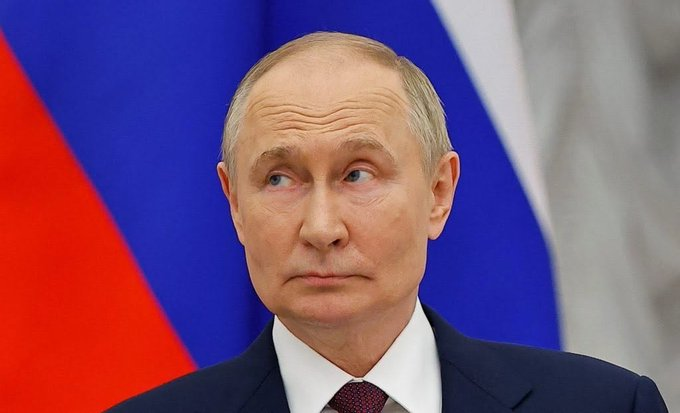
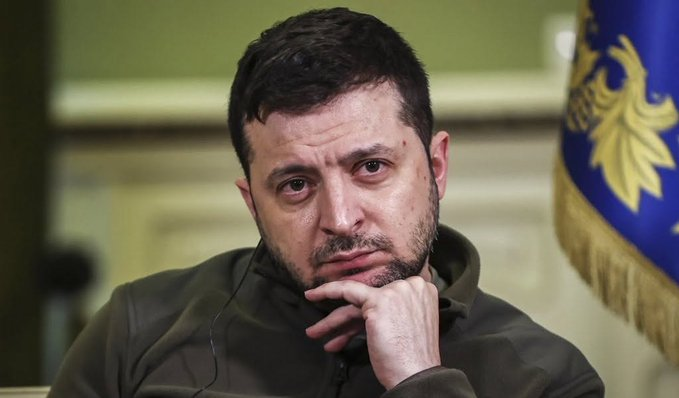
The Exchange: 175 for 175
According to official statements from both nations, the exchange followed a “175 for 175” formula, with each side releasing an equal number of military personnel.
Ukrainian Perspective
Ukrainian President Volodymyr Zelensky confirmed the exchange on Telegram, announcing that 175 Ukrainian servicemen and seven civilians had been brought home from Russian captivity .
“Our people are returning home. 175 servicemembers. Warriors of the Armed Forces, National Guard members, border guards. Privates, sergeants, and officers. And seven civilians.” — President Volodymyr Zelensky
The returned Ukrainian soldiers had been defending their country across multiple fronts, including the battle for Mariupol, the Chornobyl Nuclear Power Plant, and the Donetsk, Luhansk, Kharkiv, Kherson, Zaporizhzhia, Sumy, and Kyiv regions . Most had been in Russian captivity since 2022 .
Russian Perspective
Russia’s Defense Ministry confirmed that 175 Russian servicemen were repatriated from territory controlled by Kyiv, with seven Russian civilians—residents of the Kursk region—also returning home .
The Russian Defense Ministry stated that the returned Russian soldiers are currently on the territory of Belarus, where they are receiving “necessary psychological and medical assistance” before being transported to Russia for further treatment and rehabilitation .
Details of Those Released
| Category | Ukraine | Russia |
|---|---|---|
| Military personnel | 175 | 175 |
| Civilians | 7 | 7 |
| Total | 182 | 182 |
Sources: Multiple news reports
Ukrainian Returnees :
- Include defenders of Mariupol, some held captive for nearly four years
- 25 officers whom Russia had previously refused to exchange
- Soldiers captured during the occupation of the Chornobyl nuclear power plant
- Representatives of the Navy, Army, Air Force, Airborne Forces, SSU, National Guard, and State Border Guard Service
- Youngest released: 22 years old
- Oldest released: 63 years old
Russian Returnees :
- 175 military personnel
- Seven civilians from the Kursk region, the last remaining Russian civilians held in Ukraine following the incursion into the region in August 2024
Humanitarian Condition of Returnees
Ukrainian officials have highlighted the poor health condition of the released soldiers. Human Rights Ombudsman Dmytro Lubinets reported that many of the returned servicemen are suffering from “critical exhaustion” (low body weight), with a significant number in severe psychological distress .
Most of those released had been in Russian captivity since the early months of the full-scale invasion in 2022, enduring years of separation from their families and, in many cases, harsh detention conditions .
Timing: Orthodox Easter Ceasefire
The prisoner exchange coincides with Orthodox Easter, which is observed on April 12, 2026. Both Ukraine and Russia have agreed to a 32-hour ceasefire to mark the holiday .
Ceasefire Details:
- Start time: 4:00 p.m. (1300 GMT) on Saturday, April 11
- End time: Midnight on Sunday, April 12
President Zelensky addressed the ceasefire, stating that “the absence of Russian strikes in the air, on land, and at sea will mean no response from our side” . He expressed hope that the Easter ceasefire could become “the beginning of real movement toward peace.”
Russian President Vladimir Putin ordered the 32-hour pause in fighting following multiple calls from Zelensky, according to Russian state media reports .
Mediation and Recent Exchange History
The United Arab Emirates provided humanitarian mediation efforts in facilitating the exchange, according to Russia’s Defense Ministry .
Recent Exchange Activity:
| Date | Exchange Details |
|---|---|
| March 5-6, 2026 | 500 for 500 (200 on day one, 300 on day two) |
| April 9, 2026 | Remains exchange: Ukraine received 1,000 fallen soldiers; Russia received 41 bodies |
| April 11, 2026 | 175 for 175 plus 7 civilians each |
Sources: Multiple news reports
The prisoner exchange mechanism has been one of the few concrete results to emerge from several rounds of U.S.-brokered peace talks between Ukraine and Russia, which remain stalled over the issue of territory . Overall, there have been approximately 30 POW and soldiers’ body exchanges since Russia and Ukraine resumed direct talks with U.S. backing in spring 2025 .
Since the start of Russia’s full-scale invasion, Ukraine has brought back more than 7,000 prisoners of war, according to President Zelensky .
The Ongoing Peace Process
While trilateral peace talks between Russia, Ukraine, and the U.S. are currently paused as international attention shifts to the Middle East conflict, Kyiv maintains contact with Moscow on prisoner swaps . The success of these humanitarian exchanges demonstrates that communication channels remain open even as broader diplomatic efforts have stalled.
The Easter ceasefire, while brief, represents a rare moment of reduced hostilities. President Zelensky has framed it as a potential step toward more substantial peace negotiations. “A ceasefire at Easter could also become the beginning of real movement toward peace — our side has made the corresponding proposal,” he said .
Conclusion
The exchange of 175 prisoners of war each between Russia and Ukraine, coming on the eve of Orthodox Easter, represents a significant humanitarian achievement amid the ongoing conflict. For the 182 Ukrainians and 182 Russians returning home, the swap offers a moment of joy after years of separation and uncertainty.
As the 32-hour Easter ceasefire takes effect, the world watches to see whether this brief pause in hostilities might open the door to more substantive peace negotiations — or whether the conflict will resume with its previous intensity once the holiday has passed.
Frequently Asked Questions (FAQs)
1. How many prisoners were exchanged between Russia and Ukraine?
Each side released 175 prisoners of war, along with seven civilians, for a total of 182 people returned to each country .
2. When did the exchange take place?
The exchange took place on Saturday, April 11, 2026, on the eve of Orthodox Easter .
3. Who mediated the prisoner exchange?
The United Arab Emirates provided humanitarian mediation efforts in facilitating the exchange .
4. Is there a ceasefire in place for Easter?
Yes. Russia and Ukraine agreed to a 32-hour ceasefire beginning at 4:00 p.m. (1300 GMT) on Saturday, April 11, and ending at midnight on Sunday, April 12, to mark Orthodox Easter .
5. How many prisoner exchanges have occurred since the war began?
Since the start of the full-scale invasion, there have been approximately 30 prisoner of war and soldiers’ body exchanges, with Ukraine bringing home over 7,000 prisoners .
6. What condition are the released prisoners in?
Ukrainian officials report that many of the returned soldiers are suffering from “critical exhaustion” (low body weight) and severe psychological distress after years in captivity .
Stay informed with Reflecto News – Your trusted source for breaking international news and humanitarian updates. Subscribe for real-time coverage of the Russia-Ukraine war and global diplomatic developments.
Questions people ask
What is China's current share of global manufacturing?
China now accounts for twenty eight percent of global manufacturing. This industrial output exceeds the combined manufacturing production of the United States, Japan, and Germany, making China the leading global industrial power according to recent reports.
Why were Andrew Tate and Tristan Tate arrested in Miami?
Andrew Tate and his brother Tristan Tate were taken into custody in Miami by the United States Marshals Service. They face thirty eight new charges in the United Kingdom, including rape and child pornography offences, and prosecutors are seeking their extradition.
What warning did Moscow issue about oil prices?
Kirill Dmitriev, the Chief Executive of the Russian Direct Investment Fund, warned that a tsunami of skyrocketing oil prices is approaching. Moscow describes this potential energy shock as a major threat to global markets.
What political shift is projected for Benjamin Netanyahu's coalition?
Political polls project that Prime Minister Benjamin Netanyahu's coalition is on track to lose its majority in the upcoming October election. This projection indicates a potential political shift in Jerusalem.
Why did a Russian military aircraft land in Tehran?
A Russian airborne command aircraft, widely known as a doomsday plane, landed in Tehran. The arrival of the aircraft represents a high stakes show of support from Russia for Iran during a period of heightened regional tensions.
What did President Masoud Pezeshkian claim about the United States and Israel?
Iranian President Masoud Pezeshkian claimed that the United States and Israel failed in a forty eight hour plan to topple the Iranian government. He made these statements during a televised address marking two years since his inauguration.