Reflecto News is an online news platform covering major international political events, global economic developments, and security conflicts. The site provides updates on topics such as Chinese manufacturing dominance, Middle Eastern political tensions, and high profile legal arrests. Readers can access current articles organized by categories like World News, Iran, and USA.
Published on Reflecto News | World News | Energy & Geopolitics
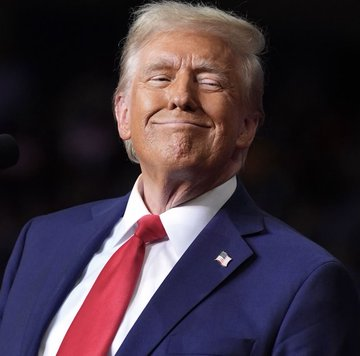
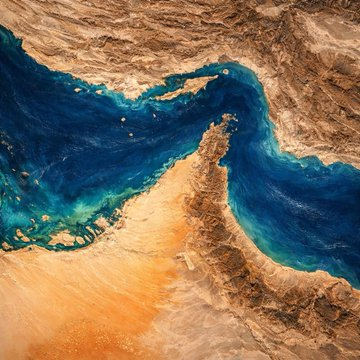
In a statement that underscores a fundamental shift in global energy dynamics, President Donald Trump has declared that nations and energy traders are increasingly realizing there are viable alternatives to passing through the strategic Strait of Hormuz. The president’s remarks, posted on Truth Social, highlight how the ongoing crisis has accelerated the search for—and adoption of—alternative routes and suppliers, potentially reshaping global energy trade patterns for years to come .
The statement comes as the Strait of Hormuz remains largely restricted, with Iran imposing strict limits on shipping and approximately 800 vessels still stranded in the Gulf. While the US and Iranian delegations engage in high-stakes peace talks in Islamabad, President Trump is signaling that the window for Tehran to leverage its control over the waterway may be closing .
‘People Are Realizing’
President Trump’s statement framed the development as an inevitable market response to Iran’s disruption of the strait.
“People are realizing there are alternatives to passing through the Strait of Hormuz. They are finding them, and they are using them. Quick turnaround!” — President Donald Trump
The president’s message reinforces his earlier announcement that “massive numbers of completely empty oil tankers” are heading to the United States to load up with American crude and liquefied natural gas. It also reflects the administration’s broader strategy of promoting US energy exports as a strategic counter to Iranian leverage .
The Alternatives: A Diversifying Global Energy Map
The crisis in the Strait of Hormuz has accelerated several long-developing trends in global energy trade, creating a more diversified map of supply routes and sources.
1. US Energy Exports: The Primary Alternative
The United States has emerged as the most significant alternative supplier, with American crude and LNG exports surging during the crisis.
| US Export Advantage | Details |
|---|---|
| Crude oil production | World’s largest producer |
| LNG export capacity | Rapidly expanding terminals |
| Quality | “Sweet” crude, easier to refine |
| Geopolitical reliability | Not subject to Hormuz disruptions |
| Turnaround time | Efficient Gulf Coast ports |
Sources: EIA, multiple news reports
President Trump has been actively promoting US energy exports, positioning them as both an economic opportunity and a strategic tool to counter Iranian influence. The administration has also been pressing European and Asian allies to increase their purchases of American energy as an alternative to Middle Eastern supplies .
2. The UAE’s Overland Pipeline (Abu Dhabi to Fujairah)
One of the most significant existing alternatives is the Abu Dhabi-to-Fujairah pipeline, which allows the UAE to bypass the Strait of Hormuz entirely .
- Capacity: Approximately 1.5 million barrels per day
- Route: From Abu Dhabi’s oil fields to the port of Fujairah on the Gulf of Oman
- Strategic value: Allows UAE exports to reach global markets without entering the Persian Gulf
Fujairah has also become a major bunkering hub (for refueling ships) and a center for oil storage, further enhancing its role as an alternative to Hormuz-dependent routes .
3. Saudi Arabia’s East-West Pipeline
Saudi Arabia operates a network of pipelines that can move crude from its eastern fields (on the Persian Gulf) to the Red Sea, bypassing the Strait of Hormuz .
- Petroline (East-West Pipeline) : Capacity of approximately 5 million barrels per day
- Terminals: Yanbu on the Red Sea
- Advantage: Direct access to markets via the Suez Canal or around Africa
4. The Oman-India Pipeline Project
While not yet operational, the crisis has renewed interest in long-discussed pipeline projects that would bypass the Strait of Hormuz entirely .
- Proposed route: From Oman to India (underwater pipeline)
- Status: Feasibility studies have been accelerated
- Strategic value: Direct access for Indian energy imports without Gulf transit
5. Rail and Overland Routes
China has been developing its Belt and Road Initiative (BRI) infrastructure, including rail links that can transport energy and goods from Central Asia and the Middle East to Chinese markets without maritime transit through Hormuz .
- China-Kazakhstan pipeline: Already operational
- Central Asia-China gas pipeline: Significant capacity
- Strategic value: Reduces dependence on maritime chokepoints
The Shift in Shipping Patterns
The crisis has already caused dramatic changes in global shipping patterns. VLCCs (Very Large Crude Carriers) that would typically load in the Persian Gulf are repositioning to the US Gulf Coast, the North Sea, and other alternative loading points .
Observed changes in shipping patterns:
- Repositioning of VLCCs: Some of the world’s largest tankers are heading to the United States
- Red Sea and Cape routes: Increased traffic around Africa’s Cape of Good Hope
- Floating storage: Elevated levels of oil stored at sea due to market uncertainty
- Insurance adjustments: War-risk premiums making Hormuz transit increasingly expensive
According to maritime analytics, the daily transit of oil tankers through the strait has fallen approximately 90 percent below pre-war levels, while alternative routes have seen corresponding increases in traffic .
The Strategic Implications for Iran
President Trump’s statement carries a clear message for Tehran: the window of leverage created by the Hormuz crisis is not infinite. If Iran does not agree to a deal that restores normal traffic, the world will adapt—and American energy producers will capture market share that may never return to the Gulf .
Key strategic implications for Iran:
| Factor | Impact on Iran |
|---|---|
| US market share | Increased US exports could permanently reduce demand for Gulf oil |
| Infrastructure investment | Alternative routes will attract capital that might otherwise flow to Iran |
| Long-term contracts | Buyers may lock in US supply, reducing future Iranian market access |
| Geopolitical leverage | Iran’s primary bargaining chip diminishes as alternatives develop |
The president’s message reinforces the position of the US delegation in Islamabad: the United States can afford to wait; Iran cannot. Every day the strait remains restricted, the world adapts, and alternatives become more entrenched .
The Limits of Alternatives
While President Trump’s statement highlights important trends, experts caution that alternatives to the Strait of Hormuz have significant limitations.
Capacity constraints:
- US export terminals, while expanding, cannot immediately replace the volume of oil that flows through Hormuz (approximately 20% of global supply)
- Pipeline alternatives (Saudi, UAE) are already operating at or near capacity
- Rail and overland routes cannot match the volume of maritime shipping
Cost considerations:
- US oil is generally more expensive to ship to Asian markets than Gulf oil
- Longer routes (around Africa) add significant time and fuel costs
- Infrastructure investments require years, not weeks, to come online
Geopolitical dependencies:
- US energy exports carry their own geopolitical risks (sanctions, trade disputes)
- Alternative routes also pass through strategic chokepoints (Bab el-Mandeb, Suez Canal, Strait of Malacca)
As one analyst noted, “Alternatives exist, but they are not perfect substitutes. The world still needs the Strait of Hormuz—but the crisis has shown that dependency can be reduced.”
The Islamabad Talks Context
President Trump’s statement comes as US and Iranian delegations meet in Islamabad for direct peace talks . The American delegation, led by Vice President JD Vance and including Jared Kushner and Steve Witkoff, is pushing for the “complete, immediate, and safe” reopening of the strait .
Iran has proposed a more gradual reopening, maintaining regulatory control and potentially charging transit fees. The White House has denied that it has agreed to release frozen Iranian assets, despite Tehran’s claims to the contrary .
Trump’s message about alternatives serves as a negotiating tool: the United States is signaling that it has options and that Iran’s leverage is not unlimited. If Tehran does not agree to favorable terms, the world will simply adapt—and American energy producers will capture the resulting market opportunity .
What Comes Next
The development of alternatives to the Strait of Hormuz is likely to accelerate regardless of the outcome of the Islamabad talks .
Short-term (weeks to months):
- Increased US crude and LNG exports
- Repositioning of tankers to alternative loading points
- Elevated floating storage
Medium-term (months to years):
- Expansion of US export infrastructure
- Acceleration of pipeline and overland projects
- Shift in long-term supply contracts toward diversified sources
Long-term (years to decade):
- Permanent reduction in Gulf’s share of global oil trade
- Establishment of multiple, redundant supply routes
- Diminished strategic leverage for Iran
President Trump’s message is clear: the world is adapting, and the United States is leading the way. As he put it: “People are realizing there are alternatives. They are finding them, and they are using them. Quick turnaround!”
Frequently Asked Questions (FAQs)
1. What alternatives to the Strait of Hormuz did President Trump mention?
President Trump stated that “people are realizing there are alternatives” to passing through the strait, pointing to US energy exports, pipeline alternatives (Saudi Arabia’s East-West Pipeline, UAE’s Abu Dhabi-Fujairah pipeline), and other emerging routes .
2. Why is the US promoting alternatives to the Strait of Hormuz?
The US is promoting alternatives to reduce global dependence on the Hormuz chokepoint, which Iran has used as leverage during the conflict. Increased US energy exports also serve American economic and strategic interests .
3. Can alternatives fully replace the Strait of Hormuz?
Experts caution that while alternatives exist, they cannot immediately replace the volume of oil that flows through Hormuz (approximately 20% of global supply). However, the crisis has accelerated the development of alternatives, and dependency on Hormuz can be reduced over time .
4. How much oil can the UAE’s Fujairah pipeline carry?
The Abu Dhabi-to-Fujairah pipeline has a capacity of approximately 1.5 million barrels per day, allowing UAE exports to bypass the Strait of Hormuz entirely .
5. What is Saudi Arabia’s alternative route?
Saudi Arabia operates the Petroline (East-West Pipeline) with a capacity of approximately 5 million barrels per day, moving crude from eastern fields to the Red Sea port of Yanbu, bypassing Hormuz .
6. How does this affect the Islamabad peace talks?
Trump’s message serves as a negotiating tool, signaling to Iran that its leverage over the strait is not unlimited. If Tehran does not agree to favorable terms, the world will adapt, and US energy producers will capture market share .
7. Are tankers actually repositioning to the US?
Yes. President Trump announced that “massive numbers of completely empty oil tankers” are heading to the United States to load American crude and LNG, a shift confirmed by maritime tracking data .
Stay informed with Reflecto News – Your trusted source for breaking energy and geopolitical intelligence. Subscribe for real-time updates on the Strait of Hormuz crisis, the Islamabad peace talks, and the transformation of global energy trade.
Questions people ask
What is China's current share of global manufacturing?
China now accounts for twenty eight percent of global manufacturing. This industrial output exceeds the combined manufacturing production of the United States, Japan, and Germany, making China the leading global industrial power according to recent reports.
Why were Andrew Tate and Tristan Tate arrested in Miami?
Andrew Tate and his brother Tristan Tate were taken into custody in Miami by the United States Marshals Service. They face thirty eight new charges in the United Kingdom, including rape and child pornography offences, and prosecutors are seeking their extradition.
What warning did Moscow issue about oil prices?
Kirill Dmitriev, the Chief Executive of the Russian Direct Investment Fund, warned that a tsunami of skyrocketing oil prices is approaching. Moscow describes this potential energy shock as a major threat to global markets.
What political shift is projected for Benjamin Netanyahu's coalition?
Political polls project that Prime Minister Benjamin Netanyahu's coalition is on track to lose its majority in the upcoming October election. This projection indicates a potential political shift in Jerusalem.
Why did a Russian military aircraft land in Tehran?
A Russian airborne command aircraft, widely known as a doomsday plane, landed in Tehran. The arrival of the aircraft represents a high stakes show of support from Russia for Iran during a period of heightened regional tensions.
What did President Masoud Pezeshkian claim about the United States and Israel?
Iranian President Masoud Pezeshkian claimed that the United States and Israel failed in a forty eight hour plan to topple the Iranian government. He made these statements during a televised address marking two years since his inauguration.