Reflecto News is an online news platform covering major international political events, global economic developments, and security conflicts. The site provides updates on topics such as Chinese manufacturing dominance, Middle Eastern political tensions, and high profile legal arrests. Readers can access current articles organized by categories like World News, Iran, and USA.
By Reflecto News Desk
April 7, 2026
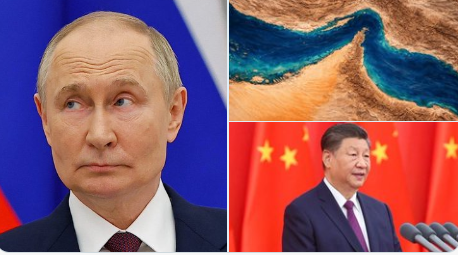
In a significant diplomatic setback amid escalating U.S.-Iran tensions, Russia and China have vetoed a Bahrain-sponsored United Nations Security Council resolution aimed at addressing the closure of the Strait of Hormuz. The vote, which occurred on Tuesday, failed despite receiving support from 11 member states, as the two permanent members exercised their veto power, blocking the measure even in its heavily watered-down form.
The resolution sought to encourage coordinated international efforts to protect commercial shipping and promote safe passage through the vital waterway, which Iran has effectively closed since late February 2026 in response to U.S. and Israeli military actions.
Details of the Failed Resolution
The draft, initially proposed by Bahrain on behalf of several Gulf Arab states, underwent multiple revisions to address objections from permanent members. Early versions referenced authorizing “defensive measures” or “all means necessary” to secure navigation. However, opposition from Russia, China, and even France led to the removal of any language that could be interpreted as endorsing the use of force.
The final version focused on calling for safe passage, condemning disruptions to global shipping, and encouraging multilateral cooperation — yet it still faced a double veto from Moscow and Beijing. Reports indicate the resolution garnered 11 votes in favor with two abstentions, falling short due to the vetoes. France had also expressed reservations about authorizing force in earlier negotiations.
This outcome highlights deep divisions within the Security Council, where Russia and China have consistently opposed measures they view as potentially legitimizing Western or U.S.-led military escalation against Iran, a key partner for both nations.
Why the Strait of Hormuz Remains Critical
The Strait of Hormuz, a narrow chokepoint between Iran and Oman, is one of the world’s most strategically vital maritime routes. It typically carries about 20-30% of global seaborne oil trade and a significant portion of liquefied natural gas (LNG) exports. Iran’s closure has already triggered sharp rises in energy prices, disrupted supply chains, and raised concerns about global economic stability.
Gulf states, heavily reliant on the strait for their oil exports, pushed for the resolution to restore safe navigation and mitigate the economic fallout from the ongoing conflict.
Russia and China’s Stance: Opposition to Force and Escalation
Both countries framed their veto as a principled stand against any authorization of military action that could escalate the crisis further. Chinese diplomats warned that such language risked “legitimizing the unlawful and indiscriminate use of force,” potentially leading to “serious consequences.” Russia, a close ally of Iran, dismissed the push as an attempt to endorse external intervention in the region.
Their coordinated position reflects broader geopolitical alignments, with both nations advocating for diplomatic solutions and criticizing U.S. and Israeli strikes on Iranian targets. The veto comes as China and Russia have engaged in high-level diplomacy, including recent calls between their foreign ministers, to promote a “balanced approach” at the UN.
Timing: Veto Coincides with Trump’s Looming Deadline
The UN vote unfolded just hours before President Donald Trump’s self-imposed 8:00 PM ET deadline for Iran to reach a deal that includes reopening the strait to safe international shipping. Trump has issued increasingly strong warnings, stating that failure to comply could result in unprecedented U.S. strikes, including on Iranian power plants and infrastructure.
The veto removes one potential avenue for multilateral pressure or authorization, leaving the situation more dependent on direct U.S.-Iran negotiations — or unilateral military action. Iran has rejected temporary ceasefires and demanded a permanent end to hostilities, sanctions relief, and reconstruction guarantees in its counterproposals.
Broader Implications for the Conflict and Global Economy
The failure at the UN underscores the challenges of achieving consensus in an increasingly polarized international system. Without Security Council backing, Gulf states and the U.S. may pursue alternative measures, such as naval coalitions outside UN auspices, though these carry higher risks of direct confrontation.
Economically, prolonged closure continues to drive up global oil and gas prices, affecting consumers and industries worldwide. Analysts warn of potential supply shortages and inflationary pressures if the waterway remains blocked.
Geopolitically, the veto strengthens Iran’s position in the short term by denying international legitimacy to forced reopening efforts, while highlighting the limits of U.S. influence at the UN during this crisis.
What Happens Next?
With the diplomatic track at the UN stalled, attention shifts back to Trump’s deadline and potential U.S. responses. Iran has shown no immediate signs of yielding, continuing to link the strait’s reopening to broader demands for peace. The coming hours could prove decisive, with risks of further military escalation high.
Reflecto News will provide ongoing updates as developments unfold in this fast-moving situation, including any statements from the White House, Tehran, or other involved parties.
FAQs: Russia-China Veto and the Strait of Hormuz Crisis
What was the UN resolution about?
It aimed to promote safe commercial shipping through the Strait of Hormuz and encourage international cooperation to address disruptions caused by Iran’s closure. Earlier drafts included provisions for defensive measures, but these were removed due to opposition.
Why did Russia and China veto it?
They opposed any language that could authorize or legitimize the use of force, arguing it would escalate the conflict. Both countries advocate for diplomatic resolutions and have close ties with Iran.
Did the resolution pass any votes?
Yes — it received 11 votes in favor but was blocked by the vetoes from Russia and China (permanent members with veto power).
How does this affect Trump’s 8:00 PM ET deadline?
The veto eliminates a potential multilateral tool for pressuring Iran, increasing reliance on direct U.S. actions or bilateral talks as the deadline approaches.
What is the strategic importance of the Strait of Hormuz?
It serves as the primary exit for oil and gas from the Persian Gulf, handling roughly one-fifth of global oil trade. Its closure has caused energy price spikes and supply concerns worldwide.
Could other countries act without UN approval?
Yes. Nations or coalitions could form naval task forces for “defensive” protection of shipping, though this would lack UN authorization and heighten escalation risks.
This article will be updated as new information emerges regarding the UN vote’s aftermath and the status of the U.S.-Iran deadline.
Questions people ask
What is China's current share of global manufacturing?
China now accounts for twenty eight percent of global manufacturing. This industrial output exceeds the combined manufacturing production of the United States, Japan, and Germany, making China the leading global industrial power according to recent reports.
Why were Andrew Tate and Tristan Tate arrested in Miami?
Andrew Tate and his brother Tristan Tate were taken into custody in Miami by the United States Marshals Service. They face thirty eight new charges in the United Kingdom, including rape and child pornography offences, and prosecutors are seeking their extradition.
What warning did Moscow issue about oil prices?
Kirill Dmitriev, the Chief Executive of the Russian Direct Investment Fund, warned that a tsunami of skyrocketing oil prices is approaching. Moscow describes this potential energy shock as a major threat to global markets.
What political shift is projected for Benjamin Netanyahu's coalition?
Political polls project that Prime Minister Benjamin Netanyahu's coalition is on track to lose its majority in the upcoming October election. This projection indicates a potential political shift in Jerusalem.
Why did a Russian military aircraft land in Tehran?
A Russian airborne command aircraft, widely known as a doomsday plane, landed in Tehran. The arrival of the aircraft represents a high stakes show of support from Russia for Iran during a period of heightened regional tensions.
What did President Masoud Pezeshkian claim about the United States and Israel?
Iranian President Masoud Pezeshkian claimed that the United States and Israel failed in a forty eight hour plan to topple the Iranian government. He made these statements during a televised address marking two years since his inauguration.