Reflecto News is an online news platform covering major international political events, global economic developments, and security conflicts. The site provides updates on topics such as Chinese manufacturing dominance, Middle Eastern political tensions, and high profile legal arrests. Readers can access current articles organized by categories like World News, Iran, and USA.
Trump Tells Reporters Negotiations Are Progressing Positively, Could Extend Ceasefire and Lead to “Good Deal” with No Nuclear Weapons for Iran
By Reflecto News Staff
April 17, 2026
President Donald Trump expressed strong optimism about ongoing negotiations with Iran, stating that talks are “looking very good” and that the two sides are closing in on a potential permanent agreement to end the conflict.
Speaking to reporters on the tarmac after landing in Phoenix, Arizona, ahead of a Turning Point USA event, Trump said: “We’ve had some very good discussions… Talks are going on, and it’ll go on over the weekend, and a lot of good things are happening.”
He added that a deal with Iran “is going to be a good deal” and reiterated his core demand that Iran must give up its nuclear weapons ambitions entirely. Trump also suggested the current ceasefire could be extended and that the US naval blockade of Iranian ports would remain in place until a final agreement is reached.
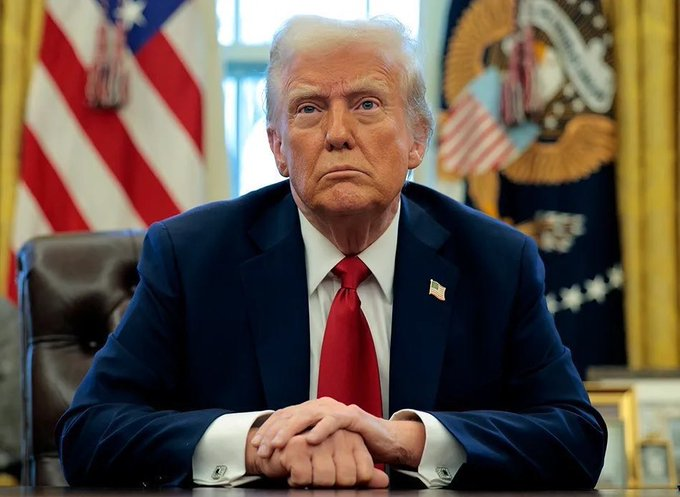
President Donald Trump speaking to reporters about Iran negotiations, expressing confidence in the talks.
Background: Current Ceasefire and Blockade Dynamics
The comments come as a fragile US-brokered ceasefire between the US and Iran — part of broader regional de-escalation efforts — is in effect, with its initial term set to expire soon. Iran has recently signaled openness to extending the truce and reopening the Strait of Hormuz to commercial shipping, moves that have already contributed to easing some pressure on global oil markets.
Trump has repeatedly framed the negotiations as advancing quickly, claiming few significant differences remain and that Iran has shown willingness to make major concessions on its nuclear program. However, Iranian officials have pushed back on some of Trump’s characterizations, describing talks as ongoing but complex.
The US maintains its naval blockade of Iranian ports as leverage, while Iran has accused Washington of overreach. Recent indirect and direct discussions, mediated in part through third countries, have focused on uranium enrichment limits, sanctions relief, regional proxy activities, and maritime security.
Map of the Persian Gulf and Strait of Hormuz, central to current US-Iran tensions and ceasefire talks.
Market and Regional Reactions
Trump’s upbeat assessment has contributed to a pullback in oil prices and a surge in market optimism, as investors bet on reduced disruption to energy flows. The successful transit of the Pakistan-flagged tanker Shalamar through the Strait of Hormuz yesterday further signaled incremental normalization of shipping.
Analysts caution that significant hurdles remain, including verifiable limits on Iran’s nuclear program, the status of enriched uranium stockpiles, and guarantees against future military action. A second round of more formal talks could take place as early as this weekend, according to Trump.
Frequently Asked Questions (FAQs)
Q1: What exactly did President Trump say about Iran talks?
A: He described the discussions as “very good,” said they would continue over the weekend, and expressed confidence in reaching “a good deal” that includes Iran giving up nuclear weapons.
Q2: Is a permanent ceasefire imminent?
A: Trump signaled strong optimism and suggested the current truce could be extended, but no final agreement has been announced. Talks remain fluid.
Q3: Will the US blockade of Iranian ports continue?
A: Yes, according to Trump. The blockade will stay in force until a long-term deal is finalized.
Q4: How has Iran responded to Trump’s comments?
A: Iranian officials have described talks as ongoing but have pushed back against some US characterizations, while signaling cautious openness to extending the ceasefire.
Q5: What are the main sticking points in the negotiations?
A: Key issues include Iran’s uranium enrichment program, removal of highly enriched uranium stockpiles, sanctions relief, cessation of support for regional proxies, and security guarantees in the Strait of Hormuz.
Q6: How does this connect to the broader regional situation?
A: Progress with Iran could help stabilize the Persian Gulf, ease energy market volatility, and support parallel de-escalation efforts in Lebanon and elsewhere.
Reflecto News Analysis
President Trump’s declaration that talks with Iran are “very good” reflects his characteristic optimistic style in high-stakes diplomacy. While the comments have boosted market sentiment and signaled potential momentum toward extending the ceasefire, the gap between public rhetoric and verifiable concessions remains wide.
Achieving a durable deal will require bridging deep differences on Iran’s nuclear ambitions and regional behavior. The coming weekend could prove pivotal if a second round of talks materializes. Success would mark a major foreign policy win for the Trump administration; failure risks renewed escalation and further disruption to global energy supplies.
As negotiations continue, the world will watch whether this latest round of optimism translates into concrete progress or remains another chapter in the long-running US-Iran standoff.
For the latest updates on US-Iran negotiations, the Strait of Hormuz situation, and broader Middle East developments, stay tuned to Reflecto News — your trusted source for accurate, timely international coverage.
Related Coverage:
- US-Iran Ceasefire: Timeline and Key Terms
- Impact of Iran Conflict on Global Oil Markets and Shipping
- Trump Administration’s Maximum Pressure Campaign: Evolution and Outlook
Images used for illustrative purposes from public and news sources.
Questions people ask
What is China's current share of global manufacturing?
China now accounts for twenty eight percent of global manufacturing. This industrial output exceeds the combined manufacturing production of the United States, Japan, and Germany, making China the leading global industrial power according to recent reports.
Why were Andrew Tate and Tristan Tate arrested in Miami?
Andrew Tate and his brother Tristan Tate were taken into custody in Miami by the United States Marshals Service. They face thirty eight new charges in the United Kingdom, including rape and child pornography offences, and prosecutors are seeking their extradition.
What warning did Moscow issue about oil prices?
Kirill Dmitriev, the Chief Executive of the Russian Direct Investment Fund, warned that a tsunami of skyrocketing oil prices is approaching. Moscow describes this potential energy shock as a major threat to global markets.
What political shift is projected for Benjamin Netanyahu's coalition?
Political polls project that Prime Minister Benjamin Netanyahu's coalition is on track to lose its majority in the upcoming October election. This projection indicates a potential political shift in Jerusalem.
Why did a Russian military aircraft land in Tehran?
A Russian airborne command aircraft, widely known as a doomsday plane, landed in Tehran. The arrival of the aircraft represents a high stakes show of support from Russia for Iran during a period of heightened regional tensions.
What did President Masoud Pezeshkian claim about the United States and Israel?
Iranian President Masoud Pezeshkian claimed that the United States and Israel failed in a forty eight hour plan to topple the Iranian government. He made these statements during a televised address marking two years since his inauguration.