Reflecto News is an online news platform covering major international political events, global economic developments, and security conflicts. The site provides updates on topics such as Chinese manufacturing dominance, Middle Eastern political tensions, and high profile legal arrests. Readers can access current articles organized by categories like World News, Iran, and USA.
Published on Reflecto News | World News | Diplomacy & Nuclear Security
President Donald Trump has declared that Iran is “unwilling to give up its nuclear ambitions,” confirming that the core dispute that derailed nearly 21 hours of direct negotiations in Islamabad remains unresolved. The statement, posted on Truth Social, represents the president’s most concise summary of why the highest-level US-Iran talks since the 1979 Islamic Revolution ended without an agreement .
Trump’s assessment aligns with statements from Iranian officials who have consistently insisted on Iran’s right to enrich uranium for civilian purposes under the Nuclear Non-Proliferation Treaty (NPT). It also underscores the fundamental incompatibility between the US demand for complete denuclearization and Tehran’s insistence on preserving its nuclear infrastructure .
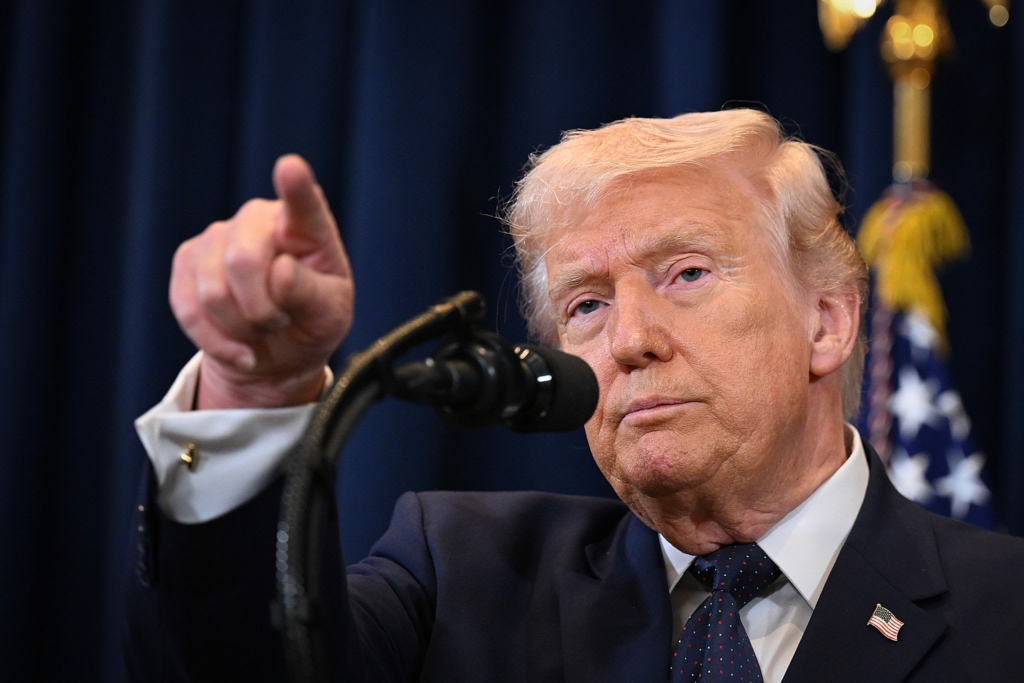
‘Unwilling to Give Up’
President Trump’s Truth Social post was characteristically direct, cutting to the heart of the disagreement.
“Iran is unwilling to give up its nuclear ambitions. We made our demands clear. They rejected them. That is where we stand.” — President Donald Trump
The president’s framing — “nuclear ambitions” rather than “nuclear program” — suggests that the US views Iran’s nuclear activities not as a peaceful civilian endeavor but as a weapons program in waiting. This characterization is consistent with US intelligence assessments that Iran has the technical capability to produce a nuclear device but has not yet decided to do so .
Trump’s statement that “we made our demands clear” refers to the US position articulated by Vice President JD Vance: an “affirmative commitment” from Iran that it will not seek a nuclear weapon, nor the “tools that would enable them to quickly achieve” one — including enriched uranium stockpiles and advanced centrifuges .
The Core Disagreement: What Iran Wants vs. What the US Demands
The nuclear impasse reflects fundamentally different positions on Iran’s rights and intentions.
| Aspect | US Position | Iranian Position |
|---|---|---|
| Enrichment | Complete cessation | Right to enrich for civilian purposes |
| Stockpile | Surrender all enriched uranium | Retain as sovereign property |
| Centrifuges | Dismantle advanced models | Preserve for civilian research |
| Facilities | Full IAEA access; dismantle underground sites | Limited access; preserve for peaceful use |
| Breakout timeline | Extend to years (no enrichment capability) | Maintain capability for peaceful program |
| Legal basis | Iran’s history of clandestine activities forfeits NPT rights | NPT permits civilian enrichment |
Sources: Multiple news reports, official statements
The US position goes significantly beyond the 2015 Joint Comprehensive Plan of Action (JCPOA), which permitted limited enrichment under strict monitoring with sunset clauses. The current US demand seeks permanent restrictions — a non-starter for Tehran .
Iran’s Nuclear Capabilities: What Tehran Currently Possesses
Iran’s nuclear program has advanced considerably since the US withdrawal from the JCPOA in 2018.
| Material/Asset | Estimated Quantity | Significance |
|---|---|---|
| 60% enriched uranium | ~400-440 kg | One “significant quantity” (enough for one weapon) is ~25 kg of 90% enriched uranium |
| 20% enriched uranium | ~1,000 kg | Can be further enriched to weapons-grade |
| 3.67% enriched uranium | ~8,500 kg | Stockpile for civilian power generation |
| Advanced centrifuges (IR-6, IR-8) | Thousands installed | Faster enrichment than IR-1 models |
| Underground facilities | Fordow, Natanz, Isfahan | Hardened against military strikes |
Sources: IAEA, US intelligence assessments
The 60% enriched stockpile is of particular concern. While not yet weapons-grade (which requires 90% enrichment), the technical step from 60% to 90% is relatively short. Experts estimate that Iran could produce enough weapons-grade uranium for a nuclear device in a matter of weeks from its existing stockpile .
Why Iran Won’t Give Up Its Program
Iran’s insistence on preserving its nuclear program is rooted in several factors that go beyond simple national pride.
1. National Sovereignty
Iran views its nuclear program as a matter of national pride and technological achievement. For a nation that has been subject to sanctions, isolation, and military threats for decades, the ability to master the nuclear fuel cycle is seen as proof of its resilience and capability .
2. Deterrence
A nuclear capability — even a latent one — provides Iran with a strategic deterrent against attack. The US and Israel have demonstrated their willingness to strike Iranian targets; a nuclear umbrella would fundamentally alter the strategic calculus .
3. Precedent
Iran points to other NPT signatories — including Japan, Germany, and Brazil — that enrich uranium for civilian purposes without being accused of seeking weapons. Tehran argues that it should be treated no differently .
4. Leverage
The nuclear program is Iran’s primary source of leverage in negotiations with the West. Surrendering it without securing significant concessions — including sanctions relief, security guarantees, and economic benefits — would leave Tehran with no cards to play .
5. Domestic Politics
Any Iranian leader who agreed to dismantle the nuclear program would face intense domestic criticism. The program enjoys broad popular support as a symbol of national resistance to foreign pressure .
The Historical Context: From JCPOA to Breakout
The current impasse must be understood in the context of the 2015 nuclear deal and its collapse.
| Year | Event | Impact |
|---|---|---|
| 2015 | JCPOA signed | Iran limits enrichment; sanctions relieved |
| 2018 | US withdraws from JCPOA | Iran begins reducing compliance |
| 2019-2020 | Iran exceeds enrichment limits | Stockpile grows; advanced centrifuges installed |
| 2021-2024 | Talks stall; Iran enriches to 60% | Breakout timeline shrinks |
| 2025-2026 | US-Israeli military strikes | Nuclear facilities damaged but not destroyed |
| 2026 | Islamabad talks | US demands complete denuclearization; Iran refuses |
The Trump administration’s 2018 withdrawal from the JCPOA — a deal it inherited — is widely seen as having accelerated Iran’s nuclear program. By the time the current war began, Iran’s breakout timeline had shrunk from one year (under the JCPOA) to weeks .
The Military Option
With Iran unwilling to give up its nuclear ambitions and Trump warning that the US military is “locked and loaded,” the military option remains on the table.
| Option | Feasibility | Risks |
|---|---|---|
| Strikes on Natanz/Fordow | Possible; underground facilities hard to destroy | May not eliminate program; Iranian retaliation |
| Strikes on Isfahan conversion facility | Possible; above-ground | Less critical to weapons program |
| Strikes on research personnel | Possible; intelligence-dependent | Limited long-term impact |
| Full-scale invasion | Unlikely; would require ground forces | High casualties; potential quagmire |
Israel has signaled that it is prepared to act if the US does not. Prime Minister Benjamin Netanyahu has declared that the campaign against Iran is “not over” and that Israel still has “more to do” .
What Comes Next
With Trump declaring that Iran is “unwilling to give up its nuclear ambitions” and no further talks scheduled, several scenarios are possible:
| Scenario | Likelihood | Implications |
|---|---|---|
| Renewed military strikes on nuclear facilities | Elevated | Trump has threatened action |
| Continued diplomacy via third parties | Possible | Russia has offered mediation |
| Acceptance of Iranian nuclear latency | Unlikely | US has consistently rejected |
| Ceasefire extension while nuclear talks continue | Possible | Temporary pause continues |
| Full-scale war resumes | Elevated | Both sides preparing |
The coming days will determine whether the nuclear impasse leads to renewed military action — or whether a path to compromise can be found.
Frequently Asked Questions (FAQs)
1. What did President Trump say about Iran’s nuclear ambitions?
Trump declared that “Iran is unwilling to give up its nuclear ambitions,” confirming that the core dispute in the Islamabad talks remains unresolved .
2. Why won’t Iran give up its nuclear program?
Iran cites its right under the NPT to enrich uranium for civilian purposes, as well as national sovereignty, deterrence against attack, negotiating leverage, and domestic political considerations .
3. What does the US want Iran to do?
The US demands an “affirmative commitment” that Iran will not seek a nuclear weapon, nor the “tools that would enable them to quickly achieve” one — including surrendering its enriched uranium stockpile and dismantling advanced centrifuges .
4. How close is Iran to a nuclear weapon?
Iran has not decided to build a weapon, but its technical capabilities have advanced significantly. From its existing 60% enriched stockpile, experts estimate Iran could produce enough weapons-grade uranium for a device in a matter of weeks .
5. Did the US and Iran agree on anything?
President Trump previously stated that “most points were agreed to” in the Islamabad talks, with nuclear issues being the sole sticking point .
6. Is the ceasefire still in effect?
The two-week ceasefire announced on April 7 remains in effect for now, though its future is uncertain following the collapse of talks .
7. What happens next?
Trump has warned that the US military is “locked and loaded” and prepared to “finish up the little that is left of Iran” if no agreement is reached. Military strikes on nuclear facilities are a possibility .
Stay informed with Reflecto News – Your trusted source for breaking nuclear security and geopolitical intelligence. Subscribe for real-time updates on the US-Iran nuclear standoff and regional security developments.
Questions people ask
What is China's current share of global manufacturing?
China now accounts for twenty eight percent of global manufacturing. This industrial output exceeds the combined manufacturing production of the United States, Japan, and Germany, making China the leading global industrial power according to recent reports.
Why were Andrew Tate and Tristan Tate arrested in Miami?
Andrew Tate and his brother Tristan Tate were taken into custody in Miami by the United States Marshals Service. They face thirty eight new charges in the United Kingdom, including rape and child pornography offences, and prosecutors are seeking their extradition.
What warning did Moscow issue about oil prices?
Kirill Dmitriev, the Chief Executive of the Russian Direct Investment Fund, warned that a tsunami of skyrocketing oil prices is approaching. Moscow describes this potential energy shock as a major threat to global markets.
What political shift is projected for Benjamin Netanyahu's coalition?
Political polls project that Prime Minister Benjamin Netanyahu's coalition is on track to lose its majority in the upcoming October election. This projection indicates a potential political shift in Jerusalem.
Why did a Russian military aircraft land in Tehran?
A Russian airborne command aircraft, widely known as a doomsday plane, landed in Tehran. The arrival of the aircraft represents a high stakes show of support from Russia for Iran during a period of heightened regional tensions.
What did President Masoud Pezeshkian claim about the United States and Israel?
Iranian President Masoud Pezeshkian claimed that the United States and Israel failed in a forty eight hour plan to topple the Iranian government. He made these statements during a televised address marking two years since his inauguration.