Reflecto News is an online news platform covering major international political events, global economic developments, and security conflicts. The site provides updates on topics such as Chinese manufacturing dominance, Middle Eastern political tensions, and high profile legal arrests. Readers can access current articles organized by categories like World News, Iran, and USA.
Published on Reflecto News | World News | Diplomacy & Nuclear Security
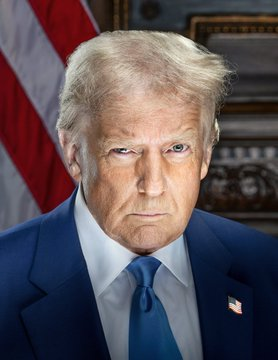
President Donald Trump has revealed that while the United States and Iran agreed on “most points” during nearly 21 hours of direct negotiations in Islamabad, the two sides were unable to reach an agreement on nuclear issues — the core of the American demand. The statement, posted on Truth Social, offers a more nuanced assessment of the failed talks than his earlier “locked and loaded” warning, acknowledging progress while confirming that the most critical gap remains unbridgeable .
Trump’s revelation comes as the US delegation has fully departed Pakistan and the fragile two-week ceasefire hangs in the balance. It also follows Vice President JD Vance’s characterization of the talks’ outcome as “bad news for Iran much more than it is bad news for the United States” .
‘Most Points Were Agreed To’
President Trump’s Truth Social post provided a concise summary of where the negotiations stand.
“We agreed on most points with Iran. But on the nuclear issue, we could not come to an agreement. They want to keep their nuclear program. That is not acceptable.” — President Donald Trump
The president’s acknowledgment that “most points were agreed to” suggests that the two sides made significant progress on other contentious issues, including the status of the Strait of Hormuz, the release of frozen assets, and potentially a ceasefire in Lebanon .
| Issue | Status According to Trump |
|---|---|
| Most points | Agreed |
| Nuclear program | No agreement |
| Strait of Hormuz | Not specified, but likely part of “most points” |
| Frozen assets | Not specified |
| Lebanon ceasefire | Not specified |
This characterization differs from the stark “no deal” framing that followed the talks, suggesting that while a comprehensive agreement remains elusive, significant progress was made on multiple fronts .
The Nuclear Sticking Point
Trump’s statement confirms what Iranian officials have indicated throughout the negotiations: the United States demanded that Iran end its nuclear enrichment program and surrender its stockpile of enriched uranium, while Tehran insisted on its right to enrich for civilian purposes under the Nuclear Non-Proliferation Treaty (NPT).
| Nuclear Issue | US Position | Iranian Position |
|---|---|---|
| Enrichment | Complete cessation | Right to enrich for civilian purposes |
| Stockpile | Surrender 60% and other enriched uranium | Retain as sovereign property |
| Facilities | Dismantle or submit to full IAEA access | Preserve for civilian research |
| Breakout timeline | Extend to years (no enrichment capability) | Maintain capability for peaceful program |
The US demand goes significantly beyond the terms of the 2015 Joint Comprehensive Plan of Action (JCPOA), which permitted limited enrichment under strict monitoring. The current US position seeks permanent restrictions with no sunset clauses — a non-starter for Tehran .
Iran’s Nuclear Program: What It Currently Possesses
Iran’s nuclear program has advanced significantly since the US withdrawal from the JCPOA in 2018.
| Material/Asset | Estimated Quantity | Weapon Potential |
|---|---|---|
| 60% enriched uranium | ~400-440 kg | Can be further enriched to 90% (weapons-grade) quickly |
| 20% enriched uranium | ~1,000 kg | Significant further enrichment required |
| 3.67% enriched uranium | ~8,500 kg | Used for civilian power generation |
| Advanced centrifuges | IR-6, IR-8 models installed | Faster enrichment capability |
| Underground facilities | Fordow, Natanz, Isfahan | Hardened against strikes |
Sources: IAEA, US intelligence assessments
The 60% enriched stockpile is of particular concern. While not yet weapons-grade, the technical step from 60% to 90% is relatively short. Experts estimate that Iran could produce enough weapons-grade uranium for a nuclear device in a matter of weeks from its existing stockpile .
What Was Agreed? ‘Most Points’
While Trump did not specify which issues were resolved, the negotiations reportedly addressed multiple contentious topics.
Potential areas of agreement (speculative based on reporting):
Strait of Hormuz
Iran had insisted that full reopening of the strait would only occur after a final peace agreement. The US demanded immediate reopening. Trump’s statement that “most points were agreed” suggests a potential compromise — possibly a phased reopening or a commitment to maintain current restricted levels pending a final deal .
Frozen Assets
Iran had demanded the release of frozen assets as a precondition for talks. The US had denied any such agreement. Trump’s statement suggests this issue may have been resolved, though details remain unclear .
Lebanon Ceasefire
Iran insisted that any agreement must include a ceasefire in Lebanon, where Hezbollah continues to fight Israel. The US had rejected this. Trump’s statement suggests potential progress, though the issue remains sensitive given Israel’s opposition .
Prisoner Exchanges
Humanitarian issues, including potential prisoner swaps, may have been among the “most points” agreed .
The Vance-Trump Dynamic
Trump’s acknowledgment that “most points were agreed” stands in some tension with Vice President JD Vance’s characterization of the talks’ outcome.
| Official | Characterization of Outcome |
|---|---|
| President Trump | “Most points were agreed to” except nuclear issues |
| Vice President Vance | “Bad news for Iran much more than for the USA” |
Vance’s framing suggested a complete failure; Trump’s framing suggests partial success. This difference may reflect different audiences (Trump speaking to his base, Vance to the press) or a genuine difference in assessment of how close the two sides came to a deal .
Iran’s Position: ‘No Hurry,’ ‘Ball in America’s Court’
Iranian officials have responded to the failed talks with a posture of strategic patience, declaring that the Islamic Republic is in “no hurry” to return to the negotiating table .
“The ball is now in America’s court. We are in no hurry. The Americans are the ones who need a deal.” — Iranian Foreign Ministry Statement
Parliament Speaker Mohammad Bagher Ghalibaf, who led the Iranian delegation, said the US “failed to gain our trust” during negotiations and characterized American demands as “excessive” .
Iran has also announced that it has no plans for another round of negotiations with the United States, though officials have indicated that they remain open to future engagement under the right conditions .
What Comes Next: Several Scenarios
With the nuclear issue unresolved and Trump warning that the US is “locked and loaded” to “finish up the little that is left of Iran,” several scenarios are possible:
| Scenario | Likelihood | Implications |
|---|---|---|
| Renewed military strikes on nuclear facilities | Elevated | Trump has threatened action |
| Continued diplomacy on nuclear track | Possible | Russia has offered mediation |
| Partial deal without nuclear resolution | Possible | Other issues could be resolved separately |
| Ceasefire extended while nuclear talks continue | Possible | Temporary pause continues |
| Full-scale war resumes | Elevated | Both sides preparing |
Trump’s acknowledgment that “most points were agreed” suggests that the two sides are closer to a comprehensive deal than the “no deal” headlines might suggest. The nuclear issue remains the final — and most difficult — obstacle .
The Path Forward: Could Diplomacy Be Revived?
Despite Trump’s “locked and loaded” warning, his acknowledgment that “most points were agreed” leaves the door open for renewed diplomacy — particularly if a third party, such as Russia, can help bridge the nuclear gap.
Potential paths to a nuclear compromise:
| Compromise Option | Feasibility |
|---|---|
| Phased enrichment reduction | Possible; Iran reduces stockpile over time |
| Stricter IAEA monitoring | Possible; Iran has resisted but may accept |
| Sunset clauses with extensions | Possible; JCPOA model with longer durations |
| Complete enrichment ban | Unlikely; Iran has rejected |
The coming days will determine whether the “most points” agreed can serve as a foundation for a final deal — or whether the nuclear impasse proves insurmountable .
Frequently Asked Questions (FAQs)
1. What did President Trump say about the Iran talks?
Trump stated that “most points were agreed to” with Iran, but that no agreement was reached on nuclear issues because Iran “want to keep their nuclear program” — which he said “is not acceptable” .
2. What nuclear issues remain unresolved?
The US demands that Iran end its enrichment program and surrender its stockpile of enriched uranium. Iran insists on its right to enrich for civilian purposes under the Nuclear Non-Proliferation Treaty (NPT) .
3. What points were agreed?
Trump did not specify, but potential areas of agreement could include the status of the Strait of Hormuz, the release of frozen assets, and a ceasefire in Lebanon .
4. Is the ceasefire still in effect?
The two-week ceasefire announced on April 7 remains in effect for now, though its future is uncertain following the collapse of talks and Trump’s threats of renewed military action .
5. How has Iran responded?
Iran has declared it is in “no hurry” to negotiate and that “the ball is now in America’s court.” Parliament Speaker Ghalibaf said the US “failed to gain our trust” .
6. Could diplomacy be revived?
Trump’s acknowledgment that “most points were agreed” leaves the door open for renewed diplomacy. Russia has offered to mediate, and other third parties could attempt to bridge the nuclear gap .
7. What happens if no deal is reached?
Trump has warned that the US military is “locked and loaded” and will “finish up the little that is left of Iran” if no agreement is reached .
Stay informed with Reflecto News – Your trusted source for breaking diplomatic and nuclear security intelligence. Subscribe for real-time updates on the US-Iran crisis and the future of nuclear negotiations.
Questions people ask
What is China's current share of global manufacturing?
China now accounts for twenty eight percent of global manufacturing. This industrial output exceeds the combined manufacturing production of the United States, Japan, and Germany, making China the leading global industrial power according to recent reports.
Why were Andrew Tate and Tristan Tate arrested in Miami?
Andrew Tate and his brother Tristan Tate were taken into custody in Miami by the United States Marshals Service. They face thirty eight new charges in the United Kingdom, including rape and child pornography offences, and prosecutors are seeking their extradition.
What warning did Moscow issue about oil prices?
Kirill Dmitriev, the Chief Executive of the Russian Direct Investment Fund, warned that a tsunami of skyrocketing oil prices is approaching. Moscow describes this potential energy shock as a major threat to global markets.
What political shift is projected for Benjamin Netanyahu's coalition?
Political polls project that Prime Minister Benjamin Netanyahu's coalition is on track to lose its majority in the upcoming October election. This projection indicates a potential political shift in Jerusalem.
Why did a Russian military aircraft land in Tehran?
A Russian airborne command aircraft, widely known as a doomsday plane, landed in Tehran. The arrival of the aircraft represents a high stakes show of support from Russia for Iran during a period of heightened regional tensions.
What did President Masoud Pezeshkian claim about the United States and Israel?
Iranian President Masoud Pezeshkian claimed that the United States and Israel failed in a forty eight hour plan to topple the Iranian government. He made these statements during a televised address marking two years since his inauguration.