Reflecto News is an online news platform covering major international political events, global economic developments, and security conflicts. The site provides updates on topics such as Chinese manufacturing dominance, Middle Eastern political tensions, and high profile legal arrests. Readers can access current articles organized by categories like World News, Iran, and USA.
Published on Reflecto News | World News | Diplomacy & Conflict
President Donald Trump has declared that his apocalyptic warning about wiping out Iranian civilization was the decisive factor that brought Tehran to the negotiating table. In a series of early morning posts on Truth Social, the president defended his controversial rhetoric, arguing that “toughness” — not diplomacy — forced Iran to agree to the two-week ceasefire and subsequent direct talks in Islamabad .
Trump’s statement comes just hours after nearly 21 hours of direct negotiations between the United States and Iran ended without an agreement on nuclear issues. Despite the diplomatic setback, the president is doubling down on his强硬 posture, crediting his most extreme threats with creating the conditions for any negotiations at all .
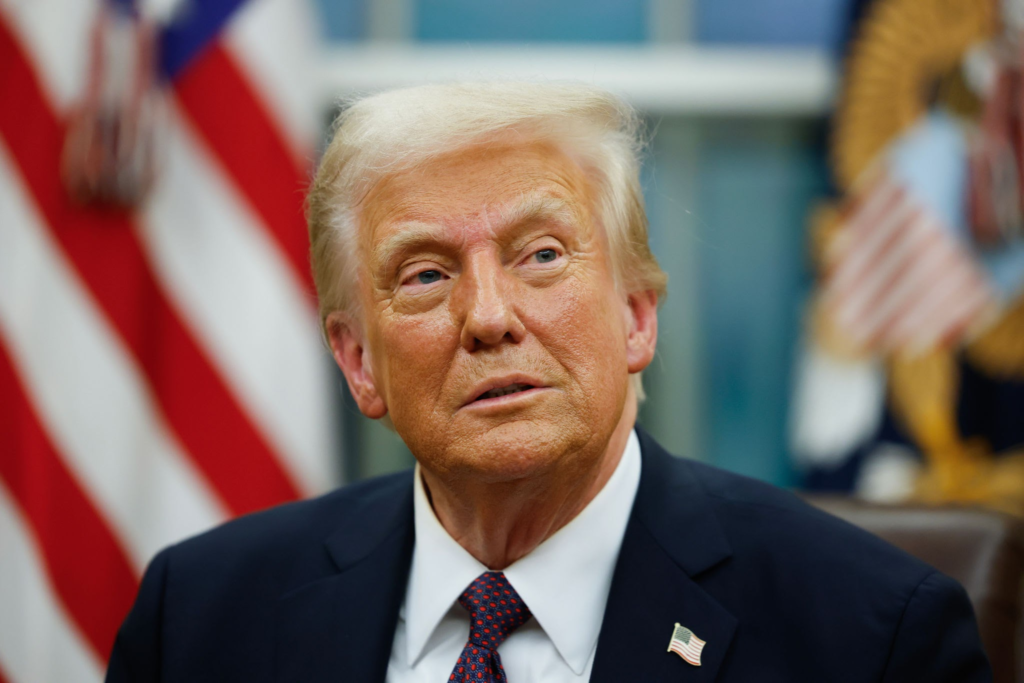
‘That’s What Brought Them to the Table’
President Trump’s Truth Social post was characteristically direct and unapologetic, defending his approach against what he characterized as weak alternatives.
“My post about wiping out Iranian civilization was not a mistake. That’s what brought them to the table. Toughness, not weakness, wins wars and makes peace.” — President Donald Trump
The president’s reference is to his April 7 Truth Social post, issued just before the ceasefire announcement, in which he warned that “a whole civilization will die tonight, never to be brought back again” if Iran did not agree to US terms . That warning came as part of an ultimatum: reopen the Strait of Hormuz, or face “complete decimation” .
Hours after that post, Pakistan announced that the United States and Iran had agreed to a two-week ceasefire, which took effect immediately .
The ‘Civilization’ Threat: A Recap
Trump’s April 7 warning was among the most extreme of his presidency, threatening not just military defeat but the destruction of an entire civilization.
“A whole civilization will die tonight, never to be brought back again. It will be complete decimation. We are sending wave after wave. The only reason they are alive today is to negotiate!” — President Donald Trump (April 7, 2026)
The post drew sharp criticism from international observers and human rights organizations, who warned that threatening the destruction of civilian infrastructure and cultural heritage could constitute war crimes under international law. UN spokesperson Stephane Dujarric stated that “any attack on civilian infrastructure is a violation of international law and a very clear one” .
Trump dismissed such concerns, insisting that the Iranian people “would be willing to suffer that in order to have freedom” .
Did the Threat Work? Assessing the Evidence
Trump’s claim that his “civilization” threat brought Iran to the table requires examination of the sequence of events.
| Date | Event |
|---|---|
| April 7 (early) | Trump issues “civilization” ultimatum on Truth Social |
| April 7 (hours later) | Pakistan announces US-Iran ceasefire agreement |
| April 8 | Ceasefire takes effect |
| April 11-12 | Direct US-Iran talks in Islamabad (no agreement) |
The timing is suggestive: within hours of Trump’s ultimatum, the ceasefire was announced. However, other factors were also at play.
Alternative explanations for Iran’s agreement to talks:
1. Military Pressure
By April 7, US and Israeli forces had conducted six weeks of devastating airstrikes against Iranian military infrastructure, nuclear facilities, and leadership targets. Iran’s ability to continue the war was significantly degraded .
2. Economic Pressure
The war had severely damaged Iran’s economy, and the continued closure of the Strait of Hormuz — while hurting global markets — was also preventing Iran from exporting its own oil .
3. Pakistani Mediation
Pakistan’s Prime Minister Shehbaz Sharif had been shuttling between Washington and Tehran for weeks, and the ceasefire announcement followed intensive back-channel diplomacy .
4. Internal Iranian Considerations
Iran’s leadership, including the wounded Supreme Leader Mojtaba Khamenei, may have calculated that a pause in hostilities was necessary to regroup and recover .
Trump’s claim that his “civilization” threat was the decisive factor is impossible to verify. What is clear is that the threat coincided with — and may have contributed to — Iran’s decision to agree to a temporary pause in fighting .
‘Toughness, Not Weakness, Wins Wars and Makes Peace’
Trump’s broader argument — that “toughness, not weakness, wins wars and makes peace” — reflects a consistent theme of his foreign policy philosophy.
Trump’s “toughness” approach:
- Maximum pressure campaigns (Iran, Venezuela, North Korea)
- Threats of “fire and fury” (North Korea)
- Withdrawal from international agreements perceived as weak (JCPOA, Paris Accord)
- Unpredictability as a strategic asset
Critics argue that Trump’s approach has produced mixed results. While the administration claims success in degrading Iran’s military capabilities, the Islamic Republic remains in power, its nuclear program has advanced, and the Strait of Hormuz remains largely restricted .
Supporters point to the ceasefire as evidence that Trump’s approach works — that only through demonstrated willingness to use overwhelming force can adversaries be brought to the table .
The Talks: Success or Failure?
Trump’s claim that his threat “brought them to the table” is accurate in the narrow sense that Iran did agree to direct negotiations. However, those negotiations ended without an agreement on the core issue of Iran’s nuclear program .
| Metric | Outcome |
|---|---|
| Ceasefire secured | Yes (temporary, two weeks) |
| Direct talks held | Yes (nearly 21 hours) |
| Nuclear agreement reached | No |
| Strait of Hormuz reopened | No |
| Comprehensive peace deal | No |
Trump has framed the talks as a partial success, stating that “most points were agreed to” with only nuclear issues remaining unresolved . However, Iran has shown no willingness to compromise on its nuclear program, insisting on its right to enrich uranium for civilian purposes .
International Reactions
The international community has responded cautiously to Trump’s claim.
United Nations: Secretary-General Antonio Guterres has consistently called for de-escalation and diplomacy, without endorsing Trump’s threats .
European Allies: France, Germany, and the UK have expressed concern about escalation but have also acknowledged the ceasefire as a positive development .
Russia and China: Both nations have called for restraint and offered to mediate, with Russia’s Putin declaring readiness to “help facilitate peace efforts” .
Human Rights Organizations: Amnesty International and Human Rights Watch have condemned Trump’s “civilization” threat as a potential war crime .
What Comes Next
With the ceasefire holding — for now — and no further US-Iran talks scheduled, Trump’s claim about the effectiveness of his threats will be tested.
| Scenario | Implication for Trump’s Claim |
|---|---|
| Ceasefire leads to comprehensive deal | Claim validated |
| Talks remain deadlocked | Claim partially validated (talks happened, no deal) |
| Ceasefire collapses, war resumes | Claim undermined |
| Iran makes nuclear concessions | Claim strongly validated |
The coming days and weeks will determine whether Trump’s “toughness” strategy ultimately produces a lasting peace — or whether the temporary ceasefire proves to be merely a pause before renewed conflict.
Frequently Asked Questions (FAQs)
1. What did President Trump claim about his “civilization” threat?
Trump claimed that his Truth Social post about “wiping out Iranian civilization” was “not a mistake” and that “that’s what brought them to the table” for negotiations .
2. When did Trump issue the “civilization” threat?
Trump posted the warning on April 7, 2026, just hours before Pakistan announced a two-week ceasefire between the US and Iran .
3. What exactly did Trump’s post say?
He wrote that “a whole civilization will die tonight, never to be brought back again. It will be complete decimation” if Iran did not agree to US terms .
4. Did the threat bring Iran to the table?
Iran did agree to a ceasefire and subsequent direct talks hours after the threat was issued. However, other factors — including military pressure, economic pressure, and Pakistani mediation — also played significant roles .
5. Did the talks produce an agreement?
The talks produced no comprehensive agreement. While “most points were agreed to” according to Trump, the core issue of Iran’s nuclear program remains unresolved .
6. Is the ceasefire still in effect?
Yes, the two-week ceasefire announced on April 7 remains in effect for now, though its future is uncertain .
7. What has been the international response to Trump’s threat?
Human rights organizations have condemned the threat as a potential war crime. The UN has called for de-escalation. US allies have expressed concern but also welcomed the ceasefire .
Stay informed with Reflecto News – Your trusted source for breaking diplomatic and geopolitical intelligence. Subscribe for real-time updates on the US-Iran crisis, ceasefire developments, and regional security.
Questions people ask
What is China's current share of global manufacturing?
China now accounts for twenty eight percent of global manufacturing. This industrial output exceeds the combined manufacturing production of the United States, Japan, and Germany, making China the leading global industrial power according to recent reports.
Why were Andrew Tate and Tristan Tate arrested in Miami?
Andrew Tate and his brother Tristan Tate were taken into custody in Miami by the United States Marshals Service. They face thirty eight new charges in the United Kingdom, including rape and child pornography offences, and prosecutors are seeking their extradition.
What warning did Moscow issue about oil prices?
Kirill Dmitriev, the Chief Executive of the Russian Direct Investment Fund, warned that a tsunami of skyrocketing oil prices is approaching. Moscow describes this potential energy shock as a major threat to global markets.
What political shift is projected for Benjamin Netanyahu's coalition?
Political polls project that Prime Minister Benjamin Netanyahu's coalition is on track to lose its majority in the upcoming October election. This projection indicates a potential political shift in Jerusalem.
Why did a Russian military aircraft land in Tehran?
A Russian airborne command aircraft, widely known as a doomsday plane, landed in Tehran. The arrival of the aircraft represents a high stakes show of support from Russia for Iran during a period of heightened regional tensions.
What did President Masoud Pezeshkian claim about the United States and Israel?
Iranian President Masoud Pezeshkian claimed that the United States and Israel failed in a forty eight hour plan to topple the Iranian government. He made these statements during a televised address marking two years since his inauguration.