Reflecto News is an online news platform covering major international political events, global economic developments, and security conflicts. The site provides updates on topics such as Chinese manufacturing dominance, Middle Eastern political tensions, and high profile legal arrests. Readers can access current articles organized by categories like World News, Iran, and USA.
Published on Reflecto News | World News | Diplomacy & Alliance Politics
President Donald Trump has embraced a characterization of the US-Israel relationship that frames the United States as the dominant partner, stating “as Bibi Netanyahu said, we’re the big brother and they’re the small brother.” The remarks, made during a recent interaction with reporters, offer a candid glimpse into how the president views the dynamics of one of America’s most consequential alliances .
Trump’s reference to Prime Minister Benjamin Netanyahu’s alleged characterization comes at a sensitive moment in US-Israel relations. The two leaders have maintained a close alliance throughout the six-week Iran war, but tensions have emerged over Israel’s continued strikes on Lebanon and the scope of the ceasefire .
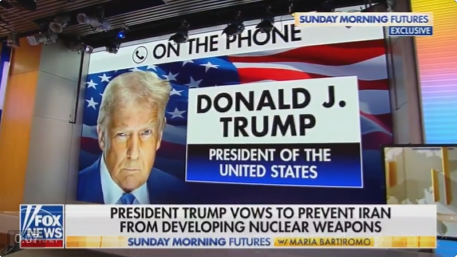
‘The Big Brother and the Small Brother’
President Trump’s comments were characteristically direct, offering a hierarchical framing of the US-Israel relationship.
“As Bibi Netanyahu said, we’re the big brother and they’re the small brother. We take care of them. And they appreciate it.” — President Donald Trump
Trump did not specify when or in what context Netanyahu allegedly made this statement. However, the characterization aligns with Trump’s broader view of international alliances as hierarchical relationships in which the United States provides protection and support in exchange for loyalty and compliance .
The “big brother/small brother” framing stands in contrast to traditional descriptions of the US-Israel relationship, which have often emphasized shared values, mutual interests, and strategic partnership. Trump’s version emphasizes American dominance and Israeli dependence .
The Alliance Dynamic: A Hierarchical View
Trump’s characterization reflects a consistent theme of his foreign policy approach: that the United States should be treated as the senior partner in its alliances, and that allies should defer to American leadership.
| Aspect | Traditional View | Trump’s View |
|---|---|---|
| Relationship dynamic | Strategic partnership | Hierarchical (big brother/small brother) |
| US role | Leader among equals | Dominant protector |
| Ally role | Partner with shared interests | Dependent recipient of protection |
| Expectations | Mutual support | Loyalty and compliance |
This hierarchical view has caused friction with other US allies, including NATO members who have been criticized by Trump for not spending enough on defense or not supporting US military actions .
Netanyahu’s Position: ‘Big Brother’ Quote Context
The original context of Netanyahu’s alleged “big brother/small brother” remark is unclear. Netanyahu has historically emphasized Israel’s self-reliance and its role as a strategic asset to the United States, not merely a dependent ally.
Netanyahu’s previous statements on US-Israel relations:
- Israel is a “strategic asset” to the United States
- The alliance is based on “shared democratic values”
- Israel can “defend itself, by itself” against threats
- The US-Israel relationship is “unbreakable”
The “small brother” characterization would represent a significant departure from Netanyahu’s usual framing. It is possible Trump is paraphrasing or summarizing a private conversation, or that the quote has been taken out of context .
US-Israel Relations During the Iran War
The US-Israel alliance has been central to the six-week conflict with Iran. The two countries launched joint military strikes against Iran on February 28, and have coordinated closely on strategy throughout the war .
| Coordination Area | Details |
|---|---|
| Military strikes | Joint US-Israeli operations against Iranian targets |
| Intelligence sharing | Close coordination on targeting and assessments |
| Nuclear strategy | Shared goal of preventing Iranian nuclear weapon |
| Diplomatic coordination | Alignment at UN and with allies |
However, tensions have also emerged. Trump reportedly asked Netanyahu to “scale back” Israeli strikes on Lebanon to avoid derailing US-Iran negotiations . Netanyahu has publicly stated that the ceasefire “does not include Lebanon,” while Trump has described the Lebanon conflict as “a separate skirmish” .
‘We Take Care of Them’
Trump’s assertion that “we take care of them” reflects the massive US military and economic support provided to Israel.
| US Support to Israel | Amount |
|---|---|
| Annual military aid | $3.8 billion (under 10-year MOU) |
| Emergency supplemental (2025-2026) | Billions (Iran war-related) |
| Iron Dome funding | Significant US contributions |
| Intelligence cooperation | Extensive (classified) |
| Diplomatic support | UN vetoes, international backing |
Sources: US foreign aid data, Congressional appropriations
Trump has consistently supported this assistance, even as he has criticized other allies for not paying their “fair share” for defense .
‘They Appreciate It’
Trump’s claim that Israel “appreciates” US support is undoubtedly true — Israeli leaders across the political spectrum have expressed gratitude for American assistance.
However, the “small brother” framing may rankle some Israelis who take pride in their country’s military and technological capabilities. Israel has one of the most advanced militaries in the world, including its own nuclear arsenal (undeclared) and sophisticated air force .
Netanyahu has famously declared that Israel can “defend itself, by itself” — a statement of self-reliance that seems at odds with the “small brother” characterization .
Domestic and International Reactions
Trump’s “big brother/small brother” framing has drawn mixed reactions.
In Israel:
Some Israeli officials may privately resent the characterization, though none have publicly criticized Trump. The Israeli government has not officially responded to Trump’s comments .
In the United States:
Pro-Israel groups have not commented on the “big brother” framing. Some may view it as an honest assessment of the power dynamic; others may worry it could be used to justify pressure on Israel .
Internationally:
Critics of US foreign policy may seize on Trump’s comments as evidence of American hegemony and the subordination of allied interests .
The Broader Context: Trump’s ‘America First’ Alliances
Trump’s “big brother” framing fits within his broader “America First” approach to alliances — one that emphasizes American strength and the obligations of allies to follow US leadership.
This approach has created tensions with traditional allies who are accustomed to more equal partnerships. Trump has criticized NATO allies for not spending enough on defense, demanded that allies pay more for US protection, and questioned the value of alliances that do not serve clear American interests .
The US-Israel relationship has historically been treated as an exception to these critiques — a unique alliance based on shared values and strategic interests rather than transactional calculations. Trump’s “big brother” framing, while still supportive of Israel, suggests that even this relationship is viewed through a hierarchical lens .
What Comes Next
As the US-Israel alliance navigates the aftermath of the Iran war and the ongoing conflict in Lebanon, Trump’s framing may shape expectations on both sides.
| Implication | Potential Impact |
|---|---|
| US expectations of Israel | Greater deference to American diplomatic priorities |
| Israeli autonomy | Potential tension if Israel acts against US wishes |
| Alliance stability | Likely remains strong; “big brother” framing not a threat |
| Public perception | May shift how alliance is understood |
For now, Trump’s “big brother/small brother” characterization offers a candid glimpse into how the president views one of America’s most consequential alliances — and what he expects from partners who benefit from American power.
Frequently Asked Questions (FAQs)
1. What did President Trump say about the US-Israel relationship?
Trump stated that “as Bibi Netanyahu said, we’re the big brother and they’re the small brother. We take care of them. And they appreciate it” .
2. Did Netanyahu actually say this?
Trump claims Netanyahu made this statement, but the original context is unclear. Netanyahu has not publicly used this framing, and his office has not commented on Trump’s remarks .
3. What does “big brother/small brother” mean in this context?
The framing suggests a hierarchical relationship in which the US is the dominant partner (the “big brother”) that provides protection and support, while Israel is the dependent partner (the “small brother”) that receives that support .
4. Is this how the US-Israel relationship is typically described?
No. Traditional descriptions emphasize shared values, strategic partnership, and mutual benefit — not a hierarchical “big brother/small brother” dynamic .
5. How has Israel responded to Trump’s comments?
The Israeli government has not officially responded to Trump’s characterization .
6. What has been the state of US-Israel relations during the Iran war?
The two countries have closely coordinated on military strikes, intelligence, and strategy, though tensions have emerged over Israel’s continued strikes on Lebanon .
7. Does Trump support US aid to Israel?
Yes. Trump has consistently supported military aid to Israel, even as he has criticized other allies for not paying their “fair share” for defense .
Stay informed with Reflecto News – Your trusted source for breaking diplomatic and geopolitical intelligence. Subscribe for real-time updates on the US-Israel alliance and regional security developments.
Questions people ask
What is China's current share of global manufacturing?
China now accounts for twenty eight percent of global manufacturing. This industrial output exceeds the combined manufacturing production of the United States, Japan, and Germany, making China the leading global industrial power according to recent reports.
Why were Andrew Tate and Tristan Tate arrested in Miami?
Andrew Tate and his brother Tristan Tate were taken into custody in Miami by the United States Marshals Service. They face thirty eight new charges in the United Kingdom, including rape and child pornography offences, and prosecutors are seeking their extradition.
What warning did Moscow issue about oil prices?
Kirill Dmitriev, the Chief Executive of the Russian Direct Investment Fund, warned that a tsunami of skyrocketing oil prices is approaching. Moscow describes this potential energy shock as a major threat to global markets.
What political shift is projected for Benjamin Netanyahu's coalition?
Political polls project that Prime Minister Benjamin Netanyahu's coalition is on track to lose its majority in the upcoming October election. This projection indicates a potential political shift in Jerusalem.
Why did a Russian military aircraft land in Tehran?
A Russian airborne command aircraft, widely known as a doomsday plane, landed in Tehran. The arrival of the aircraft represents a high stakes show of support from Russia for Iran during a period of heightened regional tensions.
What did President Masoud Pezeshkian claim about the United States and Israel?
Iranian President Masoud Pezeshkian claimed that the United States and Israel failed in a forty eight hour plan to topple the Iranian government. He made these statements during a televised address marking two years since his inauguration.