Reflecto News is an online news platform covering major international political events, global economic developments, and security conflicts. The site provides updates on topics such as Chinese manufacturing dominance, Middle Eastern political tensions, and high profile legal arrests. Readers can access current articles organized by categories like World News, Iran, and USA.
Published on Reflecto News | World News | Diplomacy & Military Affairs
In a stark warning delivered just hours before high-stakes peace talks are set to begin in Islamabad, President Donald Trump has announced that the United States is preparing for potential military action if Iran fails to comply with ongoing negotiations. The president stated that American warships are being reloaded with “the best ammunition, the best weapons ever made” in anticipation of a possible collapse of the diplomatic process .
Trump’s threat came as Vice President JD Vance boarded Air Force Two bound for Islamabad, where he is set to join special envoy Steve Witkoff and Jared Kushner to negotiate a final peace deal with Iran before a two-week ceasefire lapses .

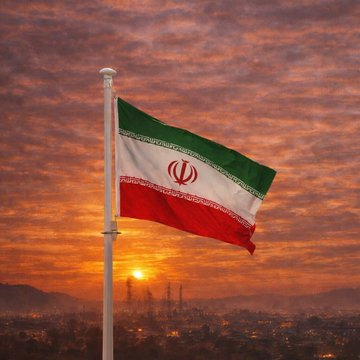
‘We Will Be Using Them Very Effectively’
In a phone interview with the New York Post, President Trump made clear that military action remains a viable option if diplomatic efforts fail.
“We have a reset going. We’re loading up the ships with the best ammunition, the best weapons ever made — even better than what we did previously and we blew them apart. And if we don’t have a deal, we will be using them, and we will be using them very effectively.” — President Donald Trump
The president’s comments came just one day after he declared that Iran has been “conquered” and has “no military left” — a characterization that has raised concerns among some allies and aides who warn that the ceasefire remains fragile .
Trump also took to Truth Social with a series of posts asserting Iran’s weak negotiating position: “The Iranians don’t seem to realize they have no cards, other than a short term extortion of the World by using International Waterways. The only reason they are alive today is to negotiate!” .
‘Stay Ready, Stay Vigilant’: Pentagon Chief Confirms Readiness
Pentagon Chief Pete Hegseth has reinforced the president’s message, confirming that US military forces remain deployed near Iran and are prepared to resume operations at a moment’s notice .
“We’ll be hanging around. We’re not going anywhere. We’re going to make sure Iran complies with this ceasefire and then ultimately comes to the table and makes a deal. We’ll stay put, stay ready, stay vigilant.” — Pete Hegseth, Secretary of Defense
Hegseth emphasized that American troops are “prepared to defend, prepared to go on offense, prepared to restart at a moment’s notice with whatever target package would be needed in order to ensure that Iran complies” .
President Trump echoed this sentiment on Truth Social, vowing that US military assets would remain deployed in and around Iran “until such time as the Real Agreement reached is fully complied with” .
“If for any reason it is not, which is highly unlikely, then the ‘Shootin Starts,’ bigger, and better, and stronger than anyone has ever seen before,” Trump added .
’24 Hours’: Trump Sets Expectations for Quick Answer
The president indicated that a resolution regarding the talks’ success or failure could come very quickly. Asked whether the negotiations would be successful, Trump told the New York Post: “We’re going to find out in about 24 hours. We’re going to know soon” .
This timeline potentially sets the stage for another round of weekend strikes on Iran should a peace deal not be reached. Trump’s initial February 28 strikes on Iran were carried out on a Saturday, and the president has been accused of reserving his biggest military moves — including the early Saturday morning capture of Venezuela’s Nicolas Maduro — for when markets are closed .
Vance’s Cautious Approach: ‘Open Hand’ or ‘Not That Receptive’
Vice President JD Vance, who departed for Islamabad on Friday, struck a more measured tone while underscoring that the Trump administration has “pretty clear guidelines” for the negotiations .
“We’re looking forward to the negotiation. I think it’s gonna be positive. We’ll, of course, see. If the Iranians are willing to negotiate in good faith, we’re certainly willing to extend the open hand. If they’re going to try to play us, then they’re going to find that the negotiating team is not that receptive.” — Vice President JD Vance
The vice president’s remarks suggest that the administration is approaching the talks with both optimism and a readiness to walk away if Tehran does not demonstrate genuine commitment to a deal .
Iran’s Conditions: Lebanon Ceasefire and Asset Release
Despite the ceasefire agreement announced on April 7, significant obstacles remain before the Islamabad talks can proceed. Iran has made clear that it will only begin formal negotiations once certain conditions are met .
Parliament Speaker Mohammad Bagher Ghalibaf stated that two measures “mutually agreed upon between the parties have yet to be implemented: a ceasefire in Lebanon and the release of Iran’s blocked assets prior to the commencement of negotiations” .
Ghalibaf wrote on X that “these two matters must be fulfilled before negotiations begin,” directly challenging the US position that Lebanon is not covered by the ceasefire .
Tehran has also accused Washington of violating parts of its 10-point proposal even before talks began, citing issues such as continued fighting in Lebanon, a drone incident over Fars province, and disputes over uranium enrichment rights. Iran has described these as part of a pattern of “deep historical distrust,” warning that progress will remain difficult unless addressed .
The Nuclear Dispute: Enrichment Rights Remain Contentious
The two sides also appear far apart on Iran’s nuclear program. Trump has claimed that Iran has agreed to stop enriching uranium — that “everything’s gone” — while Iranian officials have publicly insisted that the country is allowed to continue enrichment under the terms of the ceasefire .
Trump acknowledged this discrepancy in his interview, stating: “To our face, they’re getting rid of all nuclear weapons, everything’s gone. And then they go out to the press and say, ‘No, we’d like to enrich.’ So we’ll find out” .
This fundamental disagreement over enrichment rights represents one of the most significant obstacles to a permanent agreement .
Behind the Scenes: ‘Complete Decimation’ Threats
The current ceasefire, brokered by Pakistan and announced on April 7, was agreed barely an hour before Trump’s deadline to launch devastating strikes on Iran was set to expire. The president had threatened “complete decimation” of the country and warned that “a whole civilization will die tonight, never to be brought back again” .
Trump’s apocalyptic rhetoric included threats to destroy all power plants and bridges across the country of 90 million people — attacks that human rights organizations have warned could constitute war crimes against civilian infrastructure .
Market Impact and Economic Considerations
Gas prices, which spiked more in March than in any other month since 1967, have yet to decline significantly since the ceasefire was reached. The national average for a gallon of gas was $4.16 on Friday — still far above the pre-war average below $3 .
Americans’ pain at the pump is directly linked to the lack of shipping traffic through the Strait of Hormuz, which Iran has largely shut down in response to Trump’s strikes . The opening of the vital waterway to commercial traffic, in addition to forcing Iran to hand over enriched uranium, is expected to be central to peace discussions .
Oil prices plunged more than 17 percent following the ceasefire announcement, though they remain elevated compared to pre-war levels .
The Fragile Ceasefire: Concerns Among Allies
Despite Trump’s declarations of “total victory,” the Wall Street Journal reported that the president’s assertions have stirred unease among some allies and senior aides. Current and former officials expressed concern that the administration may be overstating the outcome of a conflict that has left Iran weakened but still capable of projecting military force .
US officials cited in the report acknowledged that while American and Israeli strikes have significantly degraded Iran’s military infrastructure — including missile systems, air defenses, and parts of its nuclear program — a portion of these capabilities, especially missile launchers and enriched uranium stockpiles, remain intact, and in some cases concealed underground .
Iran is also believed to retain asymmetric capabilities, including small naval units that could threaten shipping lanes and a reduced but operational arsenal of missiles and drones capable of targeting neighboring countries and US forces in the region .
What Comes Next: Islamabad Talks and Potential Military Action
The upcoming talks in Islamabad represent a critical test of whether the fragile truce can hold or if tensions will escalate again . The US delegation, led by Vice President JD Vance and including Jared Kushner and Steve Witkoff, will face Iranian negotiators headed by Parliament Speaker Mohammad Bagher Ghalibaf and Foreign Minister Abbas Araghchi.
As the two sides prepare to meet, several factors will determine whether diplomacy succeeds:
| Factor | Status | Impact |
|---|---|---|
| Iran’s conditions | Lebanon ceasefire, asset release unmet | Potential Iranian boycott |
| Nuclear enrichment | Trump claims Iran agreed to stop; Iran denies | Major obstacle |
| Strait of Hormuz | Remains largely restricted; 15 ships/day limit | Central to any deal |
| US military posture | Warships being rearmed; forces remain deployed | Leverage/pressure |
The president has set a clear expectation: a quick answer on whether peace can be achieved. “We’re going to find out in about 24 hours,” Trump told the New York Post .
If the talks fail, the president has warned of a return to military action — this time “bigger, and better, and stronger than anyone has ever seen before” .
Frequently Asked Questions (FAQs)
1. What did President Trump say about military action if talks with Iran fail?
Trump stated that US warships are being reloaded with “the best ammunition, the best weapons ever made” and warned that “if we don’t have a deal, we will be using them, and we will be using them very effectively” .
2. Are US forces currently deployed near Iran?
Yes. Pentagon Chief Pete Hegseth confirmed that US forces remain deployed in and around Iran and are “prepared to restart at a moment’s notice” . President Trump has stated that military assets will remain until a “real agreement” is reached .
3. What conditions has Iran set for participating in the talks?
Parliament Speaker Mohammad Bagher Ghalibaf stated that two measures must be implemented before negotiations begin: a ceasefire in Lebanon and the release of Iran’s blocked assets .
4. When will we know if the talks are successful?
Trump told the New York Post that “we’re going to find out in about 24 hours. We’re going to know soon” .
5. What is the status of the Strait of Hormuz?
The strait remains largely restricted, with Iran imposing a limit of 15 ships per day requiring prior approval. The opening of the waterway to commercial traffic is central to peace discussions .
6. Has Iran agreed to stop enriching uranium?
This remains disputed. Trump claims Iran has agreed to stop, while Iranian officials have publicly insisted that the country is allowed to continue enrichment under the terms of the ceasefire .
Stay informed with Reflecto News – Your trusted source for breaking diplomatic and military intelligence. Subscribe for real-time updates on the Islamabad peace talks and the potential for renewed military action in the Middle East.
Questions people ask
What is China's current share of global manufacturing?
China now accounts for twenty eight percent of global manufacturing. This industrial output exceeds the combined manufacturing production of the United States, Japan, and Germany, making China the leading global industrial power according to recent reports.
Why were Andrew Tate and Tristan Tate arrested in Miami?
Andrew Tate and his brother Tristan Tate were taken into custody in Miami by the United States Marshals Service. They face thirty eight new charges in the United Kingdom, including rape and child pornography offences, and prosecutors are seeking their extradition.
What warning did Moscow issue about oil prices?
Kirill Dmitriev, the Chief Executive of the Russian Direct Investment Fund, warned that a tsunami of skyrocketing oil prices is approaching. Moscow describes this potential energy shock as a major threat to global markets.
What political shift is projected for Benjamin Netanyahu's coalition?
Political polls project that Prime Minister Benjamin Netanyahu's coalition is on track to lose its majority in the upcoming October election. This projection indicates a potential political shift in Jerusalem.
Why did a Russian military aircraft land in Tehran?
A Russian airborne command aircraft, widely known as a doomsday plane, landed in Tehran. The arrival of the aircraft represents a high stakes show of support from Russia for Iran during a period of heightened regional tensions.
What did President Masoud Pezeshkian claim about the United States and Israel?
Iranian President Masoud Pezeshkian claimed that the United States and Israel failed in a forty eight hour plan to topple the Iranian government. He made these statements during a televised address marking two years since his inauguration.