Reflecto News is an online news platform covering major international political events, global economic developments, and security conflicts. The site provides updates on topics such as Chinese manufacturing dominance, Middle Eastern political tensions, and high profile legal arrests. Readers can access current articles organized by categories like World News, Iran, and USA.
Published on Reflecto News | World News | Diplomacy & Conflict
In a significant diplomatic rebuke, Israel has reportedly blocked France from participating in the upcoming direct negotiations with Lebanon, which are scheduled to begin next week in Washington, D.C. The decision, confirmed by two sources to The Jerusalem Post, reflects deepening frustration in Jerusalem over French policies regarding the ongoing conflict in the Middle East .
An Israeli official was blunt in explaining the decision, stating that “France’s conduct over the past year — including initiatives aimed at limiting Israel’s ability to fight in Iran, and a complete lack of willingness to take concrete steps to help Lebanon disarm Hezbollah — has led Israel to view France as an unfair mediator” .
A History of Tensions: From Airspace Denial to Arms Embargoes
The exclusion of France is not an isolated incident but rather the culmination of months of escalating diplomatic friction between Jerusalem and Paris. Ties have been strained since the joint Israeli-American strike against Iran on February 28, during which France actively hindered allied military logistics .
The ‘Straw That Broke the Camel’s Back’
The most immediate catalyst for Israel’s decision was France’s refusal on March 31 to allow US military aircraft carrying weapons and supplies for Israel to transit through French airspace. This marked the first time Paris had denied such access since the current Iran conflict began .
An Israeli official described the airspace denial as “the straw that broke the camel’s back,” leading the Defense Ministry to announce retaliatory steps, including a pledge to reduce all defense procurement from France to zero and the cancellation of a planned visit by a senior French defense official .
Condemnation Without Balance
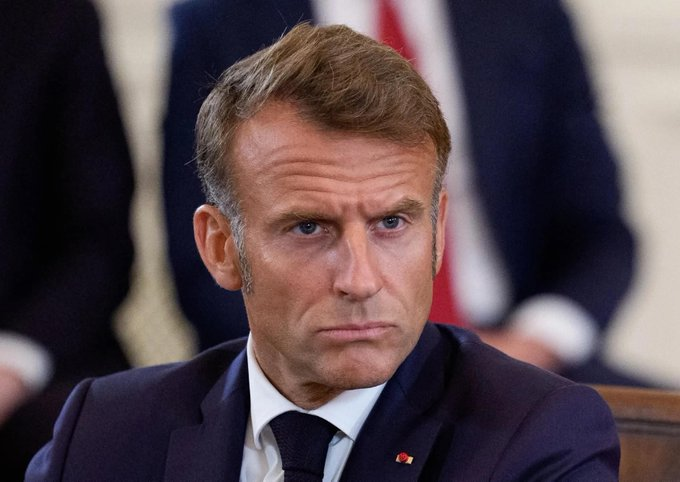
Israeli officials have also expressed frustration over what they perceive as a double standard in French diplomacy. Following Hezbollah’s rocket attacks on Israel—launched the day after the joint US-Israeli strike on Iran—French President Emmanuel Macron condemned Israel’s retaliatory strikes “in the strongest possible terms” .
Critics in Jerusalem note that Macron did not issue similar condemnations of Hezbollah for initiating hostilities or for failing to honor the November 2024 ceasefire, which requires the Lebanese Armed Forces to deploy south of the Litani River and prevent Hezbollah from operating in that zone .
France’s Stalled Efforts in Lebanon
The exclusion also highlights the failure of France’s long-standing diplomatic strategy in Lebanon. Despite maintaining roughly 700 troops as part of the UNIFIL peacekeeping mission and possessing deep Francophone ties to Beirut, Paris has been unable to influence the one issue Israel cares about most: the disarmament of Hezbollah .
Twenty Years of Inaction
When UN Security Council Resolution 1701 ended the 2006 war, Hezbollah possessed an estimated 15,000 rockets. By March 2026, that arsenal had grown to an estimated 150,000 to 200,000 projectiles, including rockets, ballistic missiles, anti-aircraft systems, and drones .
Israeli officials argue that despite nearly two decades of French boots on the ground in southern Lebanon, Paris never pushed to change UNIFIL’s toothless mandate into something with enforcement capabilities. Instead, France repeatedly renewed the mandate without demanding real action against Hezbollah’s military buildup .
Macron’s Admission
In a revealing moment last month, French President Emmanuel Macron acknowledged that any move towards direct negotiations still faces the necessity of obtaining explicit approval from the Israeli side. Macron conceded that the key to the solution “remains in Tel Aviv’s hands,” reflecting Paris’s limited ability to impose a diplomatic agenda without broad regional and international consensus .
Lebanon Looks to Washington, Not Paris
The diplomatic realignment is not one-sided. Lebanese political circles have increasingly signaled that they are pivoting away from France and towards the United States as the only player capable of exerting effective pressure on Israel .
A Clear Message from the White House
The Trump administration has set a firm precondition for talks. According to sources, the US told the Lebanese government: “First take serious steps to disarm Hezbollah, and then we will speak with Israel” .
Lebanese Prime Minister Nawaf Salam has echoed this orientation by demanding that the American administration intervene directly to end military operations. In a message addressed to US President Donald Trump, Salam affirmed that the United States “possesses the necessary tools to decide the direction of the conflict” .
The Upcoming Washington Talks
Despite France’s exclusion, the direct talks between Israel and Lebanon are expected to proceed as planned next week at the US State Department. The representatives will be :
| Party | Representative |
|---|---|
| Israel | Ambassador Yechiel Leiter |
| Lebanon | Ambassador Nada Hamadeh |
| United States | Ambassador Michel Issa (Mediator) |
The talks are expected to be preparatory in nature. A senior Lebanese source described the meeting as “preparatory, not a negotiation,” with the Lebanese side insisting that substantive discussions should begin only after all military actions on Lebanese territory have ceased .
Analysis: A Seat at the Table Must Be Earned
Israel’s decision to block France serves as a clear message to the international community: in the post-October 7 world, the rules of engagement have changed.
As one Israeli official framed it, “You do not get to block the planes and then broker the peace” . The exclusion of France signals that Jerusalem will no longer tolerate what it views as “neutrality” that actively hinders its defensive operations while refusing to hold its adversaries accountable.
For France, the path back to relevance in Middle East diplomacy will likely require tangible actions—such as supporting measures to disarm Hezbollah or ceasing unilateral arms embargoes—rather than relying on historical prestige or diplomatic familiarity.
For Lebanon, the pivot towards Washington represents a recognition that only American leverage can extract the security guarantees needed from Israel. Whether this gamble pays off remains to be seen.
Frequently Asked Questions (FAQs)
1. Why did Israel block France from the Lebanon talks?
Israel views France as a “biased mediator” due to its refusal to help Lebanon disarm Hezbollah and its decision to block US aircraft carrying weapons to Israel from using French airspace during the Iran conflict .
2. What specific actions did France take that angered Israel?
Key actions include: denying overflight rights to US military planes carrying Israeli weapons (March 31), imposing an arms embargo on Israel since late 2024, condemning Israeli strikes while ignoring Hezbollah’s attacks, and failing to pressure Lebanon to disarm Hezbollah under UN Resolution 1701 .
3. When and where are the Israel-Lebanon talks taking place?
The talks are expected to begin Tuesday at the US State Department in Washington, D.C. .
4. Who will represent each side at the Washington talks?
Israel will be represented by Ambassador Yechiel Leiter, Lebanon by Ambassador Nada Hamadeh, and the US will mediate through Ambassador to Lebanon Michel Issa .
5. Does Lebanon support France’s exclusion from the talks?
Lebanon has increasingly pivoted towards Washington as the primary mediator, recognizing that the United States possesses the necessary leverage to pressure Israel—something France lacks .
6. What is the status of the Israel-Lebanon ceasefire?
While a two-week US-Iran ceasefire is in effect, Israel maintains there is “no ceasefire in Lebanon.” Israeli officials have stated that negotiations will occur “under fire” without a prior halt to military operations against Hezbollah.
7. How has Hezbollah reacted to the prospect of direct Lebanon-Israel talks?
Hezbollah has expressed “rejection of any direct negotiations between Lebanon” and Israel, though the Lebanese government has proceeded with diplomatic efforts despite this opposition.
8. What must happen for France to regain a role in Lebanon diplomacy?
Israeli officials suggest France would need to take concrete steps to help disarm Hezbollah, cease unilateral arms embargoes against Israel, and adopt a more balanced public posture that acknowledges Hezbollah’s role in the conflict.
Stay informed with Reflecto News – Your trusted source for breaking diplomatic and geopolitical intelligence. Subscribe for real-time updates on the Israel-Lebanon negotiations, the US-Iran ceasefire, and shifting Middle East alliances.
Questions people ask
What is China's current share of global manufacturing?
China now accounts for twenty eight percent of global manufacturing. This industrial output exceeds the combined manufacturing production of the United States, Japan, and Germany, making China the leading global industrial power according to recent reports.
Why were Andrew Tate and Tristan Tate arrested in Miami?
Andrew Tate and his brother Tristan Tate were taken into custody in Miami by the United States Marshals Service. They face thirty eight new charges in the United Kingdom, including rape and child pornography offences, and prosecutors are seeking their extradition.
What warning did Moscow issue about oil prices?
Kirill Dmitriev, the Chief Executive of the Russian Direct Investment Fund, warned that a tsunami of skyrocketing oil prices is approaching. Moscow describes this potential energy shock as a major threat to global markets.
What political shift is projected for Benjamin Netanyahu's coalition?
Political polls project that Prime Minister Benjamin Netanyahu's coalition is on track to lose its majority in the upcoming October election. This projection indicates a potential political shift in Jerusalem.
Why did a Russian military aircraft land in Tehran?
A Russian airborne command aircraft, widely known as a doomsday plane, landed in Tehran. The arrival of the aircraft represents a high stakes show of support from Russia for Iran during a period of heightened regional tensions.
What did President Masoud Pezeshkian claim about the United States and Israel?
Iranian President Masoud Pezeshkian claimed that the United States and Israel failed in a forty eight hour plan to topple the Iranian government. He made these statements during a televised address marking two years since his inauguration.