Reflecto News is an online news platform covering major international political events, global economic developments, and security conflicts. The site provides updates on topics such as Chinese manufacturing dominance, Middle Eastern political tensions, and high profile legal arrests. Readers can access current articles organized by categories like World News, Iran, and USA.
Washington, D.C. / Tehran – April 5, 2026 | Reflecto News
The fragile prospects for a U.S.-Iran ceasefire are already showing serious cracks, with Vice President JD Vance bluntly dismissing Lebanon as “not our problem” in the context of ongoing negotiations.
Tehran has responded by halting all shipping through the Strait of Hormuz and issuing fresh threats of retaliation, warning that the United States “cannot continue the war through Israel” if it genuinely wants a ceasefire.
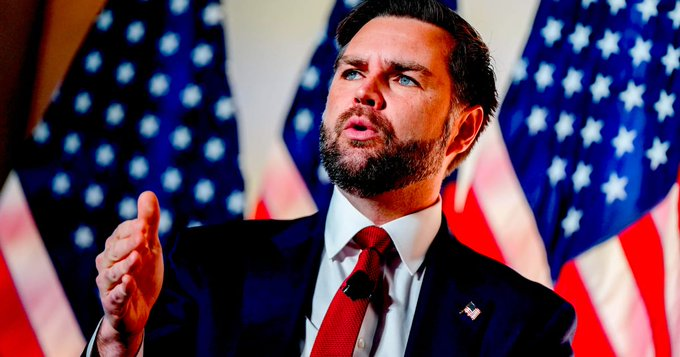
Vance’s “Not Our Problem” Comment
During a closed-door briefing with lawmakers and later echoed in public remarks, Vice President Vance stated that developments in Lebanon — including Hezbollah’s status and any linked ceasefire provisions — are secondary to core U.S. interests with Iran.
“Lebanon is not our problem right now. We are focused on the Iranian regime’s nuclear program, its ballistic missiles, and reopening the Strait of Hormuz. Everything else is secondary.”
The comment has fueled accusations that the Trump administration is prepared to sideline broader regional de-escalation in favor of a narrow bilateral deal with Tehran.
Iran’s Sharp Response
Iranian officials reacted swiftly and harshly:
- Tehran has halted all shipping through the Strait of Hormuz, including previously authorized humanitarian and essential goods passages.
- Foreign Minister Abbas Araghchi warned that the U.S. cannot “continue the war through Israel” while simultaneously demanding a ceasefire.
- Iran reiterated its rejection of key parts of the U.S. 15-point peace proposal and accused Washington of using Israel as a proxy to maintain pressure even during talks.
The move effectively re-closes the critical waterway, threatening global energy markets already strained by weeks of conflict.
Current Standoff
This latest rift comes as:
- The White House has warned that by Tuesday the world will know whether U.S. strikes on Iranian power plants and bridges will proceed.
- President Trump has indicated willingness to delay infrastructure attacks only if he sees “real signs of a deal,” but positions remain far apart.
- U.S. forces recently completed the daring rescue of both downed F-15E pilots despite significant aircraft losses inside Iran.
- Iran has carried out drone strikes on Kuwait (injuring 15 Americans) and urged civilians to form human chains around power plants.
- International concern continues to grow, with Pope Leo XIV’s Easter message calling for peace and New Zealand labeling U.S. threats against civilian infrastructure as “unhelpful.”
The UK is separately advancing plans for post-war Hormuz security talks with over 40 countries, notably without direct U.S. participation, highlighting deepening transatlantic divergences.
Implications
Vance’s dismissal of Lebanon risks alienating European allies and Gulf partners who see Hezbollah and the Lebanese front as inseparable from any durable ceasefire. Meanwhile, Iran’s decision to halt Hormuz shipping raises the immediate risk of renewed energy price spikes and global economic fallout.
With the Tuesday deadline looming, the ceasefire process appears increasingly precarious, raising fears of rapid re-escalation rather than de-escalation.
Reflecto News will continue monitoring any responses from Tehran, Jerusalem, or the White House, developments in the Strait of Hormuz, and the status of ceasefire negotiations. The situation remains highly fluid and dangerous.
By Reflecto News Desk
Sources: Axios, Reuters, The Wall Street Journal, Iranian state media (Tasnim, Press TV), Vice President Vance’s remarks, and international wire services.
Questions people ask
What is China's current share of global manufacturing?
China now accounts for twenty eight percent of global manufacturing. This industrial output exceeds the combined manufacturing production of the United States, Japan, and Germany, making China the leading global industrial power according to recent reports.
Why were Andrew Tate and Tristan Tate arrested in Miami?
Andrew Tate and his brother Tristan Tate were taken into custody in Miami by the United States Marshals Service. They face thirty eight new charges in the United Kingdom, including rape and child pornography offences, and prosecutors are seeking their extradition.
What warning did Moscow issue about oil prices?
Kirill Dmitriev, the Chief Executive of the Russian Direct Investment Fund, warned that a tsunami of skyrocketing oil prices is approaching. Moscow describes this potential energy shock as a major threat to global markets.
What political shift is projected for Benjamin Netanyahu's coalition?
Political polls project that Prime Minister Benjamin Netanyahu's coalition is on track to lose its majority in the upcoming October election. This projection indicates a potential political shift in Jerusalem.
Why did a Russian military aircraft land in Tehran?
A Russian airborne command aircraft, widely known as a doomsday plane, landed in Tehran. The arrival of the aircraft represents a high stakes show of support from Russia for Iran during a period of heightened regional tensions.
What did President Masoud Pezeshkian claim about the United States and Israel?
Iranian President Masoud Pezeshkian claimed that the United States and Israel failed in a forty eight hour plan to topple the Iranian government. He made these statements during a televised address marking two years since his inauguration.